
Households in Vietnam’s biodiversity corridors found to have higher incomes — Mongabay
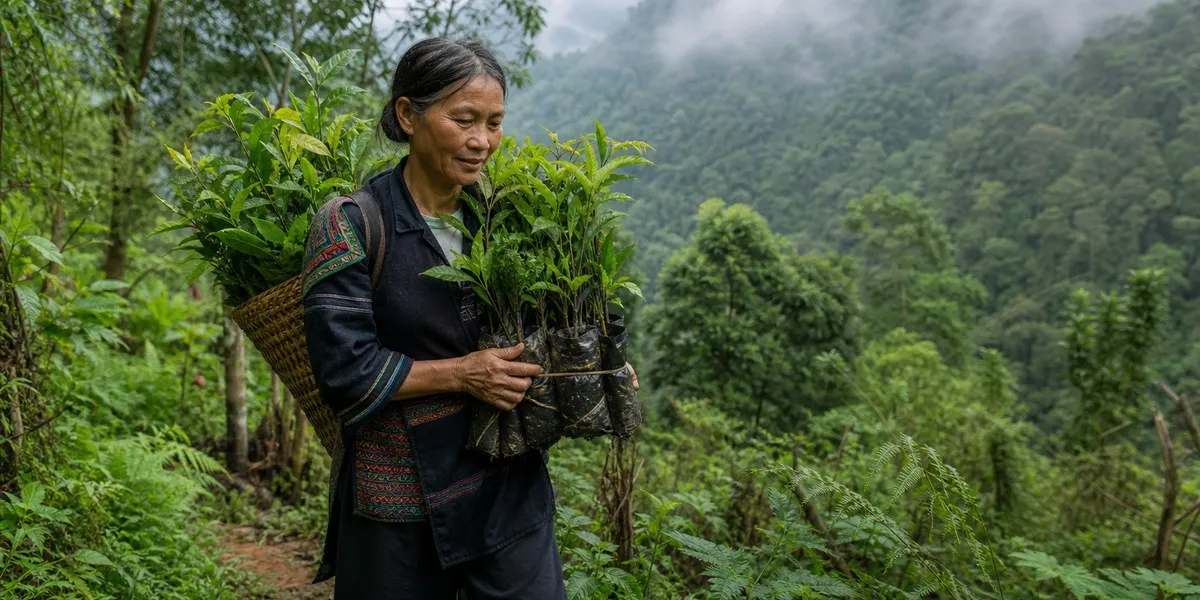
Households living within two biodiversity corridors in Vietnam’s central Annamite Mountains had incomes 25% higher than residents of areas outside them. This was the conclusion reached by the authors of a study who surveyed 120 families in four villages in Quang Nam and Thua Thien-Hue provinces, Mongabay reports.
Income per unit of land area was about $412 per hectare per year for households in the corridors and $330 for those living outside them. The main reason for the difference was payments and work related to nature conservation.
Payments for forest protection
The corridors were created by provincial authorities in 2018 to connect isolated protected areas. They cover nearly 2,000 square kilometers of watershed forests, mountain valleys and cultivated land near the border with Laos. The corridors connect the Saola Nature Reserve in Quang Nam, Song Thanh National Park, the Elephant and Species Habitat Conservation Area, as well as the Saola and Phong Dien nature reserves in Thua Thien-Hue province.
Participants in the PFES program — Payments for Forest Ecosystem Services — receive payments for complying with forest protection contracts. The conditions include restrictions on clearing land for plantations, preserving natural forest cover, and limits on harvesting non-timber forest resources, including honey and medicinal plants. Funding comes through provincial authorities from private companies that benefit from healthy ecosystems, including hydropower and water supply enterprises.
More current news is available on the UA.News Telegram channel Telegram.
According to the study, PFES payments accounted for approximately half of household incomes in the corridors. Additional revenue came from ecotourism, forest restoration contracts and patrols to counter illegal logging and remove snares.
Restricted access to resources
At the same time, corridor residents reported less access to non-timber forest products that they had previously used for food and treatment. Outside the corridors, families earned more from growing acacia for pulp and paper plantations and selling bamboo shoots, leaves and rattan poles.
The authors also warned that larger landowners generally received higher PFES payments. In their view, supporting vulnerable communities requires transferring forest management rights to local communities, expanding payment programs, creating jobs in ecosystem restoration and monitoring, and developing markets for honey, rattan and medicinal plants.


