
Basalt stele of Ramesses II restored in Cairo — Jerusalem Post
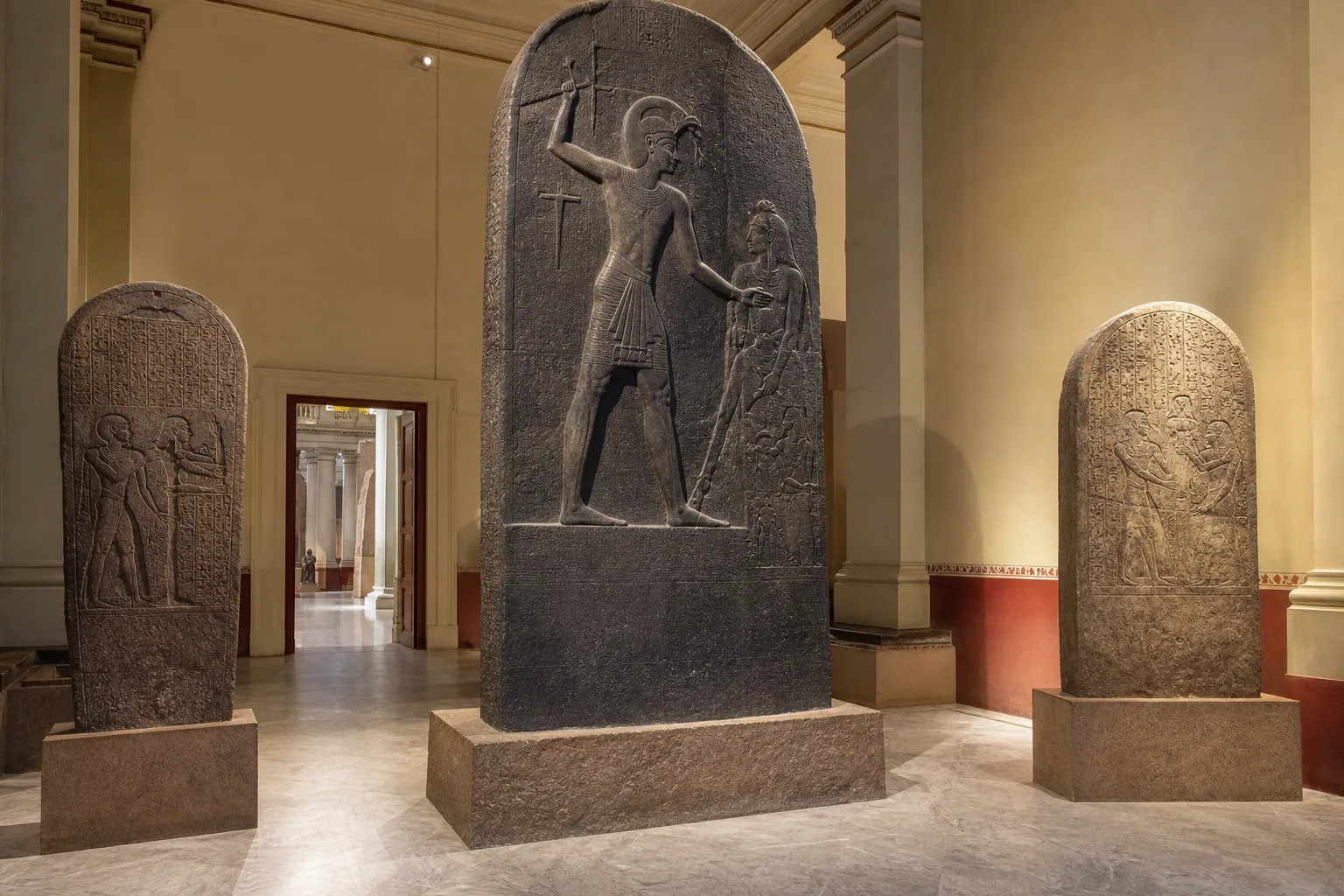
The Egyptian Museum in Cairo has completed the restoration and relocation of a basalt stele of Pharaoh Ramesses II, The Jerusalem Post reported, citing Egypt’s Ministry of Tourism and Antiquities. The monument was included in the museum’s new exhibition plan and installed between two other stelae depicting Ramesses II.
A monument of black basalt
The stele was made of black basalt during the New Kingdom period of Ancient Egypt, approximately between 1570 and 1069 BCE. It is about 240 centimeters long and 110 centimeters wide. The artifact has been exhibited at the museum for more than a century.
Hisham el-Leithy, secretary-general of the Supreme Council of Antiquities, said that the stele was originally found in two separate parts. The fragments had previously been joined during restoration work.
More current news is available on the UA.News Telegram channel Telegram.
A new display method
According to Ali Abdel Halim, the museum’s general director, the current restoration removed materials used during the previous intervention, as well as a wooden panel that had supported the artifact. Conservators treated the joints between the fragments and placed the stele in a freestanding structure with new panoramic lighting.
Halim also rejected claims circulating on social media that cement had allegedly been used during the restoration. According to him, cement was not used at any stage of the conservation work, and the published photos were taken during the restoration process and did not show the monument’s final appearance.


