
Tunnel excavation completed in Kyrgyzstan on China–Kyrgyzstan–Uzbekistan railway
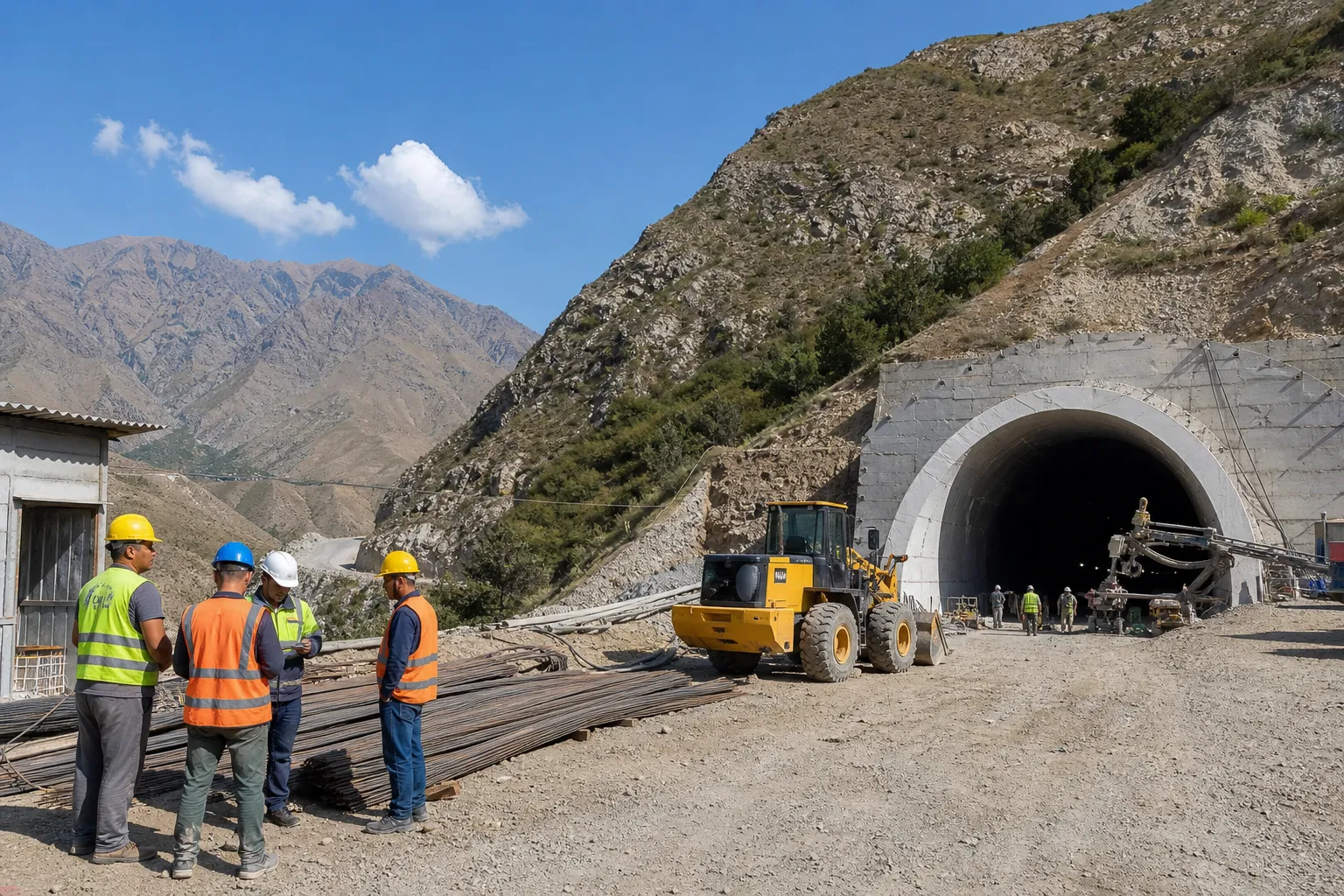
In Kyrgyzstan, excavation of a 210-meter tunnel on the China–Kyrgyzstan–Uzbekistan railway section has been completed. This is the first tunnel whose excavation has been completed on the Kyrgyz section of the mainline since full-scale work began in June 2025, the South China Morning Post reports, citing Chinese television channel CCTV.
According to CCTV, overall progress on the Kyrgyz section has reached 17%. The total length of the future railway will exceed 500 km, with about 305 km running through Kyrgyzstan. The route is intended to connect Kashgar in China’s Xinjiang with Andijan in Uzbekistan through Kyrgyzstan’s mountainous areas.
Infrastructure and track gauge
According to China’s Xinhua agency, construction has begun on 27 tunnels, 43 bridges and 88 earthwork sections. Work is also underway at 20 railway stations.
The project provides for a compromise on track gauge. Chinese standard gauge will be used on a 167.5-km section from the Chinese border to Makmal in Kyrgyzstan. The remaining nearly 140 km toward Uzbekistan will have Soviet-standard broad gauge, and a transshipment hub is planned in Makmal.
More current news is available on the UA.News Telegram channel Telegram.
A route bypassing Russia
Once completed, the mainline is expected to become the shortest overland route from China to the Middle East and Europe. According to CCTV’s estimate, it could reduce transit time by eight days compared with the China-Europe Railway Express, all three main routes of which run through Russia — an aggressor state — or Kazakhstan.
The idea for the joint Chinese-Kyrgyz-Uzbek project was proposed as early as 1997, but its implementation was delayed by difficult terrain, technical disputes over track gauge and geopolitical factors. During Chinese President Xi Jinping’s state visit to Kyrgyzstan last week, the parties said they intended to ensure the uninterrupted construction of the railway.
Project chief engineer Xi Jihong said the railway would likely be ready for operation by June 2031. At the same time, Uzbekistan’s Deputy Transport Minister Jasurbek Choriyev said in June that construction was intended to be completed by 2028.


