
Enthronement of the 6th Gangchen Tulku Rinpoche held in China
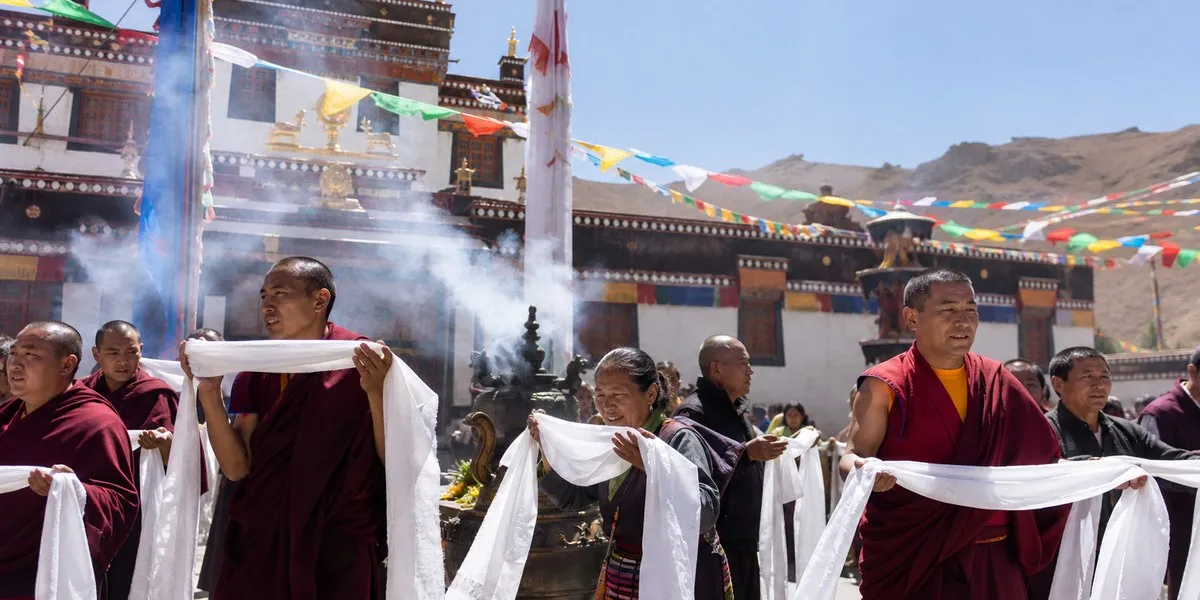
A ceremony for the enthronement of the 6th Gangchen Tulku Rinpoche, Jamyang Choephel Jampa Gyaltsen, was held at Gangchen Monastery in Sakya County of the Xizang Autonomous Region, China. As ECNS reports, Buddhist teachers, representatives of monks and nuns from Shigatse, pilgrims and other believers took part in the ceremony.
Search for the reincarnation
According to ECNS, a boy named Kyung Drakpa from Sainza County in Nagchu was recognized as the reincarnation of the late 5th Gangchen Tulku Rinpoche. A search group that included monks from Gangchen Monastery traveled more than 3,500 kilometers and discreetly visited more than 200 boys. Three candidates were then selected based, among other things, on auspicious signs, spiritual qualities and intelligence.
The 11th Panchen Erdeni Choekyi Gyalpo conducted a ritual drawing of lots from a silver bowl, which resulted in the selection of Kyung Drakpa. The decision on his recognition was submitted for approval to the religious affairs authority of the Xizang Autonomous Region. Following approval, the Panchen Erdeni performed a tonsure ceremony, bestowed Buddhist vows and gave the boy the religious name Jamyang Choephel Jampa Gyaltsen.
More current news is available on the UA.News Telegram channel Telegram.
Ceremony at the monastery
The new Gangchen Tulku Rinpoche is recognized as the reincarnation of Lobsang Thubten Trinley Yarphel, the 5th Gangchen Tulku Rinpoche, who died in Italy on April 18, 2020. ECNS notes that during a visit to China in 2011, he personally entrusted the 11th Panchen Erdeni Choekyi Gyalpo with overseeing the process of his reincarnation.
At the ceremony, a representative of the regional religious affairs bureau read out the official approval of the recognition and succession. The Xizang branch of the Buddhist Association of China presented the new tulku with a “living Buddha” certificate. With the assistance of monks, he took the Dharma throne at Gangchen Monastery, while representatives of monastic and lay communities offered mandalas, white ceremonial khata scarves and gifts.


