
More than 600,000 records were stolen from state registries in Lithuania
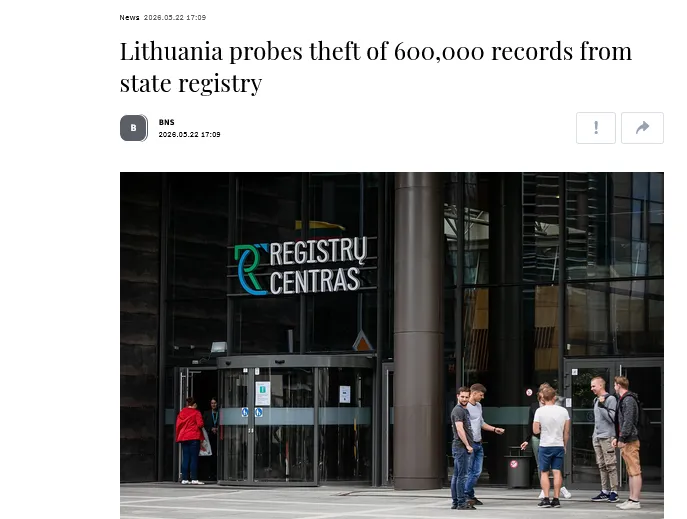
The Lithuanian Prosecutor General's Office, in collaboration with the Criminal Police Bureau, has launched a large-scale pre-trial investigation into an illegal intrusion into state information systems. Cybercriminals managed to gain unauthorized access to the databases of the state-owned enterprise "Registry Center" and copy a massive amount of confidential information.
This was reported by LRT.
Investigative authorities have determined that the cyberattack and attempts to gain unauthorized access to restricted systems were carried out from abroad. To carry out their criminal scheme, the hackers used digital platforms and servers under the direct control of other Lithuanian government agencies and departments. According to preliminary data from the prosecutor’s office, the attackers illegally copied over 600,000 official records. The attackers’ main targets were the real estate registry and the registry of legal entities—databases to which access is typically provided to users exclusively as a paid service.
Despite the significant volume of stolen information, law enforcement officials are trying to reassure the public. The prosecutor’s office has officially stated that, based on the current expert assessment of the nature of the compromised data, there is currently no need to implement any specific or emergency digital security recommendations for individuals or legal entities. The Criminal Police Bureau’s investigation is ongoing, with experts working to determine the exact source of the cyberattack, identify those involved, and patch the vulnerabilities discovered in the government’s cybersecurity systems.
As a reminder, the Russian hacking group Fancy Bear, which is linked to Russian military intelligence, hacked more than 280 email accounts of government and military institutions in NATO countries and the Balkans.
Prior to this, hackers gained access to data from the booking website Booking.com, the company reported. The attackers were able to obtain information about customer bookings, and some users received emails on Sunday notifying them of a possible data breach.


