
In Lebanon, children return to school without windows or doors — Asharq Al-Awsat
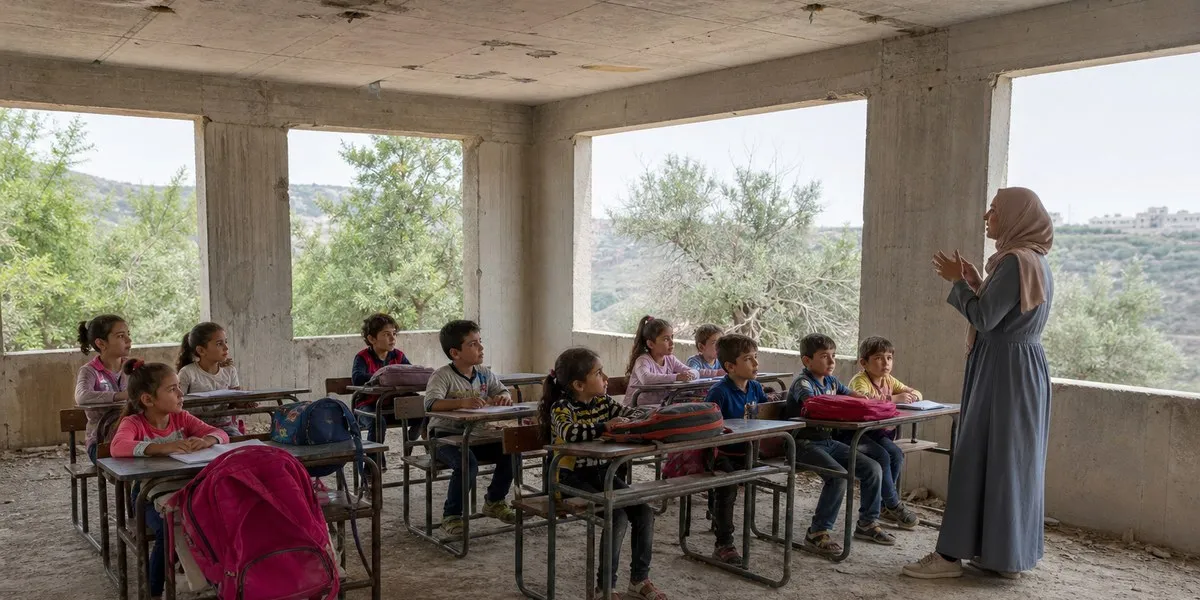
In the village of Burj Qalaway in southern Lebanon, students have resumed classes in an unfinished building after their primary school was destroyed by an Israeli strike in May, according to Asharq Al-Awsat. Eight-year-old Yara Ajami began the school year in a classroom without doors or windows. According to her, the school also has no desks or chairs.
After the summer holidays, the children were moved from the old school building to a neighboring unfinished structure that had been built for preschoolers. Sunlight enters the classrooms through unglazed window openings, while rubble has still not been cleared from the school grounds.
Fewer students after the war
School principal May Mehdi said that around 250 students are currently enrolled in the school's 24 classes. Before the start of the latest war in March, at least 600 children studied there. According to her, most students come from areas that were subjected to intense Israeli attacks and were displaced during the war.
According to Lebanese authorities, more than 4,300 people were killed as a result of the hostilities, including 261 children. More than one million residents were displaced, while over 800,000 people have returned since June, when the level of violence decreased significantly.
More current news is available on the UA.News Telegram channel Telegram.
The Israeli army has repeatedly stated that Hezbollah used civilian facilities, including schools, to carry out attacks or store weapons. Human rights organizations, in turn, accused Israel of possible war crimes during the war with Hezbollah.
Damaged and destroyed schools
According to UNICEF data released earlier in September, nearly 100,000 students in Lebanon were unable to return to school because of building damage, destruction, danger, or displacement. The organization reported that 436 schools were damaged and another 37 were completely destroyed.
Prefabricated structures funded by the state are being installed on the grounds of the school in Burj Qalaway, where there had previously been a laboratory, a computer classroom, and an interactive classroom. Some children have still not returned to the village because of displacement or security concerns: the settlement is located less than one kilometer from Israeli troops stationed in part of southern Lebanon.
Teacher Khoda Najdi, whose home was also destroyed, stressed the need to continue education despite the circumstances. Student Mohammed Moznazar, who moved between different places in Beirut during the war, said he had no books, phone, or internet for remote learning. For 14-year-old Rawan Fakih, returning to school also became a reminder of a friend who, she said, was killed in an Israeli strike.




