
There are calls in Germany to bring Russian back into schools
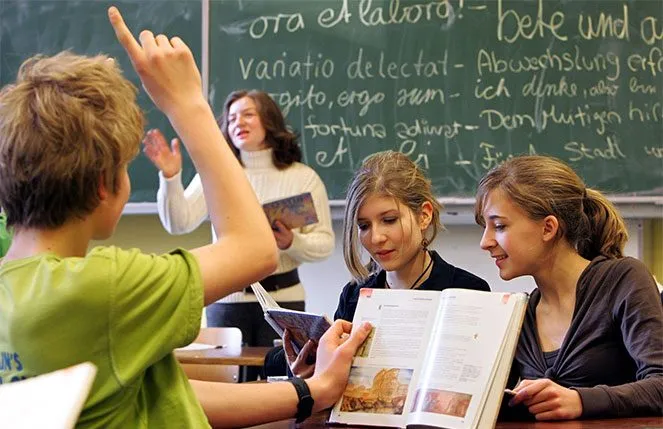
In Germany, there is discussion of an initiative to potentially reintroduce Russian into the school curriculum in the states of the former GDR. Representatives of the Alternative for Germany (AfD) party have put forward this proposal, citing educational and cultural reasons.
DW reports this, citing party representatives.
The right-wing populist party “Alternative for Germany” (AfD) intends to reinstate Russian language instruction in schools in the territories that were formerly part of pro-Soviet East Germany.
The publication notes that the AfD has a good chance of winning the local elections in the federal state of Saxony-Anhalt in September and forming a government there. And under German law, education is the responsibility of regional governments, not the central government in Berlin.
In the past, Saxony-Anhalt was part of the GDR. The local leader of “Alternative for Germany,” Ulrich Sigmund, is in favor of lifting sanctions against Russia and has promised, among other things, to reinstate Russian language instruction in schools following an election victory. He also wants to reinstate educational exchange programs for schoolchildren between Russia and Saxony-Anhalt and promises to remove all “ideology” from the school curriculum.
“This means that everything that has been ideologically introduced into it in recent years will be removed,” Sigmund stated.
As DW notes, among other things, the AfD advocates for the removal of diversity programs, LGBTQ+ education, and anti-racism seminars from the education system.
Interestingly, the German federal government has designated the AfD’s regional branch in Saxony as a “confirmed right-wing extremist organization.” However, neither this fact nor the numerous scandals surrounding the party are preventing it from gaining popularity among Germans.
Earlier, Germany announced Europe’s final rejection of Russian energy resources
As a reminder, the European Union is preparing for an energy crisis due to the war in the Middle East. Authorities are considering fuel rationing and the use of emergency oil reserves. Energy prices are expected to remain high for a long time.


