
Peru restores Andean wetlands and forests to protect water resources — Mongabay
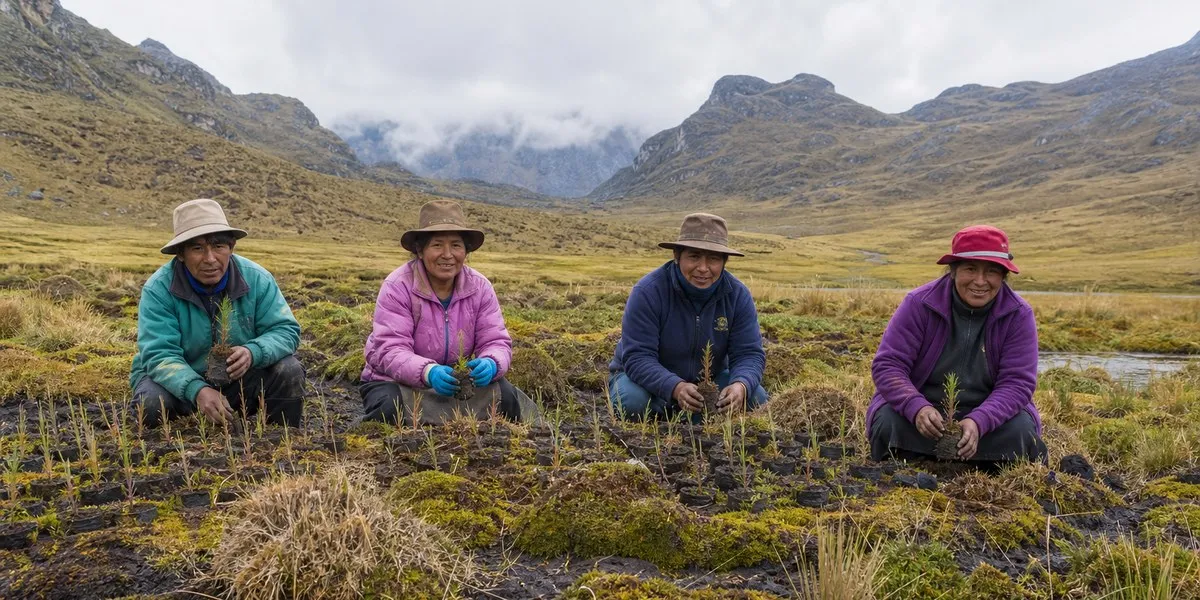
In the highland community of Villa de Arma in Peru’s Huancavelica region, the Yaku Pacha project has been implemented since 2025 to strengthen the water resources of the Chincha watershed. The initiative involves restoring natural wetlands and Polylepis forests — high-altitude trees that grow in the Andes. As Mongabay reports, the project is intended to help preserve water for around 600 community residents and the arid Pacific coast downstream.
Melting glaciers and dry seasons
Over the past six decades, Peru has lost around 56% of its glacier mass, which serves as an important natural water reservoir for the country’s cities and arid regions. Residents of Villa de Arma are also observing changes in rainfall patterns: longer dry seasons are making livestock farming and agriculture more difficult.
The main local water source is a 16-hectare wetland that stores and gradually releases water. At the same time, its condition is deteriorating due to economic activity, livestock overgrazing, tree cutting for firewood, and erosion. Imperial College London hydrologist Wouter Buytaert noted that rising temperatures may intensify evaporation from wetlands, while prolonged droughts may cause irreversible degradation of these ecosystems.
Polylepis seedlings and wetland restoration
In the first year of work, project participants and Villa de Arma residents planted 30,000 Polylepis seedlings. At the same time, they are restoring the wetland by building ditches and reinforcing areas with soil and stones to halt degradation. According to Global Forest Generation, forest restoration may take about 10 years to produce results, while work on the wetland may have a faster effect for the community.
More current news is available on the UA.News Telegram channel Telegram.
Community families participate in planting and caring for the seedlings. The organizers direct payments for each seedling to a community fund, which finances, among other things, infrastructure repairs and the installation of solar panels. Some local residents are trained to work in nurseries and on restoration efforts.
Effectiveness remains to be assessed
Scientists caution that nature-based solutions are not a universal way to overcome water shortages. Their results depend on geological conditions, rainfall levels, and the characteristics of a particular watershed. At the same time, Buytaert believes such approaches can be useful when combined with traditional infrastructure, including dams and reservoirs.
The project is already installing equipment and developing a monitoring system to assess the impact of wetland and forest restoration on the watershed. Yaku Pacha is part of the broader Acción Andina initiative, which involves more than 50,000 community members in 27 projects across five countries.




