
Surgeries using humanoid robots were performed for the first time in the U.S.
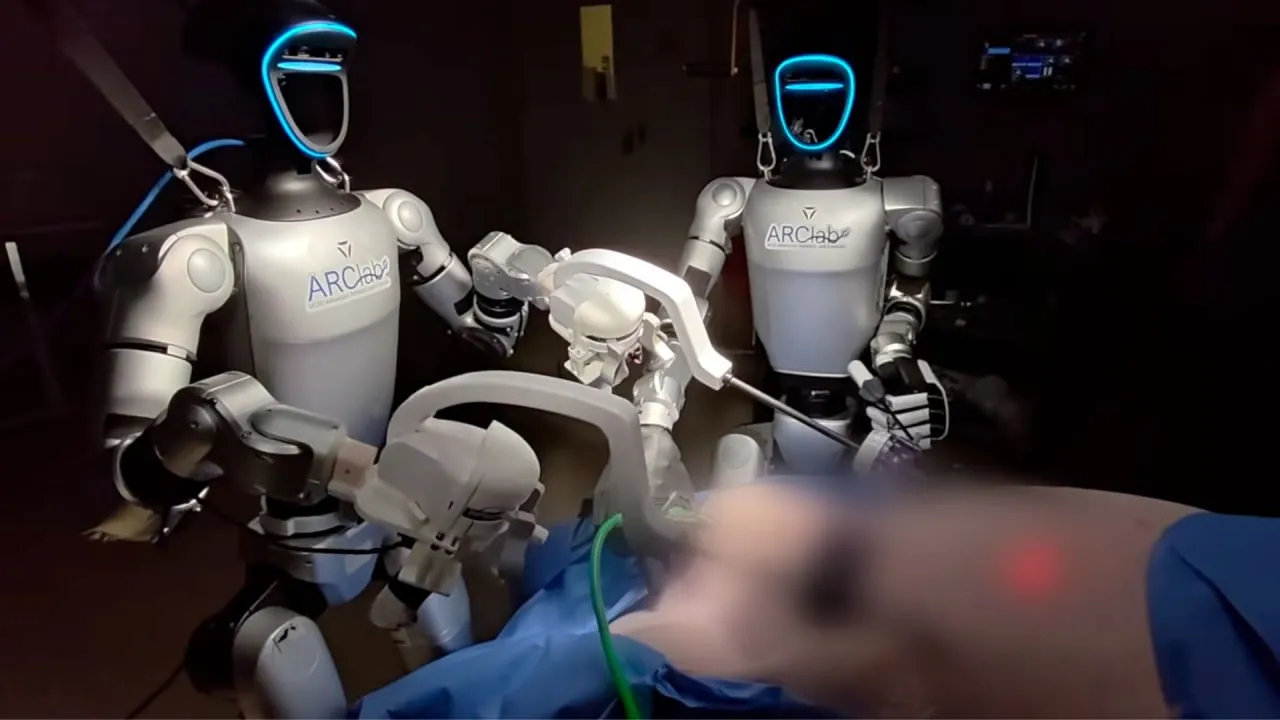
American researchers have, for the first time in the world, successfully used remotely controlled humanoid robots to perform surgical procedures during preclinical trials.
Special adapters allowed the robots to work with standard medical instruments. The technology provides intuitive control and could be an important step in the development of robotic surgery of the future.
The procedures included a gallbladder removal performed by a human-robot team, with a surgeon assisting the humanoid robot, and a second operation performed by two humanoid robots working together. Both surgeries were performed on non-primate large mammals by a team of scientists from the University of California, San Diego (UCSD).
According to the researchers, this milestone demonstrates the potential of teleoperated humanoid robots to assist surgeons in the operating room, with future applications ranging from surgical assistance to remotely performed procedures.
Telecontrolled and autonomous humanoid robots could help address the global shortage of surgeons by expanding access to advanced surgical care, especially in underserved regions where specialized medical services are limited. Their human form and versatility allow them to perform a wider range of clinical and support tasks than conventional robotic surgical platforms, making them suitable for hospitals, remote communities, disaster zones, and search-and-rescue operations.
According to the team, modern robotic surgical systems are highly specialized; they typically consist of three or four robotic arms, proprietary software, and specialized surgical instruments. Weighing about 1,800 pounds (816 kg), these systems require specially built operating rooms, complex setup, and trained support staff, making them expensive and difficult to deploy outside of large medical centers.
By comparison, the humanoid robots used in the study, called Surgie, are about 1.5 meters tall and weigh only 27 kg. Their compact, mobile design allows them to operate in existing operating rooms without significant infrastructure changes, making them more practical for medical facilities with limited resources.
To enable surgical procedures, the researchers equipped the robots with adapters that allowed them to use standard surgical instruments. The robots integrated seamlessly into existing clinical workflows, and operators reported that their human-like controls felt more intuitive than those of traditional robotic surgical systems.
The UCSD team claims that in preclinical trials, teleoperated humanoid robots achieved surgical precision comparable to existing robotic platforms, demonstrating that compact humanoid systems can deliver high-quality surgical performance while making advanced medical care more accessible in challenging environments.
Although the study demonstrated the feasibility of tele-controlled humanoid surgery, several technical challenges remain before this technology can be widely implemented.
During the procedures, the robots required repeated recalibration, which increased the overall duration of the surgery compared to conventional robotic surgical systems. The researchers noted that such limitations are common in the early stages of developing new surgical technologies, pointing out that the first robotic laparoscopic procedures once took several hours, but since then, thanks to continuous improvements, their duration has been reduced to approximately 30 minutes.
Another challenge is communication latency—the delay between the surgeon’s commands and the robot’s movements. Reducing this latency will be crucial, as researchers are working to enable long-distance tele-surgery in remote and underserved communities.
NV Techno previously reported that a robot with expressive eyebrows, designed to perform certain routine tasks for medical staff, is undergoing testing at a hospital in Milan. The robot, called Alter-Ego and standing 1.2 meters tall, can stand in for a doctor working remotely, bring a patient a bottle of water, or escort them to their treatment area. The robot has been undergoing trials since April in a department that treats people with amyotrophic lateral sclerosis (ALS)—a neurodegenerative disease.
“At first, we were afraid that patients might react negatively,” said Christian Lunetta, director of the hospital’s neuromotor rehabilitation department. But they were soon “very pleased, as the robot was designed to spark curiosity, and its movements—or at least its functions—offer a wide range of potential applications.”
This is reported in an article by Interesting Engineering.
Video: Ukraine has received humanoid robots and will send them to the front lines.
“UkrOboronProm” signeda series of memorandums of cooperation at DFNC3.
The Ministry of Defense has codified and approved the use of the new “General Chereshnya” unmanned FPV aerial system in the Armed Forces of Ukraine.




