
Journalists in Tunisia protest over Mohamed Yousfi’s arrest
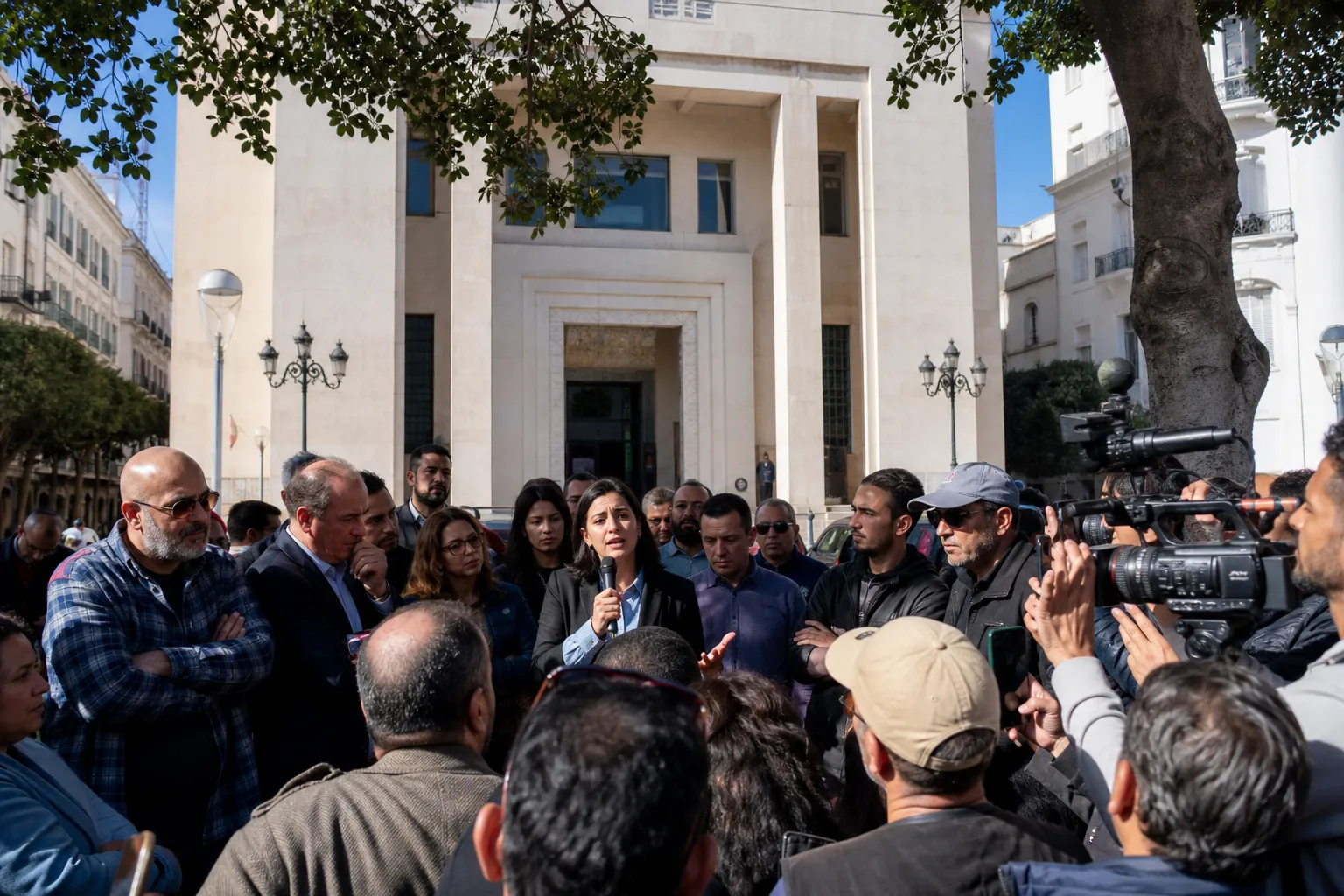
In Tunisia, journalists and activists protested outside a court on Tuesday, demanding the release of Mohamed Yousfi, editor of the investigative website Al-Qatiba. A judge questioned him in a case involving illicit enrichment and money laundering, Asharq Al-Awsat reports.
Editor’s arrest
Yousfi, who has publicly criticized Tunisian President Kais Saied, was detained last Friday when he was due to take part in a program on Express FM radio. His arrest prompted condemnation from human rights organizations, which believe the case is intended to intensify an atmosphere of fear among journalists.
Critics of the authorities say the charges against Yousfi were fabricated to punish him for his hard-hitting journalism. President Saied, for his part, says he will not be a dictator and that freedoms in Tunisia are guaranteed.
Union statements
Zied Dabbar, head of the SNJT journalists’ union, told Reuters that journalists who trouble the authorities face legal persecution and fabricated charges. According to him, journalists are now either going into exile or ending up in prison.
More current news is available on the UA.News Telegram channel Telegram.
Several media representatives have been imprisoned in Tunisia this year, including Zied Heni, Mourad Zghidi and Borhen Bsaies. Khaoula Boukrim was sentenced in absentia to four years in prison in June.
Pressure on opposition and media
Freedom of speech in Tunisia flourished after the 2011 uprising that removed Zine El Abidine Ben Ali from power and triggered pro-democracy protests known as the Arab Spring. At the same time, critics of Kais Saied believe that his concentration of power in 2021 and subsequent decrees weakened democratic safeguards and enabled the authorities to prosecute journalists.
Over the past three years, leaders of the main opposition parties, as well as dozens of politicians, activists, journalists and businessmen, have also been imprisoned in the country. They were charged with conspiracy against state security, money laundering and corruption.


