
Zimbabwe clones wild fruit trees amid miombo forest loss — Mongabay
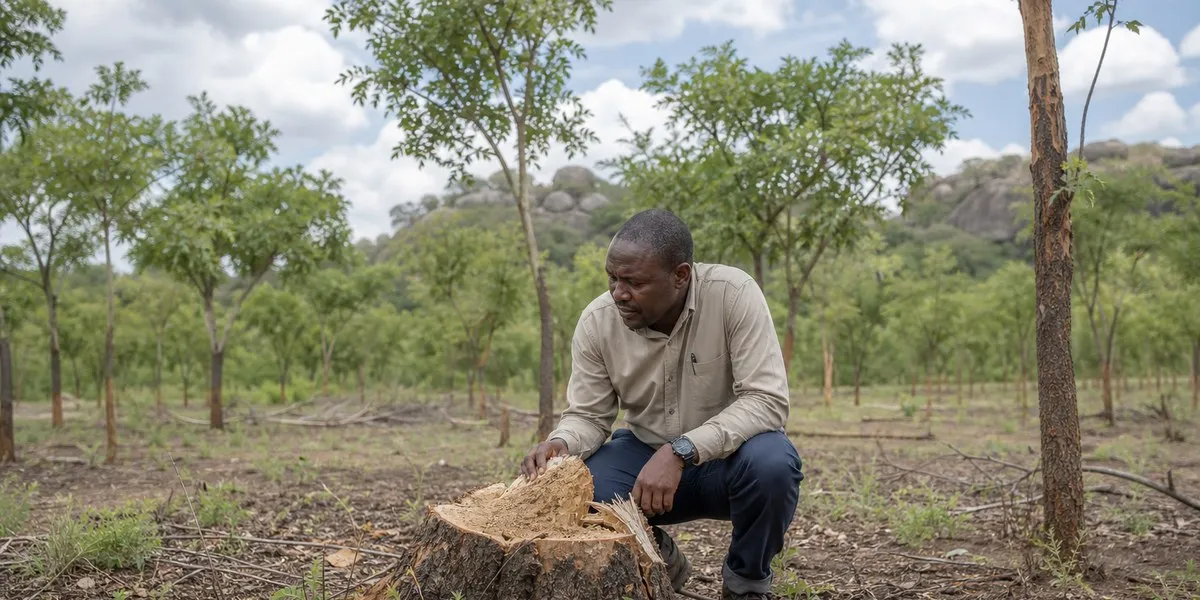
In Zimbabwe, researchers from the international organization Landscape Alliance are preserving and propagating valuable wild fruit trees threatened by logging, fires and the decline of miombo forests. One key species is the wild loquat, Uapaca kirkiana, whose sweet yellow fruits are a source of food and income for millions of people in Southern and East Africa, Mongabay reports.
Wild loquat clones were obtained more than 20 years ago from high-yielding mother trees selected in 25 geographical areas across four countries in the region. One of the field gene banks where these trees grow is located in Domboshava, about 30 kilometers northeast of Harare.
Logging in the gene bank
Alice Muchugi, head of tree diversity and productivity at Landscape Alliance, said that in 2024 fruit sellers near Harare told her about men with chainsaws who cut down some of the particularly productive trees. According to her, the wood was taken to be burned in brick kilns, while the women lost a stable source of income.
After data collection, gene bank staff allowed the women to harvest fruit for sale. Most of the trees cut down in Zimbabwe have duplicates in other Landscape Alliance gene banks in Malawi and Zambia. Muchugi stressed the need for sustainable funding to identify productive trees in the wild, monitor their cultivation and protect the gene banks.
More current news is available on the UA.News Telegram channel Telegram.
According to a study cited by the outlet, more than 500,000 square kilometers of dry miombo forests were lost in Angola, Burundi, the southeastern part of the Democratic Republic of the Congo, Malawi, Mozambique, Tanzania, Zambia and Zimbabwe between 2000 and 2023. This accounts for nearly 22% of the total forest cover of this natural zone.
Faster harvests
A wild loquat grown from seed begins bearing fruit after about 17 years. To shorten this period, specialists have used grafting and air layering since 2003. According to Isaac Nyoka, head of Landscape Alliance in Southern Africa, trees propagated using these methods can produce their first harvest in just four to five years.
In December, around 200 farmers in three agricultural districts in southern, central and western Malawi are expected to receive about 800 grafts, or roughly four per farm. Researchers are also working on cloning Strychnos cocculoides, another miombo fruit tree known as the corky monkey orange.




