
Hungary extends crisis regime over mass migration
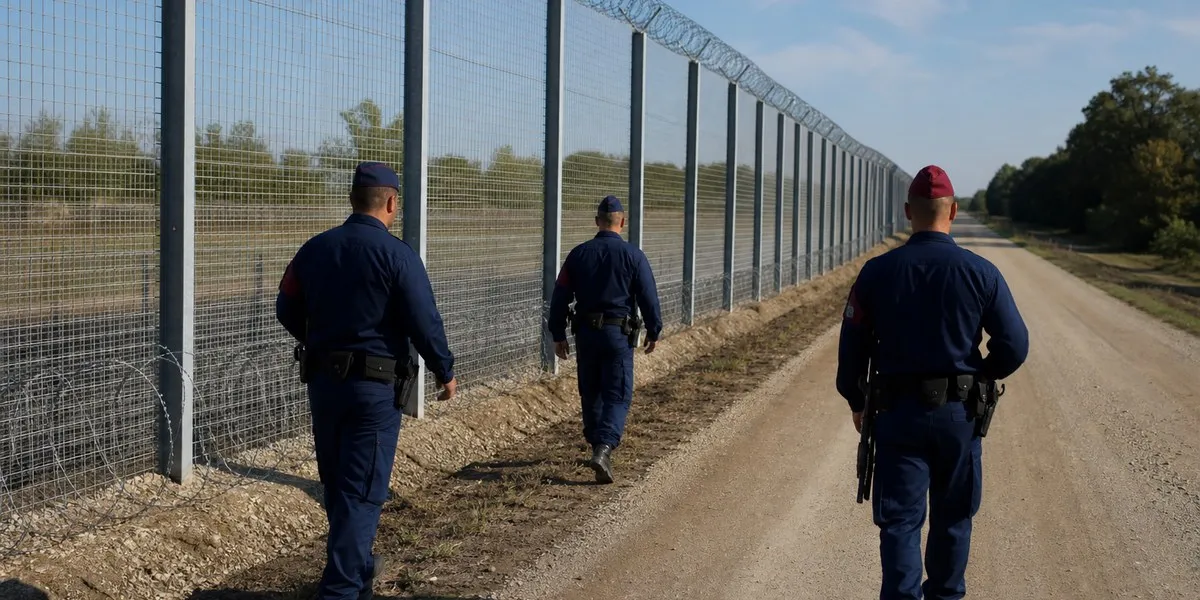
The Hungarian government has extended until December 31 the “crisis caused by mass migration” regime, which grants the authorities extraordinary powers. Prime Minister Péter Magyar said on Facebook on September 4 that the measures had been extended for another four months and stated that the Tisza party government would not ease legal regulations concerning illegal migration.
As Balkan Insight reports, the legislation on this regime was introduced by Viktor Orbán’s previous government in 2016 following the 2015–2016 migration wave. At that time, about 400,000 people, mainly from the Middle East and North Africa, passed through Hungary within several months.
Criticism from human rights defenders
Human Rights Watch called on the Hungarian authorities to end the crisis regime, ensure effective access to the asylum procedure, and bring the system into line with EU and international law. The Office of the UN High Commissioner for Refugees also stated that the current rules continue to deny many people who may need international protection access to asylum procedures.
In December 2020, the Court of Justice of the European Union found Hungary’s broad powers to expel migrants under this regime incompatible with EU law. In June 2024, the court imposed a one-off fine of €200 million on the country and a penalty of €1 million for every day until the legislation is brought into compliance with the ruling. According to the publication, the total amount of fines has already exceeded €1 billion.
More current news is available on the UA.News Telegram channel Telegram.
Under the current rules, people whom Hungarian authorities consider to be staying in the country illegally may be expelled without the possibility of applying for asylum or challenging the decision in court. The Hungarian Helsinki Committee says that such people are usually pushed through the border fence into Serbia without an individual procedural assessment. Official statistics for 2025 record 4,389 so-called pushback incidents.
Negotiations with the EU
Magyar explained the extension of the regime, among other things, by the situation in the Spanish exclave of Ceuta at the end of July. He also demanded that the European Commission effectively write off Hungary’s daily fine. After a meeting in Budapest with European People’s Party President Manfred Weber, Magyar stated that he had secured Weber’s cooperation in negotiations to ease the financial burden.
Márton Schlanger, a researcher at the Budapest-based Republikon analytical center, suggested that the Hungarian government’s hardline position could be part of negotiations on the new EU Pact on Migration and Asylum. In his view, the authorities may formulate a maximalist position that they would later abandon in exchange for a more important goal: not accepting relocated migrants and not paying for their maintenance in other EU countries.


