
Hungary has found a cheap alternative to Russian gas — Index
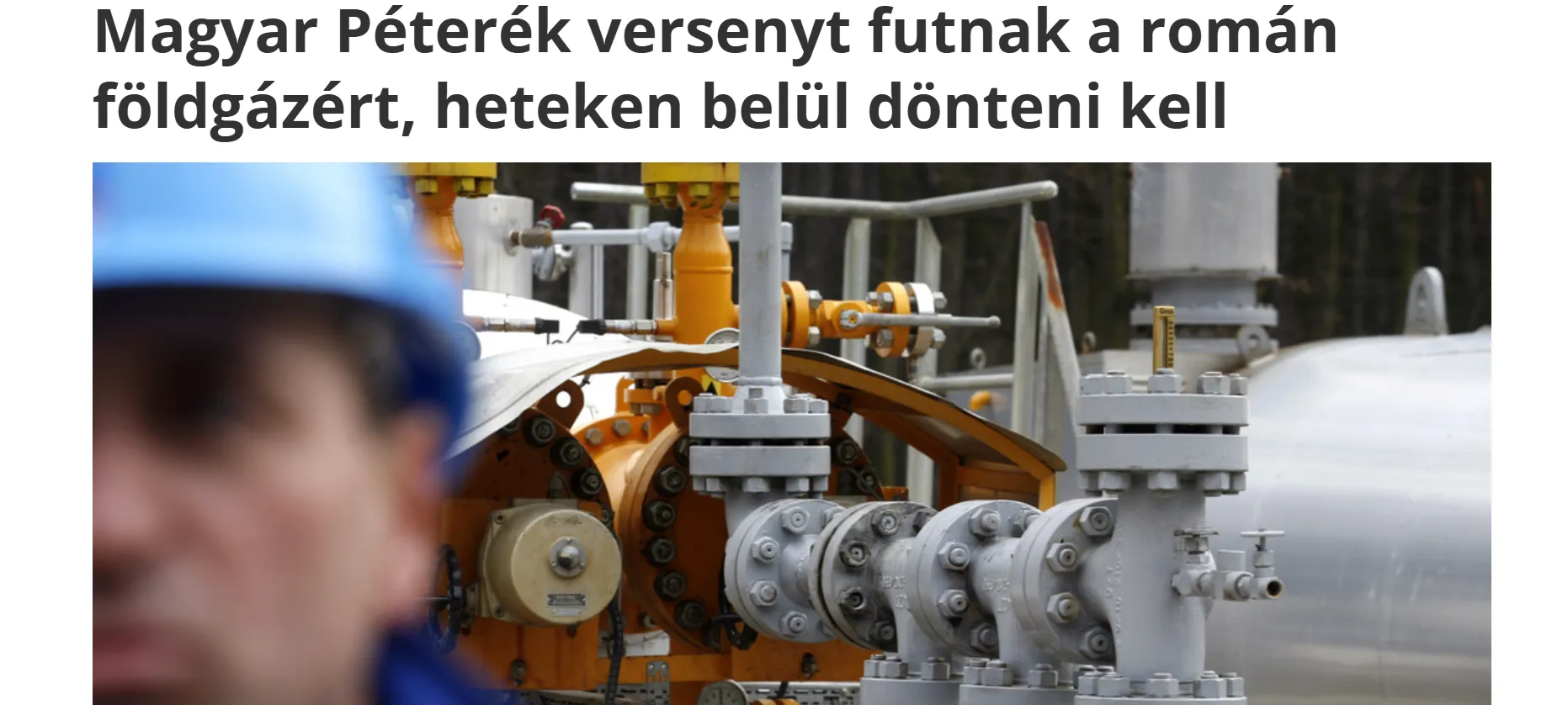
Hungary is actively considering signing an agreement with the Romanian companies OMV Petrom and Romgaz to supply natural gas from the Black Sea field Neptun Deep.
This was reported by the Hungarian news outlet Index.
Production at this site is scheduled to begin in 2027, which will allow Budapest to partially diversify its energy supply sources.
The Hungarian state-owned energy company MVM has already held preliminary negotiations and agreed on the base price for gas from the new deepwater field.
It is expected that Romanian gas for Hungary will not be more expensive than Russian gas. Currently, authorized representatives of both sides are discussing the exact schedule and volumes of fuel supplies.
It is planned that, in the initial phase, Hungary will be able to import up to 1 billion cubic meters of “blue fuel” from the Romanian gas field.
The implementation of this energy project is of strategic importance for reducing Budapest’s dependence on monopoly supplies from Gazprom.
Thus, gas supplies from Romania could replace 20%–25% of Russian gas imports.
According to the publication, the fate of the “blue fuel” supply agreement will be decided in the coming weeks during final meetings between company executives.
Meanwhile, large-scale technical work has already begun in Romania on laying an underwater gas pipeline as part of the “Neptun Deep” project in the Black Sea.
The explored field, with total reserves of about 100 billion cubic meters of gas, could make the country one of the key gas suppliers to Europe once production begins.
The project is considered one of the largest and most secure energy assets of the European Union in the Black Sea region.
Hungary completely blocks agricultural imports from Ukraine
Earlier, the Hungarian government commented on the massive attack by Russian drones on Zakarpattia, during which the region’s critical infrastructure was struck. Budapest described the situation in the border region as extremely alarming and announced that it was preparing urgent countermeasures.
Transcarpathiahas suffered the most massive attack by Russia since the start of the war — Regional Military Administration.


