
Tern colony numbers are recovering in England — The Guardian
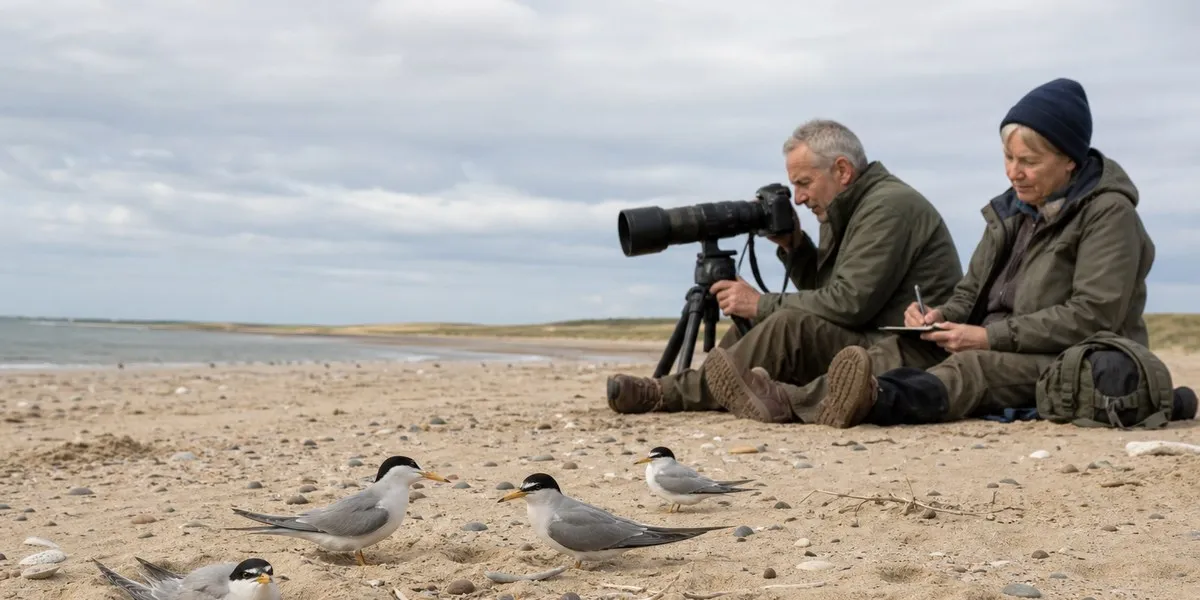
Signs of recovery in tern colonies have been recorded at key nesting sites in England after years marked by bird flu, flooding and increasingly unpredictable weather. The most notable results were recorded at Long Nanny in Northumberland, one of the UK’s important breeding sites for little terns.
As The Guardian reports, the National Trust counted at least 126 pairs of little terns there, twice the previous record for the site. Rangers confirmed that at least 82 chicks fledged and believe the final number could exceed 100.
A record for little terns
Little terns migrate from West Africa to nest on open sandy beaches. The National Trust noted that the species has been declining in the UK for a long time, making the current successful season particularly significant.
More current news is available on the UA.News Telegram channel Telegram.
The number of Arctic terns at Long Nanny also increased somewhat: there were at least 730 breeding pairs there this year, with 1,346 eggs counted in their nests. In 2023, the colony suffered major losses due to bird flu, when rangers found more than 600 dead chicks. In other recent seasons, nests were lost to high spring tides and extreme weather.
The situation is not improving everywhere
At Blakeney Point in Norfolk, more than 1,100 pairs of Sandwich terns returned to breed after a two-year break. Ben McCarthy, the National Trust’s head of nature conservation, said the figures showed the results of careful protection and management of internationally important breeding sites, but urged people not to let their guard down.
At the same time, the National Trust stressed that the situation is not positive for seabirds everywhere. On the Farne Islands in Northumberland, Arctic tern numbers fell by 27%. No common terns were recorded there this year, compared with five breeding pairs last year; the number of Sandwich terns remained at two breeding pairs.




