
More than 420,000 Drupella snails removed from the Great Barrier Reef in Australia
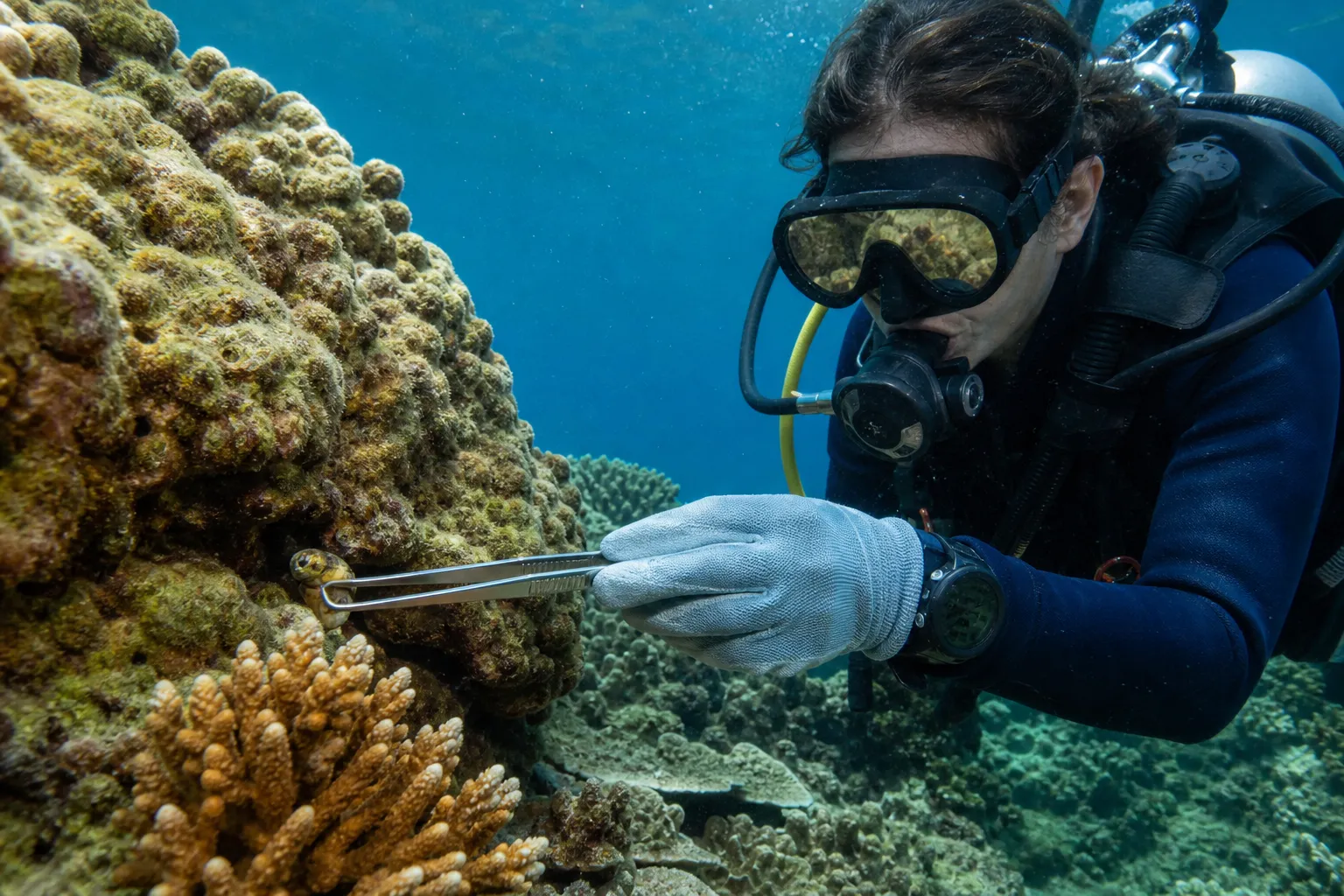
In Australia, tourism operators working on the Great Barrier Reef have removed more than 420,000 Drupella snails, which feed on living coral tissue, since the program began in 2022. These gastropod mollusks, up to 5 centimeters long, can consume corals faster than they can recover, ABC News Australia reports.
Snails threaten coral reefs
Drupella colonies have been found in recent months in the southern Great Barrier Reef, including in the lagoons of Lady Elliot and Lady Musgrave islands off the coast of Bundaberg. Island workers wearing diving or snorkeling gear individually remove the snails from coral crevices using elongated tweezers.
Brett Lacey, owner of the Lady Musgrave Experience tourism company, said his staff collect the snails during daily tours. According to him, during a recent two-hour dive near Lady Musgrave Island, the team removed 1,500 mollusks. He also noted that large individuals that reproduce are being found in the lagoon increasingly often.
A female Drupella can produce nearly 160,000 embryos in a single spawning event. After spawning, the embryos can drift as far as 180 kilometers, creating the possibility for the population to spread across a significant part of the reef.
More current news is available on the UA.News Telegram channel Telegram.
Monitoring and population control
The Tourism Reef Protection Initiative includes 26 tourism operators that help monitor more than 270 sites on the Great Barrier Reef. They track outbreaks of Drupella and crown-of-thorns starfish, which also feed on corals.
Roger Beeden, chief scientist at the Great Barrier Reef Marine Park Authority, said that without proper control, the snails can destroy large areas of coral. According to him, one mollusk can consume an amount of coral tissue comparable to its own size in a day. Research also indicates that their feeding rate increases as water temperatures rise.
Scientists believe that agricultural runoff, which increases nutrient levels in the water, may contribute to the spread of the snails. Jessica Blackmore, environmental manager of Lady Elliot Island, said that regular removal of the mollusks helped reduce their numbers to a level at which corals can recover naturally.


