
4th-century tomb with Greek mourning poem found in Egypt — Live Science
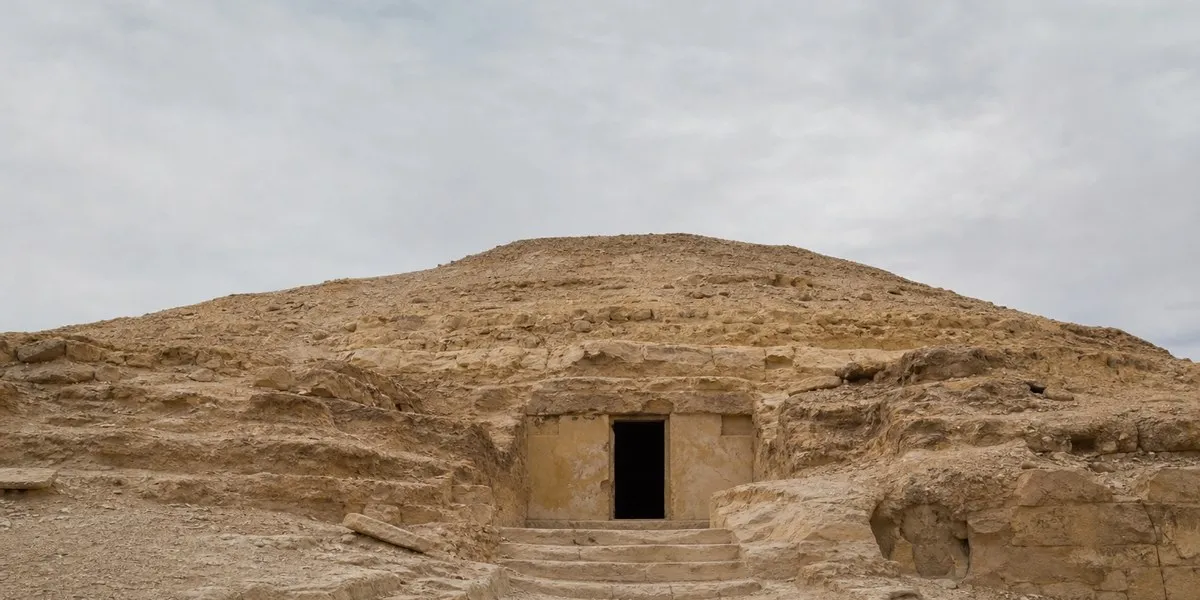
Archaeologists in Egypt have discovered a limestone tomb about 1,700 years old in the Dakhla Oasis. A 19-line mourning poem in ancient Greek is carved on a stone slab inside it. The tomb, with a pyramidal roof, dates to the 4th century — a period when Egypt was under the rule of the Roman Empire. It was found near the ancient city of Motis, modern-day Mut, Live Science reports.
A poem for Pisecht
The tomb was built for a married couple. The deceased man was named Pisecht; according to Egypt’s Ministry of Tourism and Antiquities, he may have been a judge. The poem praises him for his kindness and wisdom and calls him a counselor in life.
Angelos Chaniotis, a researcher at the Institute for Advanced Study in New Jersey who was not involved in the excavations, described the inscription as a highly artistic and original epigram. According to him, its grammar resembles the language of the Homeric epics. In the final lines, Pisecht’s son Sarapion addresses his father and asks him to accept memorial libations and gifts from the children who mourn him.
More current news is available on the UA.News Telegram channel Telegram.
Spells and finds
The tomb also contains hieroglyphic inscriptions with spells intended to protect the deceased. Some of the texts mention fragments of the “Amduat,” a work about the journey of the sun god through the underworld.
Fourteen steps lead to the entrance. It is decorated with images of a winged sun disk, the god Osiris and two cobras. Archaeologists also found an offering table, a purification basin, pottery and at least one coin depicting the Roman Emperor Constantine the Great, who ruled from 306 to 337.
Above the tomb entrance is a mud-brick sanctuary that, according to specialists’ assessment, was built after the burial of Pisecht and his wife. This may indicate that the tomb was reused later.




