
3,000-year-old horse burial found in Egypt — Live Science
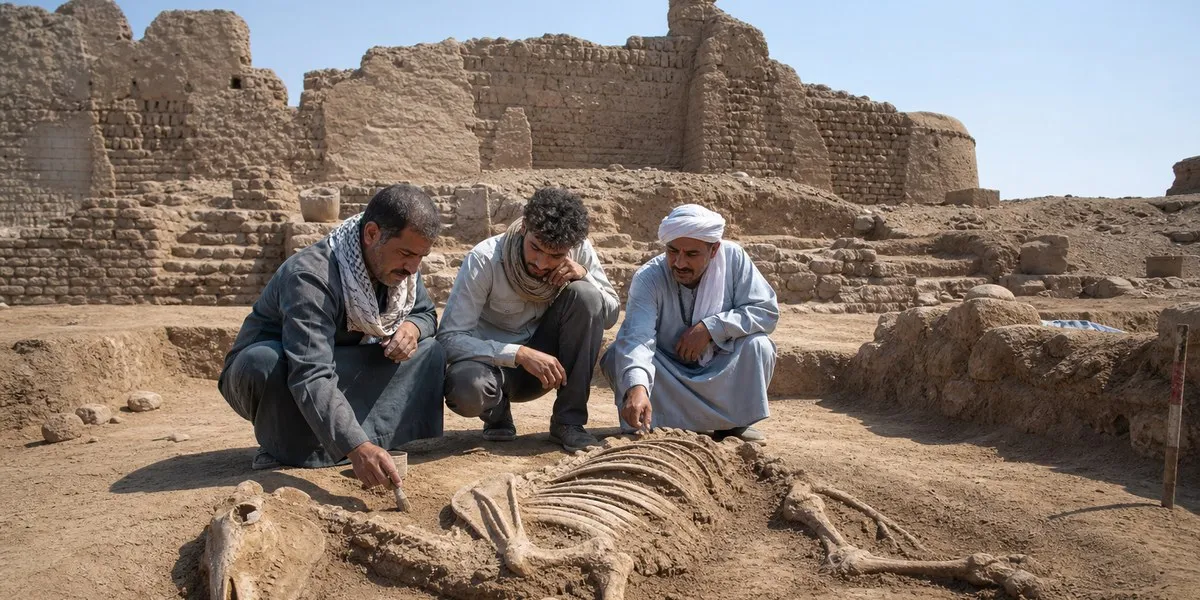
Archaeologists have discovered the burial of a horse about 3,000 years old in an ancient Egyptian fortress in the western part of the Nile Delta. It was a young, medium-sized male that may have pulled a chariot or performed other military duties, Live Science reports.
The horse and harness details
Near the skeleton, researchers found remains of harness parts for a chariot horse. Egypt’s Ministry of Tourism and Antiquities believes the animal was likely buried ceremonially.
The discovery was made at a fortress at the Abqaa archaeological site in Egypt’s Lake District. The fortress dates to the New Kingdom period, approximately 1550–1070 BC, and was used to defend against hostile Libyan tribes in the west.
More current news is available on the UA.News Telegram channel Telegram.
Lonneke Delpeut, a researcher of ancient Egyptian horses at the University of Vienna, noted that horse remains, and especially complete skeletons, from pharaonic Egypt are rare. At the same time, she cautioned against definitively identifying the animal as a war horse, since there is no clear concept of such a horse for Ancient Egypt. In her view, it was certainly a chariot horse, and its careful burial indicates its value.
Slabs with hieroglyphs
During the excavations, a stone slab depicting a captive Libyan was also found. According to Egypt’s Ministry of Tourism and Antiquities, his clothing indicates that he belonged to the Meshwesh tribe, with which Egypt was often in conflict. The captive is shown with his hands bound behind his back and his body bent — this pose was meant to signify submission.
Other artifacts include a hieroglyphic slab bearing the name of Pharaoh Ramses II, who ruled approximately from 1279 to 1213 BC. Another slab mentions Pharaoh Merneptah, who ruled approximately from 1213 to 1203 BC, and compares his strength to Seth, the ancient Egyptian god of the desert and storms.


