
At least 120 Roman inscriptions identified in a cave in Spain
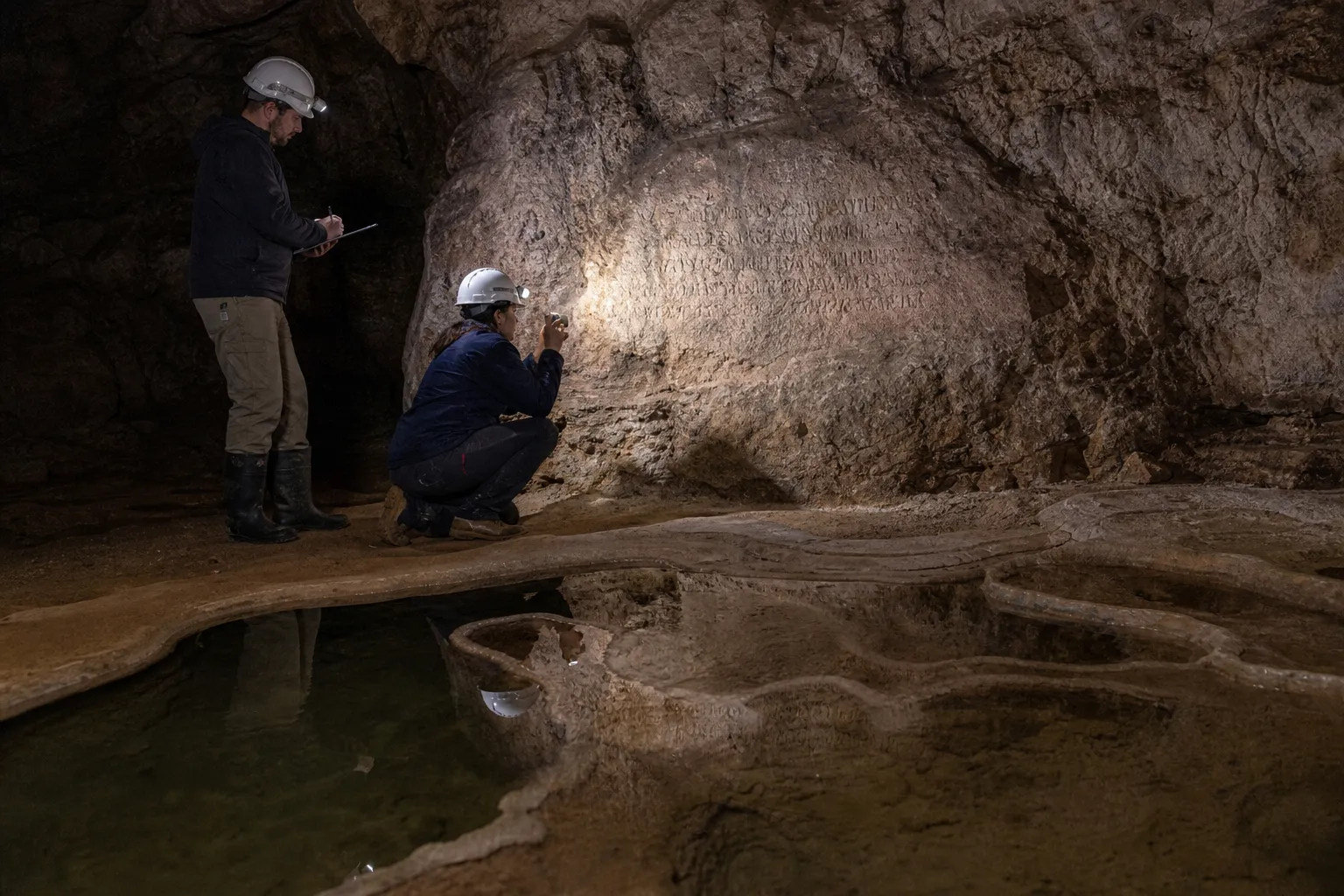
In the Cova Dones cave in Valencia, eastern Spain, researchers have identified at least 120 Latin inscriptions dating to the 1st–2nd centuries CE. The inscriptions were found on the walls and ceiling of a section of the cave located more than 200 meters underground. The Jerusalem Post reports on the research findings.
A sanctuary deep inside the cave
Work in May and June was carried out by a team led by Virginia Barciela of the University of Alicante and Aitor Ruiz-Redondo of the University of Zaragoza. The University of Alicante announced the results at the end of July.
By 2026, approximately 15 Latin inscriptions were known at the site. Archaeologists discovered the Roman layer in the cave in 2024. At that time, they also found around 15 Latin inscriptions and a coin from the reign of Roman Emperor Claudius, who ruled in 41–54 CE.
The researchers noted that the texts are concentrated in a separate part of the cave, remote from the entrance, which, in their view, indicates an organized cult. The cave floor contains small natural pools — gours — formed by water seeping through the rock.
More current news is available on the UA.News Telegram channel Telegram.
Inscriptions in honor of Domina
Epigraphist Silvia Alfayé of the University of Zaragoza said that five votive inscriptions confirm the worship of a deity whom visitors in the Roman era called Domina — ‘Lady’ in Latin. Three inscriptions contain MALACI, a previously unknown epithet of the goddess.
According to Alfayé, this aspect of the deity may have been associated with water, although the final interpretation is still being developed. Epigraphy specialist Sergio García-Dils believes that at least five dedications to one deity and the location of the texts in a separate part of the cave point not to random visits, but to deliberate cult activity.
Possible involvement of women
Several female names are among the inscriptions already documented. The team suggests that Cova Dones may have been a cave sanctuary visited by women. Researchers also found several spindle whorls — objects used for spinning — and suggested that they may have been left as offerings, since spinning was associated with the female sphere in antiquity.
The cave attracted archaeologists’ attention in 2023, when more than 100 Paleolithic rock images were found there. According to the researchers, this is the largest collection of Paleolithic art discovered in the eastern Iberian Peninsula. In 2025, scientists also identified more than 100 fragments of stalagmites altered by human hands.


