
Second Temple-era mikveh complex excavated in Israel — Jerusalem Post
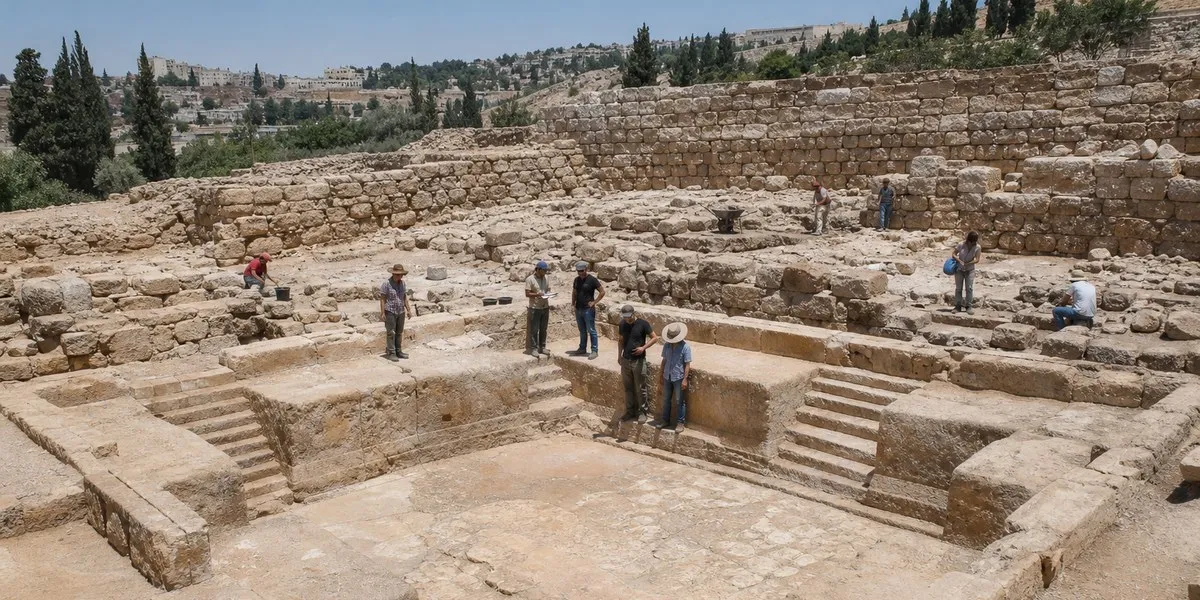
In Jerusalem, Israel, archaeologists have discovered a large complex containing several ritual baths, or mikvehs, and a central pool, which was likely used by Jewish pilgrims before heading to the Temple Mount during the Second Temple period. Excavations at the Ophel archaeological site were conducted over five seasons by Hebrew University of Jerusalem professors Uzi Leibner and Orit Peleg-Barkat, the Jerusalem Post reports.
The complex, covering about 280 square metres, is located approximately 50 metres from the now-sealed Triple Gate, which in antiquity was one of the main entrances to the Temple Mount. According to the researchers, during the Second Temple period, underground stairs led from the gate to the central part of the Temple Mount plaza.
Pool and ritual baths
At the centre of the complex, archaeologists uncovered a large plastered pool measuring approximately 12 by 9.5 metres. Stairs descended into it from all four sides. The structure is dated to the beginning of the 1st century CE.
Northwest of the pool, a hewn-stone structure with four rooms was found. Three of them were identified as mikvehs — baths for ritual purification — also dated to the beginning of the 1st century. Between the central pool and the stone structure was a courtyard paved with large slabs of carefully worked stone.
More current news is available on the UA.News Telegram channel Telegram.
All three mikvehs had a rare structural feature: drainage openings hewn into the floors of the baths. Like the central pool, they were connected to a drainage system that carried water into the Kidron Valley. In Leibner's view, this feature may indicate a constant supply of flowing water, possibly connected to an aqueduct that supplied water to the Temple Mount from the Hebron Hills area.
Traces of the destruction of 70 CE
One of the mikvehs was preserved to its full height of 4.2 metres, along with a stone vault and a shaft through which water entered it. During the Byzantine period, it was used as a water reservoir.
Beneath the monumental complex, the expedition also discovered the remains of an earlier public structure for ritual purification with a large mikveh, probably dating from the 1st century BCE. The researchers believe it ceased to function after the construction of a later drainage channel that crossed its pool.
The complex was destroyed in the summer of 70 CE during the destruction of Jerusalem and the temple by the Romans. Archaeologists cited dozens of coins from the period of the First Jewish Revolt against Rome, found in different parts of the structure, as evidence of this. After the destruction, the site remained abandoned for several centuries, and residential buildings were erected there during the Byzantine period.




