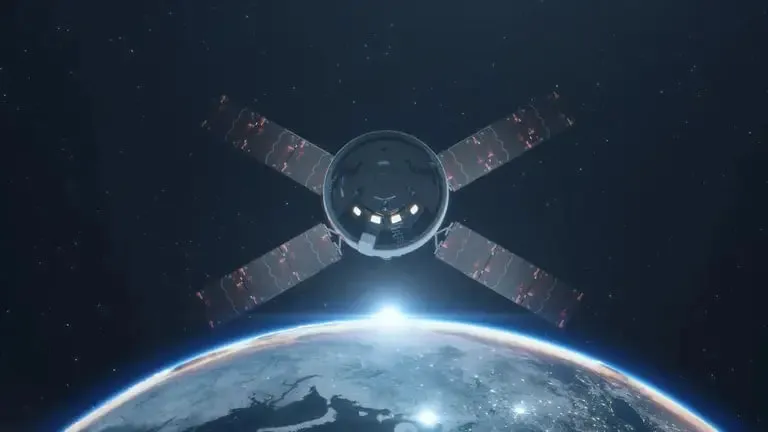
NASA is preparing to unveil the next phase of the Artemis lunar program and announce the crew for the Artemis 3 mission. According to the agency, an official announcement is expected in just a few weeks. This mission is set to be a key step in plans to return humans to the Moon’s surface.
Space.com reports on this. The U.S. space agency NASA has officially confirmed that on June 9, it will introduce the Artemis 3 mission crew and share new details about flight preparations.
The Artemis 3 mission has become one of the most important parts of NASA’s current lunar program. It is intended to lay the groundwork for the next astronaut landing on the Moon as part of Artemis 4. According to the agency’s current plan, Artemis 3 is scheduled to launch in mid-2027.
When will NASA reveal the Artemis 3 crew?
NASA will hold a crew presentation at the Johnson Space Center in Texas. The agency has not yet named the astronauts, but has confirmed that the team will consist of four people.
Importantly, the mission no longer involves a lunar landing. Artemis 3 was initially envisioned as the first U.S. crewed lunar landing since the Apollo program. However, in February, NASA Administrator Jared Isaacman announced a major change to the Artemis program architecture.
Now, Artemis 3 will carry out a different task. The mission will test complex docking and rendezvous operations in Earth orbit between the Orion capsule and lunar landers. NASA is considering two lunar lander options: SpaceX’s Starship and Blue Origin’s Blue Moon.
It is after these tests that NASA plans to proceed with a full-scale astronaut landing as part of Artemis 4. If the schedule remains unchanged, the mission could deliver humans to the region of the Moon’s south pole by the end of 2028.
Why is Artemis so important?
The Artemis program has become the United States’ flagship space project for the coming decade. NASA aims not merely to replicate the success of Apollo, but to establish a long-term human presence on the Moon.
Unlike the short expeditions of the 1960s and 1970s, the new program calls for regular flights, the construction of the Gateway orbital station, and the use of commercial space systems from private companies.
As part of Artemis, NASA is also testing a new model of cooperation between the government and the private sector. Whereas spacecraft were previously built exclusively by government contractors, critical mission components are now being developed by private companies. That is why SpaceX and Blue Origin have been given key roles in the lunar program.
Artemis 2 was an important step toward the new mission. Prior to Artemis 3, NASA successfully carried out the Artemis 2 mission. It launched on April 1 of this year and became the first crewed flight around the Moon under the new program.
NASA announced the Artemis 2 crew back in April 2023—about two years before the mission’s launch. The agency is using a similar approach now.
The success of Artemis 2 was critical for the entire program. During the flight, NASA tested the SLS rocket, the Orion spacecraft, and life support systems for long-duration missions in deep space.
Why the new phase of Artemis could transform the space industry
Artemis 3 will effectively serve as a dress rehearsal for future lunar infrastructure. Docking large space systems in Earth orbit is one of the most challenging tasks in modern spaceflight. It is precisely these technologies that NASA plans to use not only for flights to the Moon but also, in the future, for missions to Mars.
For SpaceX, the mission will also serve as another test of the Starship system, which Elon Musk’s company is promoting as a universal vehicle for interplanetary flights. Jeff Bezos’s Blue Origin is simultaneously working to demonstrate the readiness of its Blue Moon landing module.
The competition between the two companies is gradually evolving into a new phase of the space race—no longer between nations, but between private corporations.
NASAhas unveiled plans to establish the first permanent base on the Moon — Associated Press.
Earlier, the Japanese probe Hayabusa-2 delivered organic compounds from the asteroid Ryugu. And NASA researchers have detected organic compounds, including sugar molecules, in samples delivered from the asteroid Bennu.
The Curiosity rover has identified more than 20 types of organic molecules, including a nitrogen-containing compound structurally similar to the building blocks of DNA.