$ 44.29 € 51.47 zł 12.15
+19° Kyiv +19° Warsaw +21° Washington

Latvia is fortifying its border with Russia with anti-tank trenches and dragon's teeth
UA NEWS 28 May 2026 13:34
Latvia is fortifying its border with Russia with anti-tank trenches and dragon's teeth

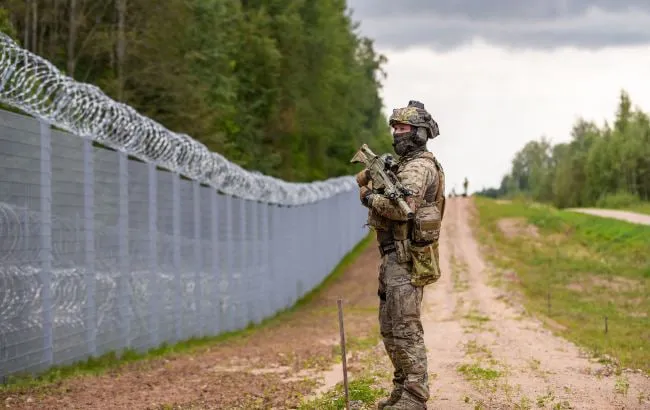
The Latvian National Armed Forces have begun installing defensive structures along the border with Russia. These include anti-tank trenches and so-called “dragon’s teeth,” which reach a height of about 10 meters. The aim of these measures is to strengthen the country’s defense capabilities and protect its national border.

This was reported with reference to LSM.

It is noted that this land was previously expropriated for national defense purposes, as the construction of the Baltic Defense Line infrastructure is planned directly along the border, including areas where private property is located.

The barriers are arranged in three rows, each approximately 10 meters wide, and are designed to prevent the movement of military equipment across the border.

Each of the dragon’s teeth weighs about one and a half tons. Military officials noted that the gaps between them are small, so military equipment cannot pass through.

The manufacture and delivery of the barriers to their deployment sites began as early as 2024, but their physical installation on state and municipal lands began in 2025.

Land expropriation became one of the biggest challenges, as part of the infrastructure is being built on private property, but the Law on the Creation of Anti-Vehicle Infrastructure significantly accelerated this process. "

"Before the Law on the Creation of Anti-Vehicle Infrastructure was adopted, we faced restrictions. We couldn’t simply go in and begin deploying these mobility barriers on private land. At this point, that issue has been resolved," noted Andris Riksts, the officer in charge of the "Baltic Defense Line" project.

According to the publication, landowners will receive fair compensation for the expropriation of land necessary for infrastructure construction, which will be determined by a special commission with the assistance of a certified real estate appraiser.

The purpose of the defense line is not only to deter a potential adversary but also, if necessary, to stop and destroy it while it is still at the border.

"If something happens, we need to be able to destroy them here, because we see this in Ukraine—once we give up land, it is practically impossible to get it back," Riksts noted.

He emphasized that in modern warfare, it is not only defense against drone and missile attacks that is important, but also control over the ground.

“They won’t be able to subdue us with drones. In Ukraine, we see that hundreds of drone and missile attacks occur every day, but as long as the land is held and no one physically comes and drives people from their homes, this land is ours,” the officer added.

In addition to the "dragon’s teeth," the construction of anti-tank trenches is also planned for the future.

The total length of Latvia’s border with Russia and Belarus is approximately 450 km. This year, Latvian troops plan to build over 8 km of anti-vehicle infrastructure.

Lithuaniahas warned of a dangerous situation in the skies over the Baltic region.

Latviaresponded to Moscow sharply and without diplomatic niceties.

On the morning of May 23, another drone incursion was recorded in Latvia. Prior to this, air raid alerts due to UAVs had been declared in the country almost every day this week.

According to The Telegraph, Russia has allegedly learned to intercept and “redirect” Ukrainian drones, forcing them to fly toward NATO countries. Due to massive electronic warfare attacks, the drones lose their bearings and begin to veer off course.


Read us on Telegram and Sends

Завантажуй наш додаток