
Italy's Supreme Court has upheld Ukraine's right to protect the children of our citizens
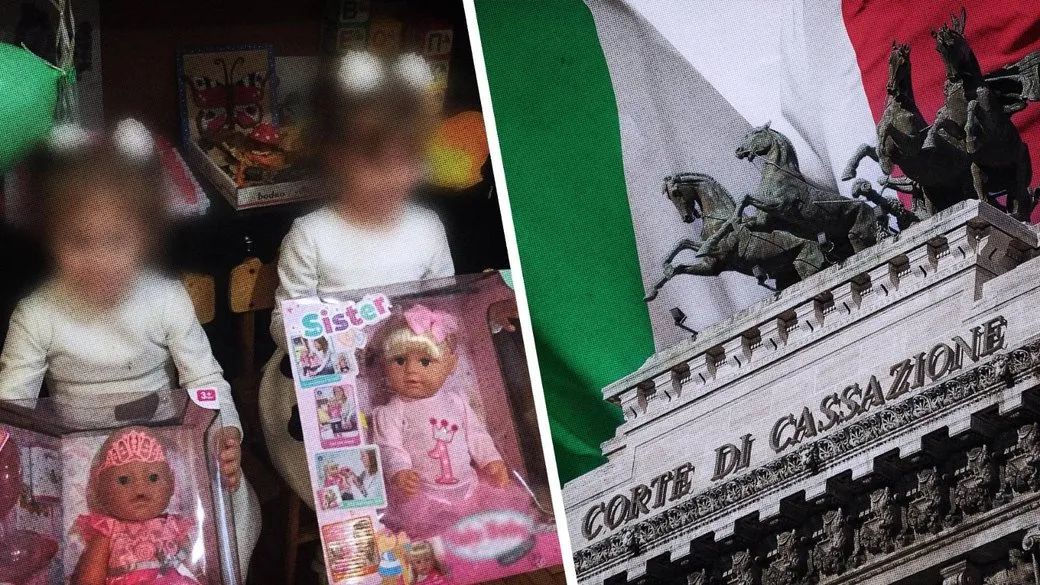
The Italian Supreme Court overturned the decision to appoint a local lawyer as the guardian of two Ukrainian twin sisters. The court effectively ruled that guardians and lawyers for Ukrainian children residing in Italy must be appointed by the Ukrainian side. At the same time, the court did not review the girls’ refugee status, which had previously been granted to them in Italy.
The Joint Chambers of the Italian Supreme Court issued their ruling on July 26, 2026. The case concerns two nine-year-old twin sisters from Ukraine. The girls arrived in Italy after the start of Russia’s full-scale invasion. There, an Italian court appointed a special guardian for them—a local attorney, Riccardo Liotta. He subsequently secured refugee status for the children. This occurred despite the Ukrainian side’s opposition.
Now, the Italian Supreme Court has overturned the decision appointing Liotta as the girls’ guardian. International lawyer Rosa Emanuela Lo Faro, who represented the Ukrainian side, explains: the court clearly defined who has the right to appoint guardians and legal representatives for children from other countries. According to her, this authority lies with the consul of the country from which the children arrived.
In other words, in the case of Ukrainian children, such decisions must be made by the Ukrainian side. An Italian court may intervene only if the consul fails to fulfill his or her duties—that is, if the consul appoints neither a guardian nor a guardian ad litem. In such a situation, the Italian judge may personally appoint a person to represent the child’s interests. In the case of the twin sisters, according to the Ukrainian side, the situation was different. The Ukrainian consul officially appointed both a guardian and a curatorial attorney for them. However, the court in Catania did not take this into account and appointed a local attorney for the children.
Yulia Dinnichenko, the sisters’ official guardian—who personally appealed the decision in Italy—calls the Supreme Court’s ruling a landmark decision. “This is a landmark decision, because initially the Italian courts recognized that the consul could only appoint guardians. Now they have recognized that he can also appoint lawyers for the children. This definitively establishes that children deprived of parental care must be looked after by the Ukrainian side,” said Dinnichenko.
What Will Happen to the Refugee Status of the Girls
Despite the Ukrainian side’s victory, the Supreme Court’s decision does not automatically revoke the refugee status the girls received in Italy. The reason is that the court considered the issue of the guardian’s authority, not the refugee status itself. Therefore, the decision to grant the sisters refugee status formally remains in effect.
Rosa Lo Faro points out an important detail. According to her, when Liotta represented the children’s interests before the commission reviewing the application for refugee status, he failed to disclose that the girls already had a legally appointed Ukrainian guardian. In other words, the children were effectively presented as being unaccompanied by a legal representative. This is precisely why the Ukrainian side wishes to separately challenge the status granted to the girls.
Dynnychenko explains that the Supreme Court did not consider this issue for procedural reasons. The question of the girls’ refugee status was not raised in her appeal filed on February 18, 2024. According to the guardian, this status did not yet exist at that time—it was granted to the sisters only in May 2024. “The fact that they had refugee status became known during the Supreme Court’s consideration of the case, when Liotta himself attached these documents to his response to the appeal. Upon seeing this new circumstance, the judge added it as a separate item to the list of issues to be resolved by the Joint Chambers. Therefore, we expected the court to address this in the same way as the other issues on the list,” Dinnichenko explained.
Now the Ukrainian side plans to proceed through administrative channels. The next step is to appeal to the Italian Ministry of the Interior. It is under the Ministry’s jurisdiction that the commission which granted the girls refugee status operates. The Ukrainian side seeks to have this status revoked. Rosa Lo Faro also stated that she plans to challenge the refugee status of other Ukrainian children who were granted it in Italy against the wishes of their Ukrainian guardians and custodians.
How Ukrainian Children Ended Up Under the Custody of Italian Courts
The story of the twin sisters and their guardian, Yulia Dinnichenko, was previously told by journalists from Suspilne’s investigative unit in the documentary “Protected from Their Homeland: How Italian Courts Take Ukrainian Children Away.” After the start of the full-scale invasion, approximately 5,000 Ukrainian orphans and children deprived of parental care were evacuated to 19 European countries.
This process took place without a single centralized plan for routes or prior agreements with all the countries receiving the children. In March 2022, Yulia Dynnychenko’s organization “New Horizons” took in 21 Ukrainian children in Italy. Among them were 16 children from the Chynadiyevo orphanage in Zakarpattia. However, some of the Ukrainian children fell under the purview of Italian law.
Specifically, this refers to the so-called “Zampa Law” of 2017. It stipulates that a child arriving in Italy without parents or legal guardians automatically receives the status of an unaccompanied minor. This is where the problem arose. In some cases, Italian authorities did not recognize the guardians previously appointed by Ukraine. Among them were orphanage directors, foster parents, and temporary guardians from civil society organizations.
Instead, Italian authorities began appointing their own guardians for the children. This is what happened with the children brought to Italy by Dinnichenko’s organization. The Juvenile Court of Catania refused to recognize her authority over the children her organization had taken in.
However, the case eventually reached the Italian Supreme Court. A year later, after reviewing the cases of four Ukrainian children, the court recognized Dynnichenko as their legal representative. This decision became an important precedent for advocates of Ukrainian children in other similar cases. However, despite this decision, two nine-year-old twin sisters were never returned to Dinnichenko’s care. The girls are currently living with an Italian family. The Ukrainian guardian has no access to them.
Why This Decision Is Important
The new Supreme Court ruling applies not only to the two sisters. The Ukrainian side believes it could influence other cases where Italian authorities have appointed local guardians or attorneys for Ukrainian children instead of the representatives designated by Ukraine. In effect, the court confirmed that if the Ukrainian side has already legally appointed a guardian or a curatorial attorney for a child, an Italian court cannot simply ignore that appointment.
At the same time, the issue of refugee status remains a separate legal procedure. It is precisely this issue that the Ukrainian side now plans to resolve through Italian administrative authorities. For the twin sisters, this means that the Supreme Court’s decision has become an important step in the fight to have the Ukrainian guardian’s authority recognized. But it has not yet resolved the main issue—whether the girls will return to Ukrainian custody and whether the refugee status granted to them in Italy will be revoked. Suspilne’s investigative team covered this in the documentary “Protected from Their Homeland: How Italian Courts Take Ukrainian Children Away.”
Italian authorities have declared a red alert due to abnormal heat in all 27 of the country’s largest cities. The cause is extremely high temperatures, which are approaching 40°C in some regions, as well as a threat to public health.


