
The war in Iran is hitting European jobs due to soaring energy prices
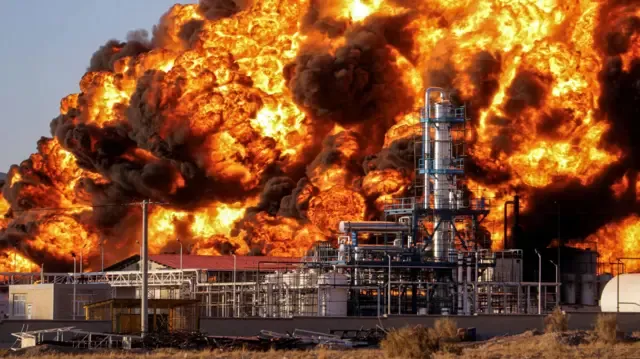
Europe once again finds itself in a situation where politics and war are directly impacting the economy, and this time the consequences could be far-reaching, as key manufacturing sectors are under immediate pressure due to a sharp rise in energy prices. According to estimates by European institutions, the risks are so serious that the labor market could lose up to 1.3 million jobs in the near future.
The European economy is currently operating under constant strain, where any new external conflict immediately impacts fuel, electricity, and logistics costs, and it is the conflict between the U.S. and Iran that has once again destabilized the energy market. As a result, companies in the EU have begun to calculate losses not in millions, but in jobs, and the forecasts look quite alarming.
According to the European Commission and analysts, the automotive industry may be hit the hardest, with up to 600,000 workers at risk, as this sector is the most dependent on stable logistics, steel, electronics, and energy resources, all of which are rapidly becoming more expensive. At the same time, the construction, metallurgy, chemical, and transportation sectors are under pressure, and together they could lose tens of thousands of jobs, which would be a serious blow to the EU labor market.
Separately, experts point to new technological sectors that were once considered drivers of the future, but are now also at risk, particularly battery manufacturing—where approximately 85,000 jobs could be at risk of elimination—and the solar panel sector, which is also under pressure due to rising costs of components and logistics. The steel industry is also affected, where additional environmental requirements, combined with high energy costs, create yet another layer of risk for thousands of workers.
All these developments are affecting the overall structure of the EU labor market, where the manufacturing sector employs about 30 million people and the service sector accounts for nearly 87 million jobs; even a small decline in industry could trigger a domino effect. That is why analysts warn that the current energy instability could hit not only factories but also consumers, as lower-income households are already forced to spend more on transportation and basic expenses.
In fact, Europe finds itself in a situation where a global conflict thousands of kilometers from its borders is directly affecting jobs, wages, and the stability of entire industries, and so far, economists are reluctant to predict when this pressure will begin to ease. This is reported by Reuters.
As a reminder, amid the escalating situation in the Middle East, the discount on Russian Urals crude began to rise for the first time in recent months. However, experts say that high oil prices will not save the Russian economy from a slowdown.
The price of Russian Urals crude at Indian ports jumped to a record $121.65 per barrel.


