
Scientists have explained why rivers in Alaska turn orange
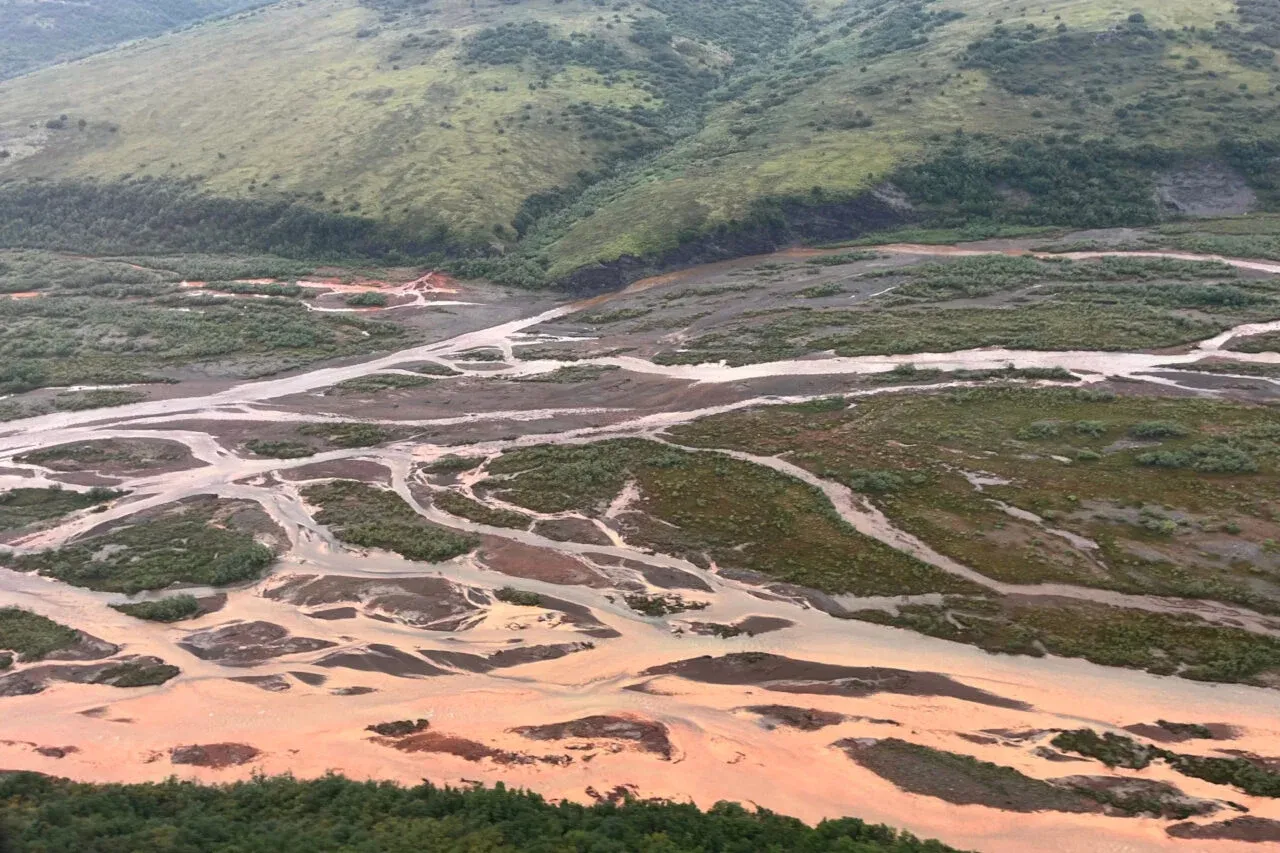
Scientists at the University of California have discovered why rivers in Alaska suddenly turn bright orange—the cause is toxic iron released as permafrost melts. This is not just a strange natural phenomenon, but a consequence of large-scale climate change that is already affecting water, fish, and entire ecosystems. Researchers warn that the process is likely to intensify.
The problem of “rusty” rivers in Alaska has long attracted the attention of scientists, but now they have been able to clearly explain the mechanism that triggers this discoloration of the water, and it turned out to be much more complex than simple natural pollution. Studies have shown that the melting of permafrost opens up new channels in the soil through which water begins to leach out iron compounds that had been securely “sealed” underground for millennia. As a result, these elements end up in rivers, where they react with oxygen and literally turn into rust, which colors the water orange.
Scientists describe two distinct scenarios for this process, both of which depend on the terrain. In mountainous areas, permafrost thaw triggers acid rock drainage, similar to what occurs near mines, where pyrite, upon contact with water, decomposes to form sulfuric acid and releases toxic metals. As biochemist Tim Lyons explains, it is the combination of iron and oxygen that creates the very rust-like particles that settle in water bodies and change their color.
In low-lying areas, the mechanism is different but no less dangerous: there, microorganisms are activated that “process” the iron and make it more mobile in the water. As they travel further downstream, these compounds oxidize again and form a sediment that can spread for tens or even hundreds of kilometers. This is why orange spots and murky areas appear farther and farther from where the process begins.
Data published in the journal Communications Earth & Environment indicate that the problem has already become systemic in northern Alaska. Contaminated water degrades ecosystems: it inhibits algae growth, reduces insect populations, and harms fish by clogging their gills with fine iron particles. Environmentalists emphasize that even remote and seemingly protected areas are no longer isolated from the effects of global warming.
Researchers also note that the situation is partially predictable: warm seasons with significant snow cover often precede large-scale “rusting” of rivers in subsequent years. This gives local authorities a chance to at least warn communities in advance and try to reduce the impact of pollution on the lower reaches of rivers.
As Tim Lyons sums up, “even where nature seems farthest from human influence, the effects of climate change can no longer be hidden—there are no safe places left.”
While festive lights are already being lit in Anchorage, at the very edge of the Aleutian Arc—the islands of Adak and Attu—Christmas arrives an hour late. Christmas arrives here at 12:00 p.m. on December 25, Kyiv time.


