
The launch of the EU’s new entry and exit system caused three-hour lines at airports
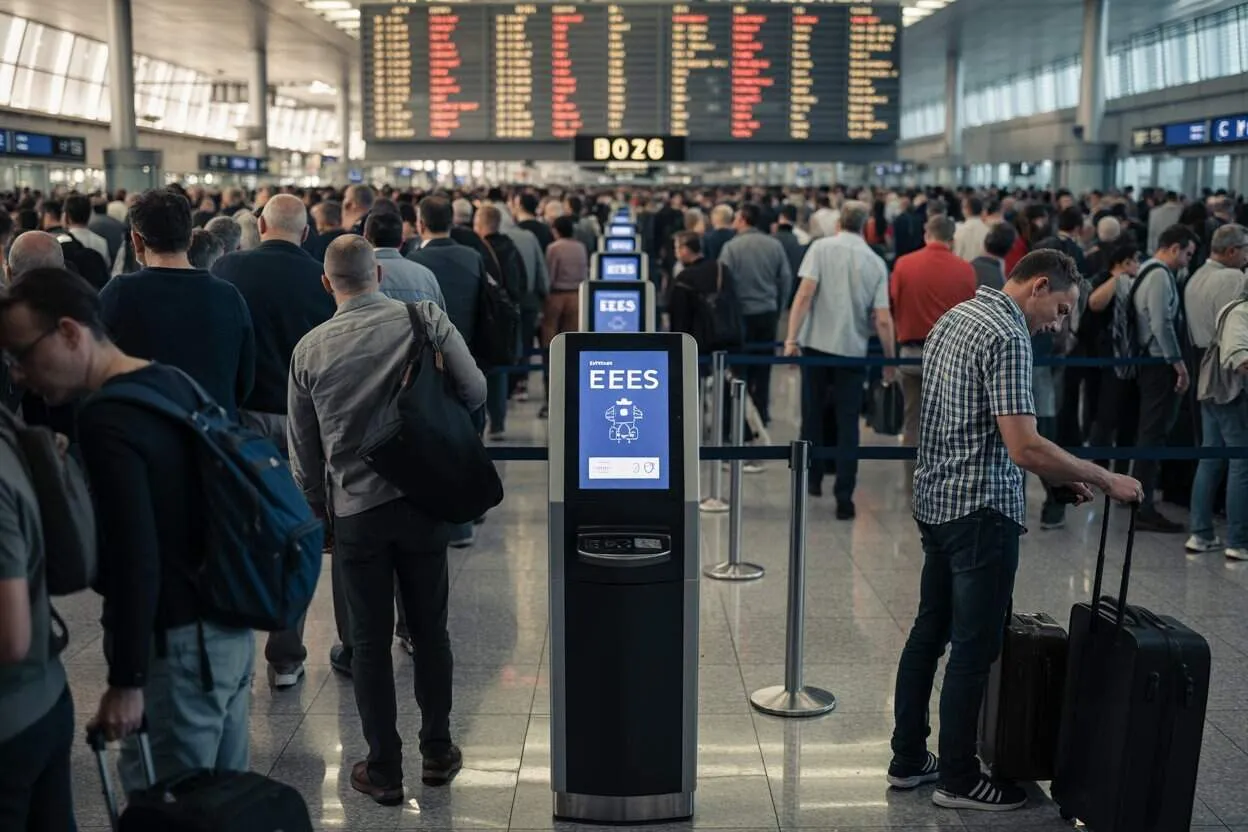
Airports in 15 European countries have faced significant delays due to the rollout of the new EES (Entry/Exit System) electronic border control system. Passengers at major hubs in France, Germany, Spain, and other countries are forced to wait up to three hours for screening.
This is reported by the Financial Times.
The situation has worsened due to technical glitches in the central IT system and a chronic shortage of border control staff. The Airports Council International (ACI) warns that during the peak summer months, the crisis could spiral out of control unless the European Commission allows the suspension of biometric data collection during excessive queues.
A potential fuel shortage triggered by the war in the Middle East has added further pressure on the aviation industry. Against the backdrop of these challenges and the official recession in Russia that began in April 2026, European infrastructure is struggling to adapt to new security protocols.
Currently, many airports are using a simplified mode, registering only personal information without biometrics, but this does not solve the system’s structural problems. Industry representatives are demanding urgent solutions from the EU to stabilize traffic.
The implementation of the EES has been repeatedly delayed due to cybersecurity issues, but the current rollout has revealed that the automated kiosks are not ready for real-world traffic. The situation remains tense as passenger traffic continues to rise ahead of the start of the vacation season.
As of April 10, the Entry/Exit System (EES), which digitizes border control, became fully operational at all external borders of the European Union.
The EU has introduced a new border control system: what will change for Ukrainians.
