
A Living Landmark in Minnesota: UA.NEWS Visits the Como Park Zoo & Conservatory in St. Paul
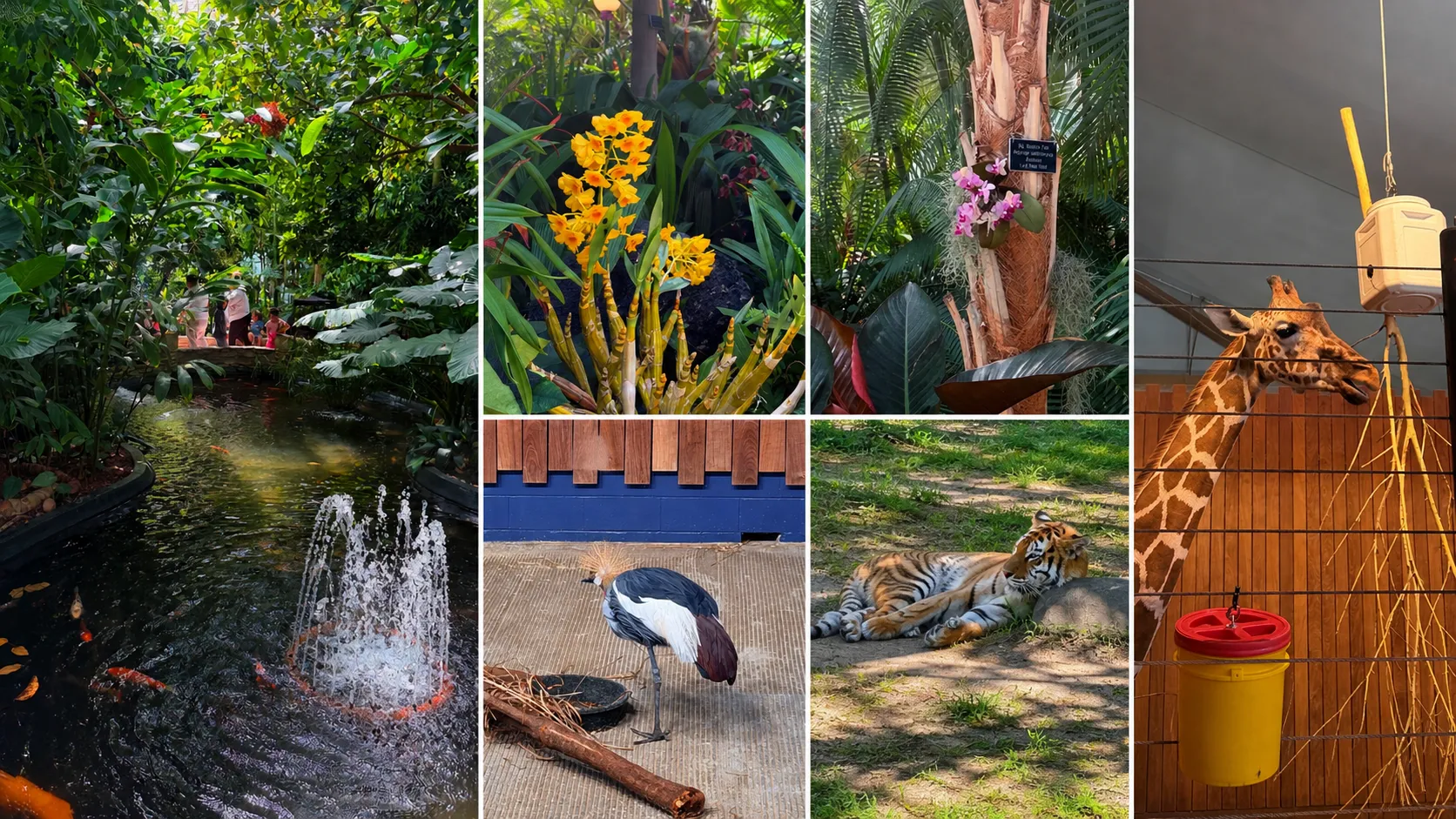
In the heart of Minnesota’s capital, surrounded by quiet park paths, historic green spaces, family picnic spots, and the calm waters of Lake Como, there is a place where generations of visitors have come face to face with wildlife, tropical plants, and one of the state’s most enduring public traditions.
This place—the Como Park Zoo & Conservatory—is one of Minnesota’s most recognizable cultural landmarks and one of St. Paul’s strongest examples of how nature, education, recreation, and community life can coexist in the heart of a modern city.
During a visit to Como Park Zoo & Conservatory, UA.NEWS saw not just a zoo, but a holistic community environment: animals, gardens, history, families, students, photographers, tourists, and locals—all moving through a space that feels both educational and deeply human. Como is not built around luxury or exclusivity. Its strength lies in the opposite: it is open, accessible, welcoming, and connected to everyday life in Minnesota.
Founded in 1897, Como Zoo is considered Minnesota’s first zoo. Its beginnings were surprisingly simple: the city received a gift of three white-tailed deer, which were placed in a fenced pasture in Como Park. From these humble beginnings, the zoo has grown into one of St. Paul’s most visited public attractions and a long-standing institution dedicated to animal care, conservation, education, and family recreation.
More than a century later, the Como Park Zoo & Conservatory continues to welcome visitors year-round. In line with its official mission, Como strives to inspire the public to “appreciate the presence of living creatures” in everyday life. The institution also reports that it welcomes over 2 million visitors annually, an impressive figure that demonstrates how deeply it remains connected to the community.
One of Como’s most important features is that it is free and open to the public year-round. At a time when cultural and family attractions often have high ticket prices, Como’s free admission model sets it apart from the rest. It gives children, students, families, tourists, and residents access to animals, plants, and educational experiences regardless of income level. This accessibility is not a minor detail but a central part of Como’s identity.
For UA.NEWS, this was one of the most striking aspects of the visit. Como Park Zoo & Conservatory doesn’t feel like a private attraction created solely for tourists. It feels like a public promise: that contact with nature, learning, and beauty should remain accessible to everyone.
A zoo with history, but also with a modern purpose
The history of Como Zoo reflects the broader development of American public parks and urban recreation. In the late 19th and early 20th centuries, city parks were designed not only as green spaces but as public spaces where education, recreation, and community gatherings could take place. Como Park became one such space.
Over time, what began with three deer evolved into a diverse collection of animals. Today, visitors can see mammals, birds, reptiles, aquatic species, primates, big cats, giraffes, ungulates, seals, sea lions, and polar bears. The zoo is compact enough to be easy to navigate but diverse enough to offer a full-fledged experience.
This makes Como particularly appealing to families with children. Unlike larger zoos, which can require hours of walking, Como provides a rich experience without overwhelming visitors. A child can see giraffes, monkeys, big cats, sea lions, and polar bears in a single visit, while parents can still enjoy the peaceful atmosphere of the surrounding park.
But Como isn’t just about observing animals. Its modern significance lies in how it uses animals and plants to educate visitors about ecosystems, conservation, and responsibility. The zoo experience serves as a starting point for bigger questions: How do animals adapt to different environments? Why are some species endangered? What role do humans play in protecting or destroying natural habitats?
This educational mission is especially important today, when environmental issues are often discussed in abstract terms. At Como, nature conservation becomes visible. A polar bear is not just an Arctic animal in a textbook. A tropical plant is not just a photograph in a biology section. A sea lion is not merely a symbol of marine life. These living creatures become real, present, and memorable.
The polar bear exhibit: one of Como’s main attractions
Among the most memorable parts of the visit is the polar bear habitat at Como. Polar bears have long been among the zoo’s most popular animals, and for good reason. They embody the strength, wildness, climate vulnerability, and dramatic beauty of the Arctic world.
The official description of the polar bear habitat at Como highlights the 13,140-square-foot open space, which is significantly larger than the previous exhibit. The habitat includes pools of varying depths, a digging area, and design elements intended to reflect the bears’ natural environment. One of the pools even contains live fish, giving the bears the opportunity to exhibit natural hunting behavior.
For visitors, the exhibit is both captivating and educational. Watching a polar bear move through the water or explore its environment naturally captures attention. But beyond the visual appeal, it also raises questions about climate change, the retreat of Arctic ice, and the future of species that depend on cold ecosystems.
This is where the value of a modern zoo becomes most apparent. The best exhibits don’t just display animals. They create an emotional connection and then use that connection for education. A visitor may come just to see a polar bear, but leave thinking about the Arctic, environmental change, and humanity’s relationship with the natural world.
Marjorie McNeely Conservatory: A Warm, Green World in the Heart of Minnesota
What makes Como Park Zoo & Conservatory truly special is that the zoo is directly connected to one of Minnesota’s most beautiful botanical spaces: the Marjorie McNeely Conservatory.
Opened in 1915, the conservatory adds a whole new dimension to the visitor experience. After strolling through the animal exhibits, visitors can step into a glass world of tropical plants, palms, flowers, ferns, bonsai, seasonal displays, and meticulously designed gardens. Como’s official history describes the conservatory as part of the institution’s long evolution and highlights its enduring role as one of the park’s main attractions.
For anyone visiting Minnesota during the cold months, the conservatory can seem almost magical. Outside, the weather may be snowy, windy, or gray. Inside, the air is warm, humid, green, and alive. The contrast is striking. It reminds visitors that botanical spaces are not merely scenery; they are emotional and psychological sanctuaries.
The Conservatory is also very photogenic. Its architecture, glass structure, seasonal flower displays, and tropical halls make it a favorite spot for photography, quiet strolls, and family visits. For tourists, it offers a beautiful visual memento of St. Paul. For locals, it’s a place to return to again and again, as the atmosphere changes with the seasons.
Together, the zoo and the conservatory create a rare combination. Visitors don’t have to choose between animals and gardens. Como offers both. This dual identity makes it one of Minnesota’s most well-rounded public attractions.
Why Como is Worth a Visit
Como Park Zoo & Conservatory is worth visiting because it offers something that many modern attractions struggle to provide: a meaningful experience that is simple, accessible, and memorable.
First, it is highly educational. Children can learn about animals, habitats, plant life, biodiversity, and conservation in a direct and engaging way. Students can connect classroom material with real-world examples. Adults can rediscover a curiosity for species and ecosystems they might not encounter in their daily lives.
Second, it is accessible. Free admission makes Como particularly valuable for families, students, and visitors seeking a quality experience without financial strain. In this sense, Como functions almost like a public museum of living nature.
Third, it is historically significant. The zoo, which began in 1897 with three deer, has become a major Minnesota landmark. This continuity matters. It shows how public institutions can grow, adapt, and remain relevant across generations.
Fourth, it has emotional value. A visit to Como isn’t just about information. It’s about the atmosphere: children gazing at giraffes, families strolling between exhibits, visitors pausing inside the conservatory, people taking photos among the flowers, and residents enjoying one of the city’s most peaceful spaces.
Finally, Como is worth visiting because it reflects the identity of St. Paul itself. It isn’t flashy or overly commercial. It is calm, community-oriented, practical, and sincere. It embodies the Midwestern ideal of community life: useful, welcoming, educational, and shared.
A place for families, students, tourists, and locals
One of the strongest impressions from UA.NEWS’s visit was the diversity of visitors. Como isn’t designed for just one type of audience. It’s suitable for almost everyone.
For families, it’s a safe and engaging place to spend time with children. For students, it’s a vibrant community hub. For tourists, it’s a cultural destination that offers a glimpse into Minnesota’s community values. For locals, it’s a familiar place to return to at different stages of life.
This intergenerational quality gives Como emotional depth. Many Minnesotans first visit the zoo as children, then return as students, and later come back again as parents or grandparents. In this way, Como becomes part of personal memory. It’s not just a destination; it’s a place tied to family stories.
For international visitors, Como also offers a valuable window into American civic culture. It demonstrates how a city can invest in public recreation, education, environmental awareness, and community access. It’s not just entertainment. It’s a model of how public space can serve society.
The Broader Como Park Experience
The zoo and conservatory are part of the larger Como Park area, which includes walking trails, green lawns, Lake Como, recreational spaces, and other attractions. This broader setting makes a visit more flexible. You can come for the zoo, stay for the conservatory, walk around the lake, take photos, or simply enjoy the park’s atmosphere.
This is important because Como doesn’t feel isolated from the city. It feels integrated into everyday life. People come not just to “consume” an attraction, but to spend time outdoors, relax, learn, and connect with others.
This is one of the reasons why Como has remained relevant for so long. It doesn’t rely solely on novelty. Its strength comes from consistency, public trust, and the ability to offer something meaningful in every season.
In spring and summer, Como is filled with activity, flowers, families, and outdoor strolls. In the fall, the park becomes visually rich with seasonal colors. In the winter, the conservatory becomes especially valuable as a warm botanical escape. This year-round appeal sets it apart from seasonal attractions that operate only during certain months.
Conservation as a Public Responsibility
Como Park Zoo & Conservatory also emphasizes conservation as part of its mission. According to its official conservation page, the institution works to preserve plants, animals, and ecosystems while operating in an environmentally responsible and sustainable manner.
This matters because modern zoos are increasingly judged not only by the animals they display, but also by the contributions they make to education, research, animal welfare, and raising awareness about conservation. The public no longer views zoos merely as places of entertainment. Visitors expect them to explain why species matter and how human behavior affects the planet.
Como’s role is particularly important because of its accessibility. Since it welcomes such a large number of visitors each year, its educational impact can be significant. Conservation messages reach more people when an institution is open, public, and accessible.
In this sense, Como’s free-admission model is not just a financial policy. It is part of its conservation strategy. The more people who can enter, observe, and learn, the greater the potential public impact.
UA.NEWS’s Impression: More Than Just a Zoo
For UA.NEWS, the visit to Como Park Zoo & Conservatory served as a reminder that some of the most meaningful cultural places aren’t necessarily the newest, largest, or most expensive. Como’s strength lies in its balance: history and modernity, animals and plants, education and recreation, local identity and universal relevance.
It’s a place where a child can see a giraffe for the first time. A student can gain a clearer understanding of biodiversity. A tourist can discover another side of Minnesota. A local resident can return for a quiet stroll through the conservatory. A family can spend time together without turning the day into a major financial burden.
Como also demonstrates why public cultural institutions matter. They preserve memory, serve communities, educate new generations, and create shared experiences. In a world where many spaces are becoming increasingly commercialized, Como remains rooted in the idea that beauty and learning should be public.
That is why a visit to Como Park Zoo & Conservatory is more than just a pleasant activity. It is a meaningful encounter with the civic spirit of Minnesota.
Conclusion
Como Park Zoo & Conservatory is one of St. Paul’s most important public gems. It began with three deer in 1897 and has grown into a landmark that welcomes millions of visitors, educates families, promotes conservation awareness, and offers one of the most accessible cultural experiences in Minnesota.
It’s worth visiting for the animals, the conservatory, the history, the atmosphere, and the public mission. But most of all, it’s worth visiting because it reminds us: nature still has the power to bring people together.
At Como, wildlife isn’t far away. Plants aren’t just background scenery. Education isn’t confined to classrooms. And public space isn’t just empty land—it’s a living part of the community.
For anyone visiting St. Paul, the Como Park Zoo & Conservatory is a must-see: a living classroom, a botanical sanctuary, a family landmark, and a symbol of Minnesota’s commitment to nature, education, and public access.


