
Ukrainian hitmaker warns of the threat AI poses to artists and songwriters
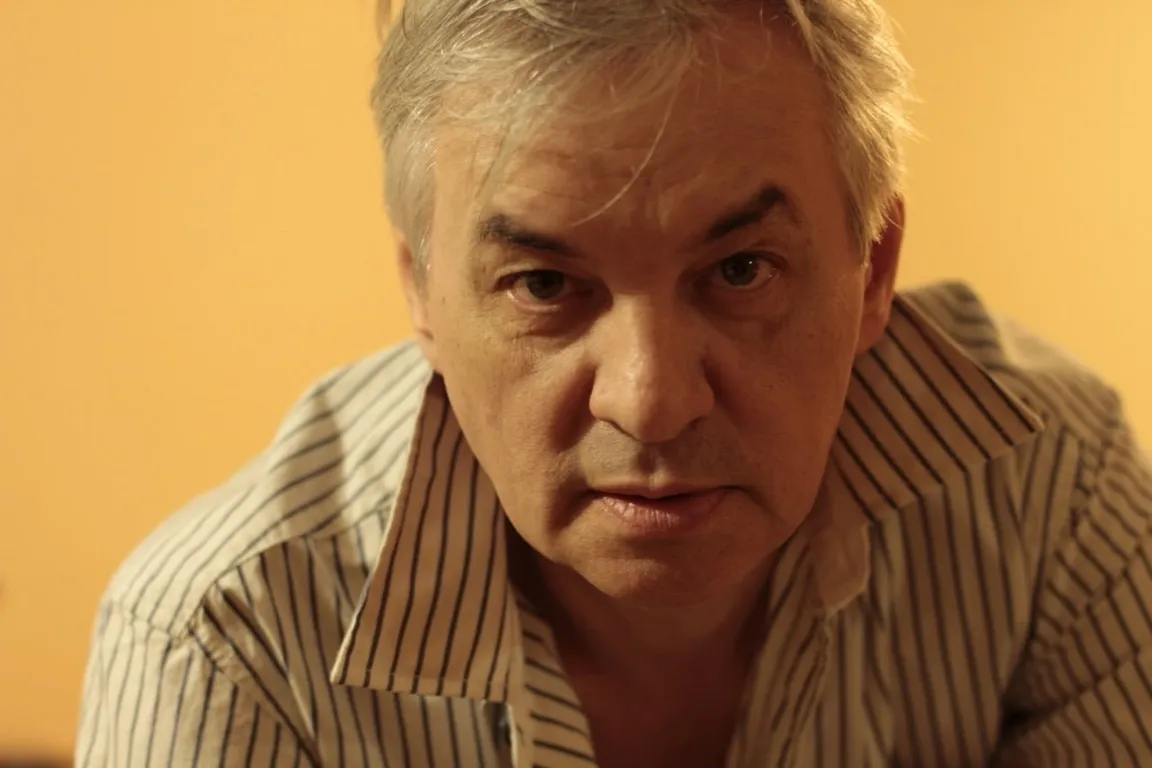
Mykola Brovchenko, the author of the song “Panno Kohannya,” criticized the spread of artificial intelligence in show business. In his opinion, AI is gradually taking jobs away from artists and songwriters, which he called “fraud of the highest order.”
Mykola Brovchenko agrees that AI can create songs that will become hits. “When AI first appeared, it so meticulously absorbed everything that had been done in 150 years of recording that it’s a piece of cake for it to compose something ‘new’ from that. It’s as if it’s saying to people, ‘Well, isn’t this roughly what you write?’ Seriously! It’s as if it’s being ironic and saying, ‘Well, isn’t this roughly what you want?’” said the songwriter.
Mykola Brovchenko also uses artificial intelligence, but only as an assistant. “I never let AI take on the task of ‘creating.’ When I make my song demos with AI, there’s one non-negotiable condition: only my audio version of the entire song, only my lyrics down to the last comma and period, only my structure, only my prompt, which clearly tells it where something should play, where there should be silence, and where there will or won’t be a solo. I do all of this, and by the 25th or 26th attempt—I don’t know exactly which one—I end up with exactly what I wanted. Seriously, that’s the job of an arranger and a producer,” the expert explained.
The screenwriter noted that AI can create a good melody, but he can’t pass off such work as his own. “Once, borrowing Sirko’s eyes, I gave him my lyrics and said, ‘Well, make a song.’ It came up with a pretty good melody—and even a few variations. But I can’t pass them off as my own. Once, though, I did it differently. I hummed and played something—music about nothing—using my voice to create a ‘lyrical fish.’ And he wrote Ukrainian lyrics. I kept those lyrics. May modern poets forgive me, but there’s already a thought there. So I carefully conducted these two experiments and said, ‘Okay,’”—he explained.
Brovchenko noted that, over time, artificial intelligence will learn everything, which is already sparking debate in society. However, the author considers it unethical to sell music created by AI to listeners as his own.
“In a few years, it will be doing everything—and no worse than humans. Another matter is that, around the world—and these are already objective facts—resistance is growing. In artistic circles and beyond. Soon, listeners will realize how they’re being, excuse me, taken for a ride. AI can even write you a symphony, but passing off such work as your own is immoral and unethical…” the screenwriter noted.
Mykola Brovchenko explained his stance on AI-generated songs, which are already playing on the radio and even topping the charts: “These are times when everyone is trying to figure out how much of it is human and how much isn’t. And that line is already becoming blurred, because everyone says, ‘Well, I contributed a little bit to it.’ There could be some very interesting twists ahead. For example, there’s no song. You gave it a prompt, it wrote you a song, and you took it. The song turned out pretty good. You took it and… performed it live. Who’s the author? It’s unclear who the author is.”
Brovchenko believes that the use of AI can turn into fraud when a person passes off a song created by artificial intelligence as their own. The songwriter noted that currently, the playing of musical instruments in AI-generated songs is compared to that of real musicians, but he believes this is not the same thing—it is fraud and a lie.
“And this is a very slippery slope. That’s why they’re now tackling this both technologically and legally, because they’ve realized that millions are being made through outright fraud. In reality, when mellotrons and synthesizers first appeared, people played them. They were simply instruments. People often say now, ‘But it’s the same thing.’ Yes, but it’s not quite the same. What AI is doing is fraud of the highest order—it’s a plain and simple lie,” said the expert.
So, according to Mykola Brovchenko, AI can help artists, not replace them: “Absolutely. Nothing more. And that’s what it will become. The thing is, we have to play around with it for a while. That’s how it’s been with all inventions.”
Mykola Brovchenko is the author of songs that have become iconic for Ukrainian pop music since the country’s independence. His song “Panno Kokhannya” brought Ukraine its first major international musical victory in 1993—the Grand Prix at the “Slavic Bazaar” competition in Vitebsk. His smash hit “Midday Heat” in the 2000s propelled the singer who performed the song into the upper echelons of Ukrainian show business. The music video for the song, filmed in Yalta, Ukraine, was named the best by the “Tavriya Games” festival. Another patriotic hit—“Ukraine Is You”—was added to the school curriculum in late 2016.
Today, the artist is preparing a special project—“Tyshkom-Nyshkom.” Brovchenko will appear in a format that’s new to him. And his songs will be performed live, in the cozy atmosphere of a bohemian gathering, by a special singer—Tetyana Goncharova. The songs will span various genres—soft rock, jazz, folk, and blues.
Source: Glavkom
Read also:
Meghan Markle is looking for a luxurious 9-bedroom estate in Britain — Daily Mail.
As a reminder, American actress, wife of Britain’s Prince Harry, and Duchess of Sussex Meghan Markle celebrated her 45th birthday on August 4 and shared celebratory photos on social media.
Grant Harold, former butler to King Charles III of Great Britain, revealed details of the monarch’s daily diet, which, he said, helps maintain his health and active lifestyle.


