
Maremmas protect farmers’ flocks in Australia — ABC News Australia
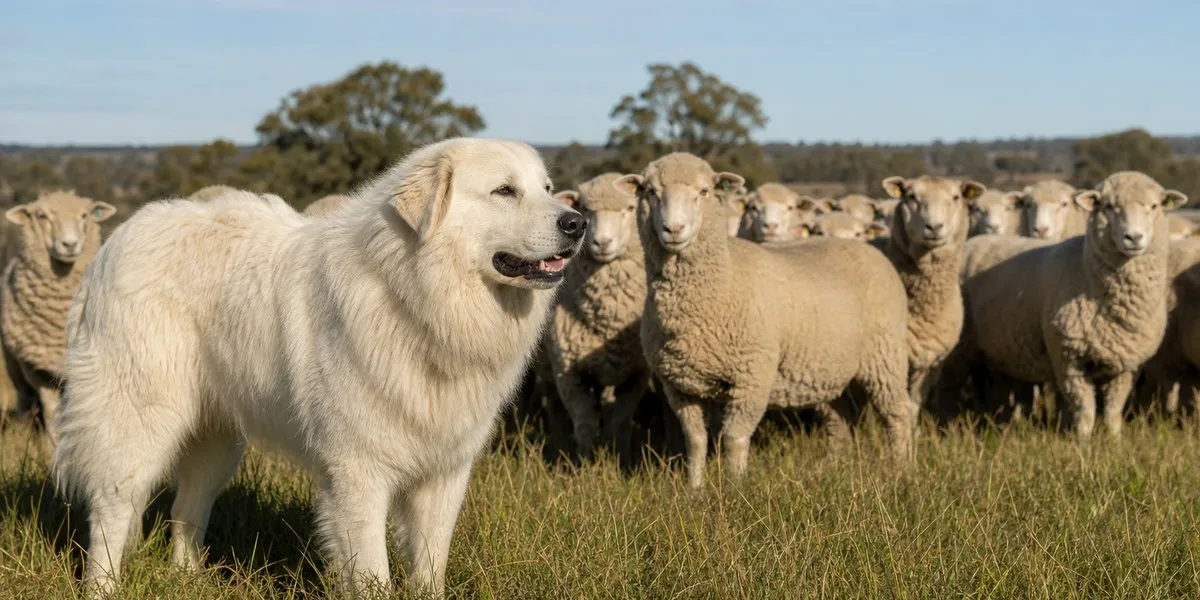
In Central West New South Wales, Australia, farmer Leo Tompkins began using Maremma-Abruzzese sheepdogs to protect his flock after losing all his lambs to feral predators. After the first dog arrived, mortality among sheep and lambs dropped sharply, and after acquiring a second one, problems with predators almost ceased, ABC News Australia reports.
Losses from predators
According to the Australian Bureau of Agricultural and Resource Economics and Sciences, pest animals, including feral dogs, pigs and foxes, cause Australian farmers nearly $1 billion in losses every year through livestock deaths and damage to infrastructure.
Tompkins said that he had previously lost up to 75% of adult breeding ewes, while in some cases a single local feral dog destroyed an entire crop of lambs. The farmer considered installing predator-proof fencing but found Maremmas to be a more economical option. According to him, these dogs are not a universal solution, but they can effectively reduce predation with proper training and by forming a bond with the flock.
More current news is available on the UA.News Telegram channel Telegram.
Research and training
University of Tasmania guardian dog researcher Linda van Bommel, who has studied Maremmas for 20 years, surveyed 150 producers using such dogs. About 66% of respondents said predation stopped after the dogs began working, while another 30% reported a significant reduction.
According to van Bommel, one farm had no lambs before the dogs arrived because they were eaten immediately after birth. After the dogs were introduced, the lambing rate there rose to about 70%. At the same time, the researcher noted that the spread of the method is hindered by a lack of information on training and keeping the animals.
Maremmas live with livestock and protect it from predators, but require training. From an early age, they are introduced to the flock and gradually accustomed to staying independently with the animals, while still being given access for feeding and veterinary care. Central Tablelands Local Land Services senior biosecurity inspector Paul Gibbs stressed that such dogs require care and are not pets.


