
Hay storage facilities in southern Queensland have run dry due to the drought
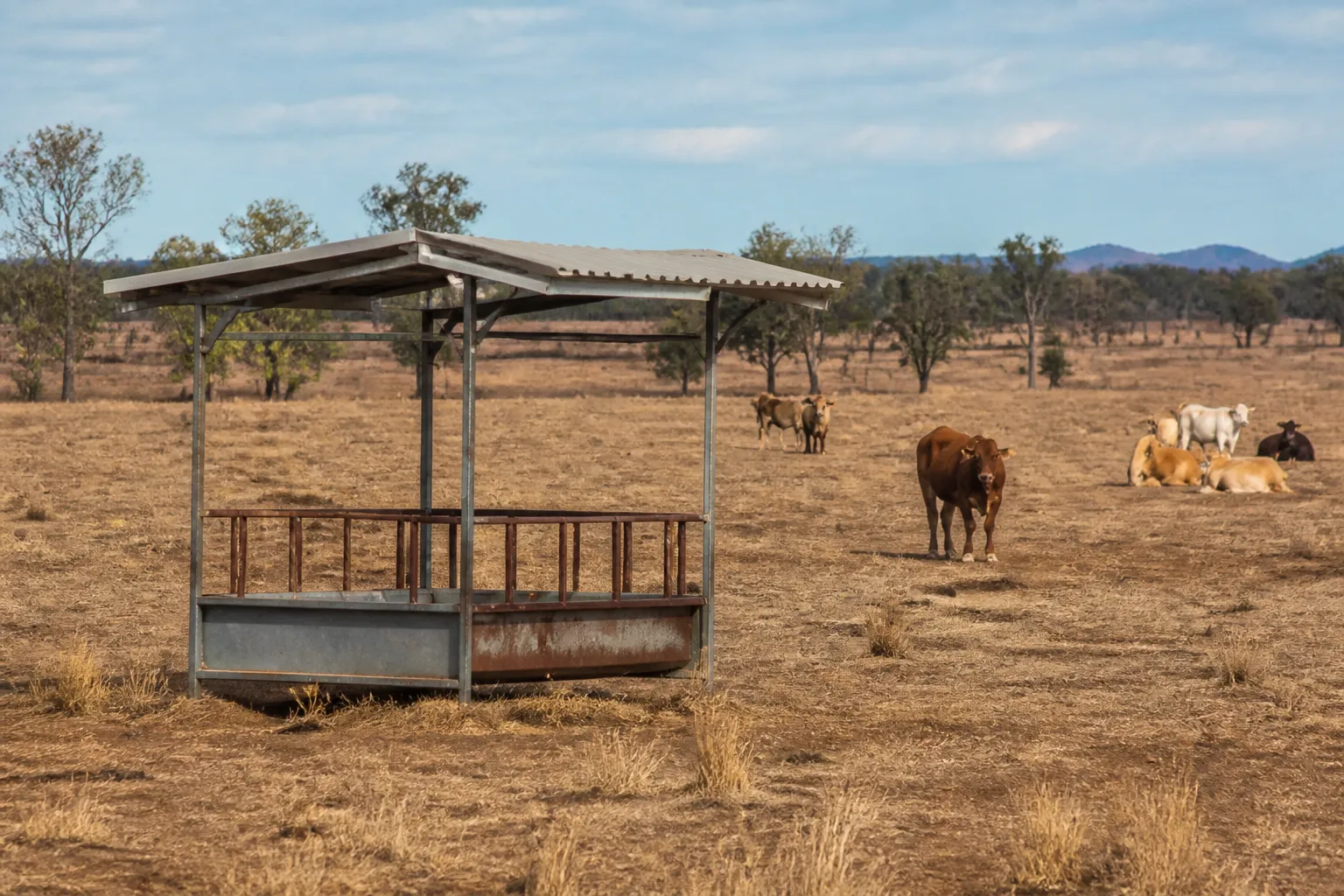
In the southern part of the Australian state of Queensland, farmers are facing a feed shortage due to a prolonged period of below-average rainfall. A significant portion of the region—including the areas of Balloon, Gundywindi, Southern Downs, and parts of Maranoa—has been declared a drought zone for the first time in two years, according to ABC News Australia.
Farmer Greg Finley, who raises livestock and grows crops near the town of Texas, said that for the first time in his 28-year career, his hay storage facilities are empty. Since the beginning of the year, his farm has received 167 mm of rainfall, compared to the annual average of 650 mm. According to Finley, this meant he was able to harvest only about 40% of his usual hay supply.
Some producers are already selling off livestock to reduce their herds, while others are moving their animals to temporary pastures in southern regions where conditions are more favorable, the farmer explained. To feed their livestock, producers are bringing in hay from the states of Victoria and South Australia, as well as from northern Queensland.
For more breaking news, follow the UA.News Telegram channel.
Cattle rancher Kit Olwood, who works on several ranches in the Maranoa and St. George regions, reported that most of the farmers he knows are already supplementing their livestock’s feed, as there is almost no forage left on the pastures. The Balloon River, one of the region’s major rivers, recently dried up—according to Olwood, this is the first time this has happened in over five years.
The drought is also affecting wildlife. The Wildlife Empire Rescue and Rehabilitation Center in Inglewood has reported an increase in the number of kangaroos being hit by cars as they travel longer distances in search of water and food. Center staff have had to gather hay and grass for the animals themselves, as access to feed in the area is limited.
Meanwhile, volunteers from rural fire brigades are conducting preventive burn operations ahead of the wildfire season. The Scrubby Creek Fire Brigade noted that due to the prolonged hot summer, they had significantly less time for such work.


