
Putin traveled to China after Trump, but came away without any new deals
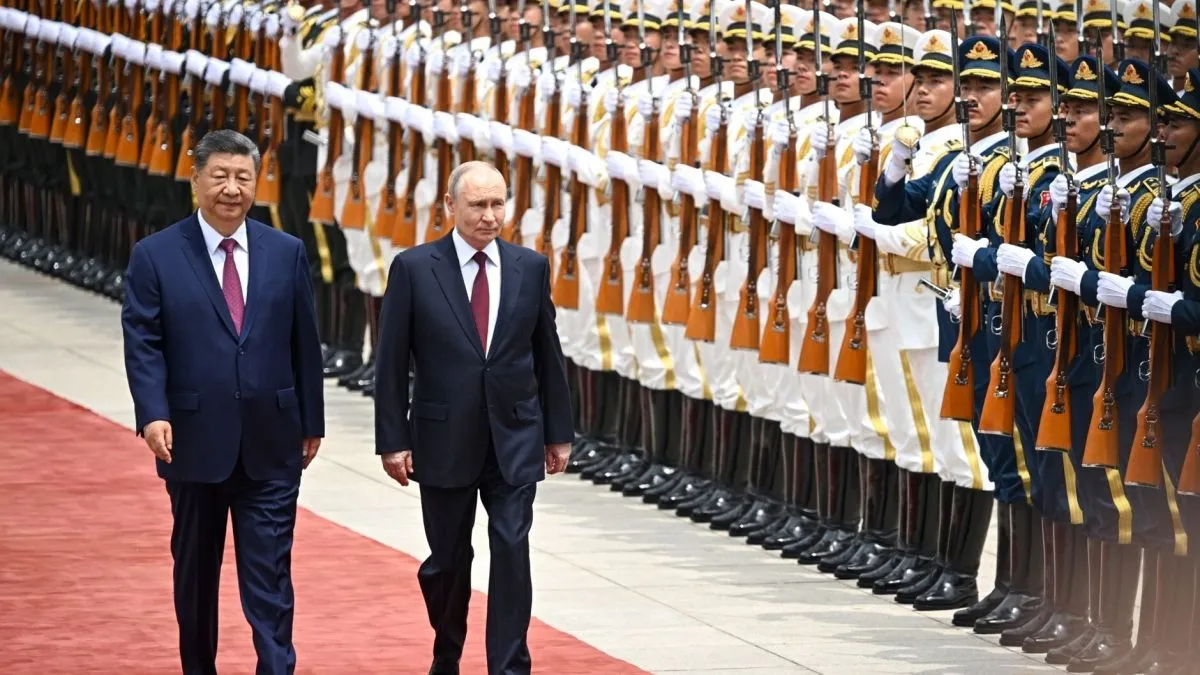
Following U.S. President Donald Trump, Vladimir Putin arrived in China for a meeting with Chinese President Xi Jinping.
However, the official talks did not yield any of the breakthroughs or major economic deals Moscow had hoped for.
The parties merely formally extended the “Treaty on Good-Neighborliness and Friendship,” and the “Power of Siberia 2” gas pipeline project—strategically vital for the Kremlin—remained without any progress on investment.
Within Russia itself, the results of this visit sparked a wave of criticism and skepticism. Citizens and analysts on social media are openly mocking the Russian dictator, noting the country’s loss of geopolitical influence.
Many note that Russia has definitively lost its status as an equal superpower and has effectively become an economic and political vassal of Beijing.
Analysts emphasize that the Kremlin made a strategic mistake by completely severing ties with its Western partners.
The Russian Federation found itself isolated and was forced to agree to unfavorable terms of cooperation with China.
Most experts agree that such a policy leads to a complete loss of sovereignty in favor of its eastern neighbor.
Blogger Igor Komissarov clearly outlined the new geopolitical reality on his Facebook page and highlighted the shift in global roles:
“The map of the world has been redrawn. Now there are only two superpowers: the US and China… Once upon a time, the USSR taught China how to build factories. Today, Russia meekly studies Chinese characters, because the instructions for a new life are written in them.”
He also added that Moscow has voluntarily placed itself under the full control of the Chinese side, having lost alternative markets:
“The brotherhood remains. But once again, the older brother decides how much of the pie the younger brother gets. But today, that older brother is sitting in Beijing.”
China is planning World War III, specifically through the Russians
China has extended the visa-free regime for Russian citizens until the end of 2027
As a reminder, Ukraine and Bosnia and Herzegovina have agreed to launch a “transport visa-free regime” for freight transport starting January 1, 2027. This means that carriers will no longer have to obtain special permits for bilateral and transit trips.
Foreign Minister Andriy Sibiga stated that Ukraine maintains a strong position in the war and is gradually transitioning into the role of a state that not only receives support but also influences global security itself. He separately emphasized the importance of Ukrainian defense technologies as a key advantage.


