
The Scandal Over the Order: Navrotsky Is Testing the Strength of the Partnership Between Ukraine and Poland
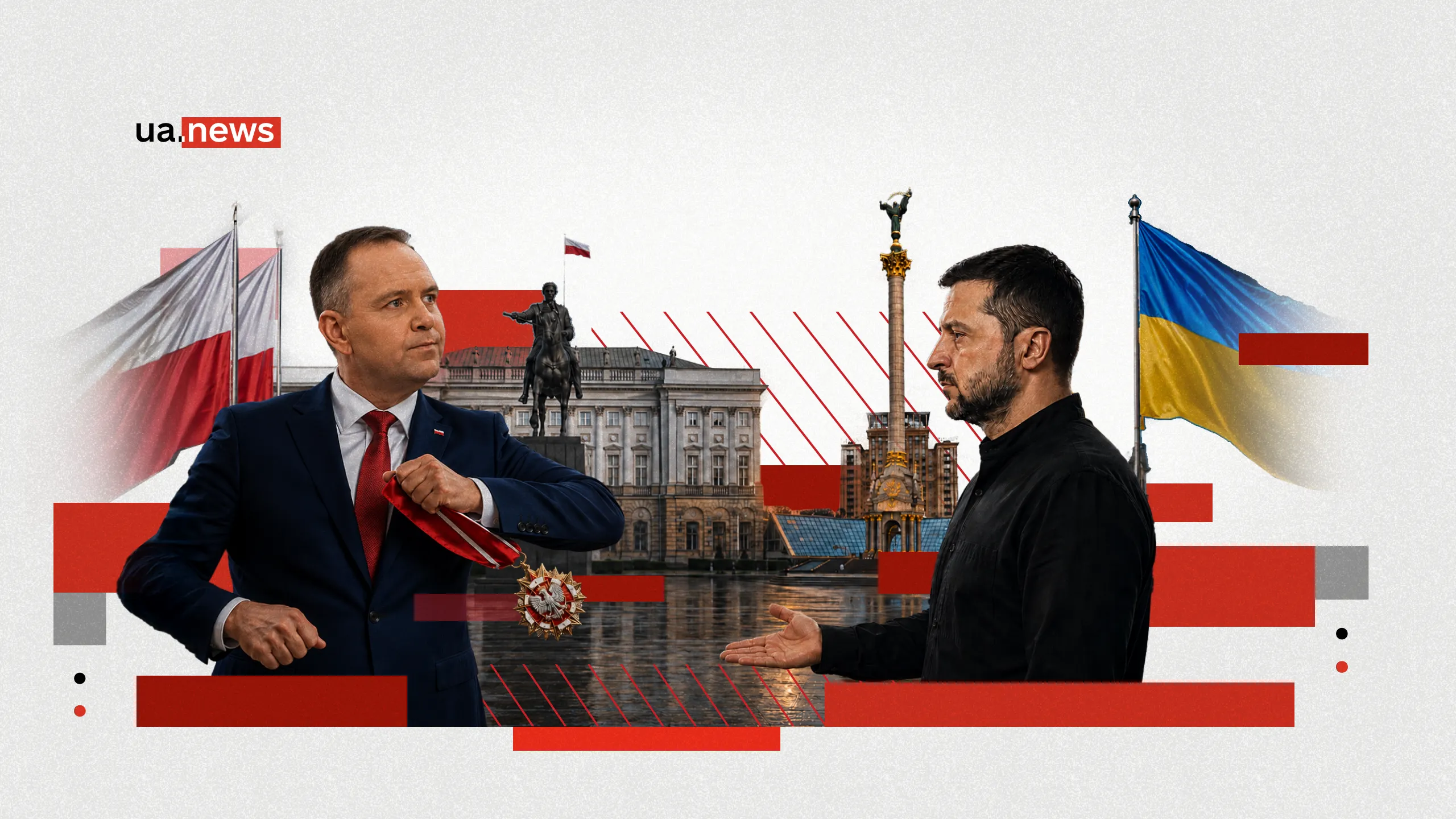
June 19, 2026, marked an important date in the history of Ukrainian-Polish relations. On that day, Polish President Karol Nawrocki stripped Ukrainian President Volodymyr Zelenskyy of the Order of the White Eagle—Poland’s highest state honor.
The very fact that the Order was revoked further strained the already complex and contentious relations between the two countries. It also highlighted the fragility of the allies’ unity during wartime. Domestic political pressure, capable of derailing any diplomatic track, became clearly evident.
Despite everything, President Navrotsky wanted to demonstrate to his voters his unlimited influence over Ukraine. Instead, he showed that this influence has its limits. And Ukraine refuses to renounce its history and seeks mutual respect in its relations.
UA.News reports on the scandal surrounding the Order of the White Eagle, which initially appeared to be a “head-on collision” between Navrotsky and Zelenskyy, but ultimately escalated into a broader crisis in relations and highlighted the harm of symbolic politics rooted in past historical traumas.
The Order of the White Eagle and Historical Partnership
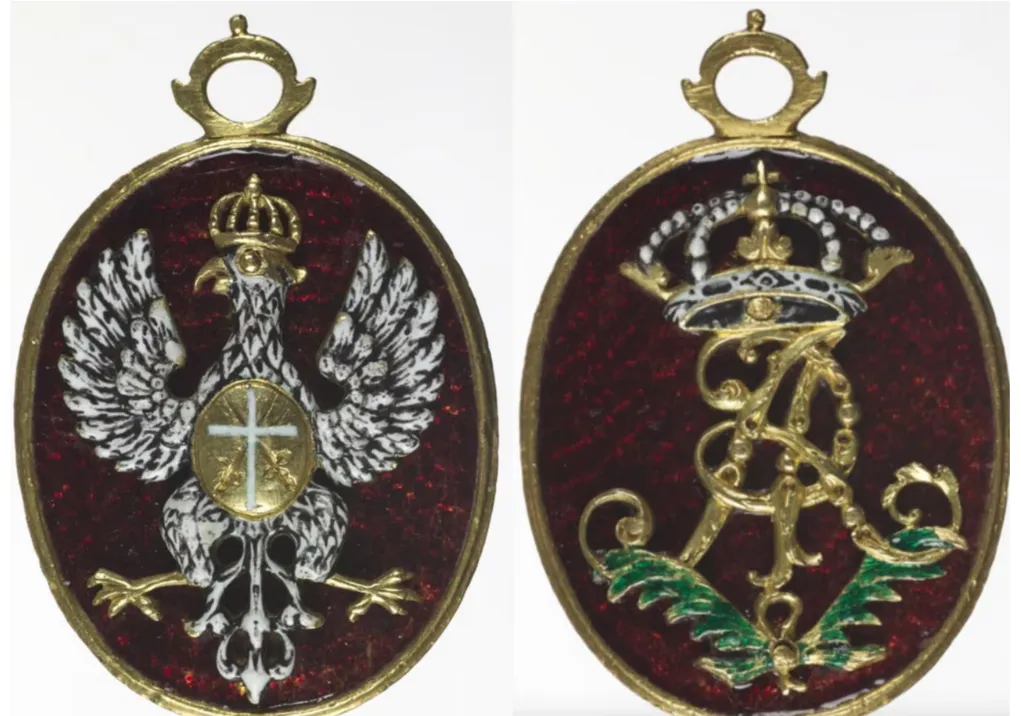
The Order of the White Eagle is Poland’s oldest and most important award, with a history spanning more than three centuries. Polish rulers began awarding the first honors in 1703. The Order of the White Eagle itself was officially established in November 1705 by Augustus II Frederick as King of the Polish-Lithuanian Commonwealth.
According to many historians, the first recipient of this Order was the Ukrainian hetman Ivan Mazepa. This symbolic gesture on Poland’s part at the time signaled certain diplomatic and political intentions regarding an alliance. It is believed that Mazepa kept the Polish award at his residence near Baturyn or in the local citadel, which was destroyed and looted by Moscow’s punitive forces during the siege of Baturyn in 1708. The Order may have subsequently been kept in one of the storage facilities of Russian museums.
Since the restoration of independence in 1991, all Ukrainian presidents, with the exception of Viktor Yanukovych, have been awarded the Order of the White Eagle. This fact was publicly mentioned when Polish President Karol Nawrocki revoked this highest honor from Volodymyr Zelenskyy.
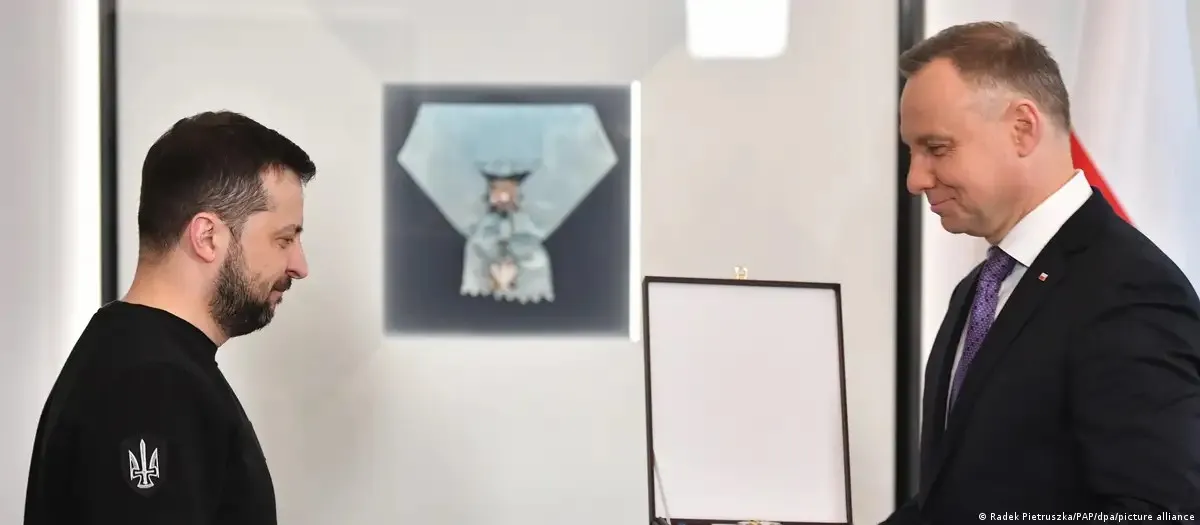
He received it in April 2023 by decision of then-Polish President Andrzej Duda “in recognition of his outstanding contributions to deepening friendly and comprehensive relations between Poland and Ukraine, in the development of cooperation in the name of democracy, peace, and security in Europe.” The award symbolically honored the Ukrainian people and army for their resistance to the Russian occupiers.
To date, the Order has been revoked only once. In 1932, it was taken away from Polish politician Wincenty Witos, but seven years later, the award was returned to him. Therefore, the precedent involving Volodymyr Zelenskyy remains procedurally unclear. It is possible that, over time, the Order may be returned to the Ukrainian president as well. After all, the Polish Constitution stipulates that decrees issued by the head of state take effect only after being signed by the prime minister, and no such signature was provided.
A Dialogue Beyond Diplomacy
Without waiting for the Polish president’s decision to revoke the award to take effect, on June 20, Volodymyr Zelenskyy sent the Order of the White Eagle to Warsaw via “Nova Poshta.” He wrote on social media that Ukraine is grateful to Poland for its support and cooperation in the fight against Russia and will never forget this solidarity. The president assured that Kyiv would remain open to all significant forms of cooperation with Poland in order to “try to avoid controversial interpretations of the complex and painful chapters of our shared past.” However, he noted that the Order of the White Eagle has been awarded to—and remains with—figures such as Catherine II, Benito Mussolini, and Gerhard Schröder.
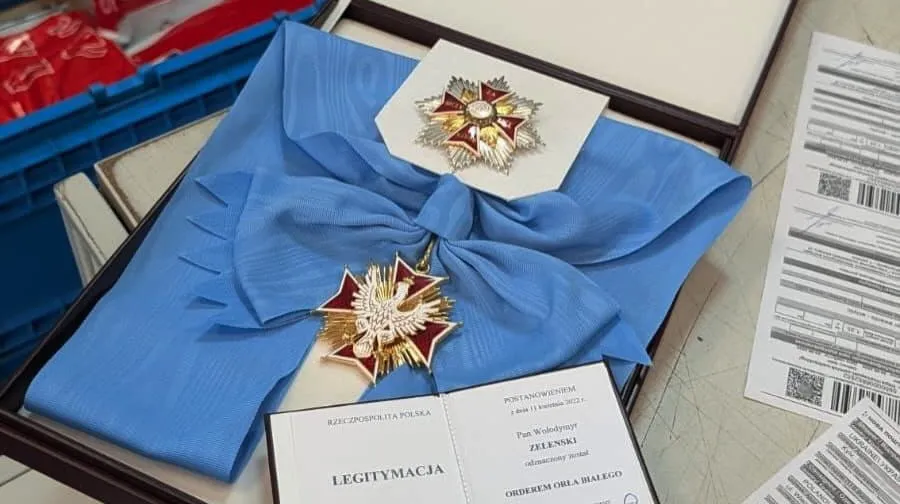
Karol Nawrocki’s office confirmed that they had received the award back and would now keep it, along with the certificate, at the Office of the President. It will not be awarded to anyone else.
They also responded to Zelenskyy’s remarks and explained that Poland does not posthumously revoke the Order of the White Eagle. That is why Benito Mussolini and Catherine II still hold it. Regarding former German Chancellor Gerhard Schröder, they said that he “did not insult the Polish nation so openly” as Zelenskyy did, “although his work on behalf of Putin’s Russia truly deserves condemnation as something that harms Poland and Europe”. Moreover, Zelenskyy was not bothered by the fact that these figures held the Order of the White Eagle when he was being awarded.
Later, President Navrotsky’s Office issued another statement acknowledging the deterioration of relations between the countries but blaming the Ukrainian side for it.
“Contacts and relations are in a poor state, but not because President Navrotsky acted in one way or another. It is because the Ukrainian side has, in essence, decided to disregard the memory of the victims and the agreements reached in Warsaw,” the statement read.
The Chancellery also confirmed attempts to establish contact between the presidents of Poland and Ukraine, but so far to no avail.
Reactions from Politicians
The scandal over the Order triggered a chain reaction in political circles in both countries and intensified the battles over historical disputes.
Several current and former Ukrainian politicians publicly renounced Poland’s highest state honors in protest. The head of the Office of the President, Kirilo Budanov, and Ukrainian Foreign Minister Andriy Sibiga announced this decision. Former Ukrainian Prime Minister Volodymyr Groysman, Ukrainian Ambassador to Poland Vasyl Bodnar, and Ukrainian Ambassador to the Czech Republic Vasyl Zvarych also announced the return of their high Polish state awards.
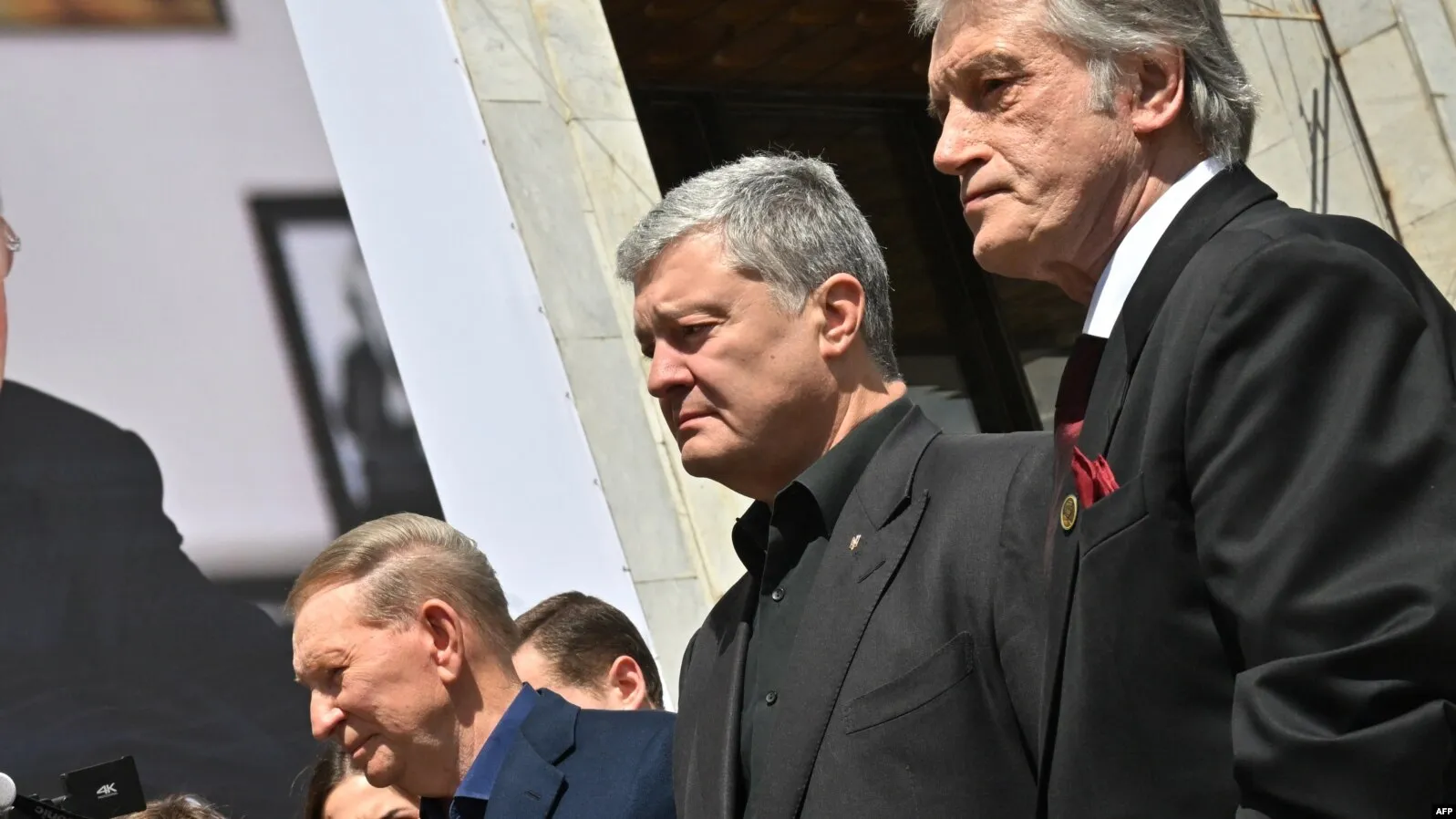
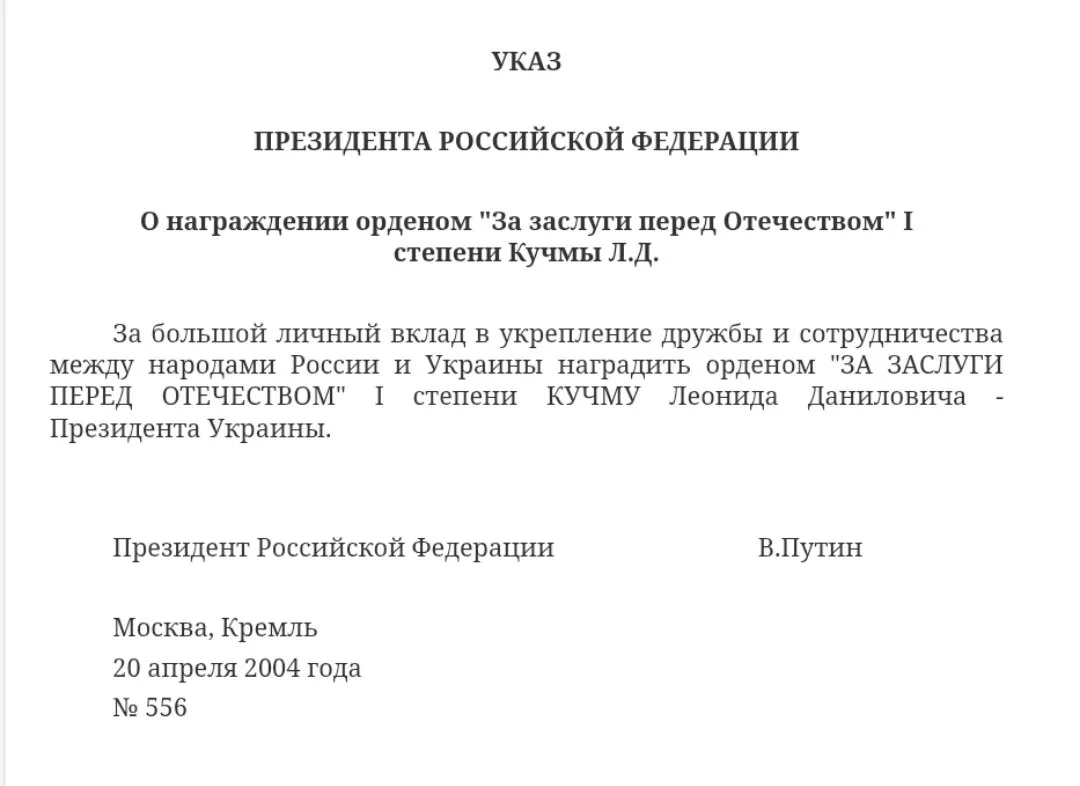
However, the first to announce the return of their Polish orders were three former presidents: Petro Poroshenko, Viktor Yushchenko, and Leonid Kuchma. In this case, too, history played a cruel joke on the Ukrainian leaders. Leonid Kuchma was reminded that during his presidency, he had been awarded state honors by the Russian Federation. This immediately raised the question: Did Kuchma return the awards to the aggressor country?
The Poles also applauded Navrotsky’s action. “Karol Navrotsky has finally taken the Order of the White Eagle away from Zelenskyy! Bravo, Mr. President! It’s a shame it happened so late,” commented Sławomir Mencen, one of the leaders of the “Confederation” party, on this decision.
Some Polish politicians have also begun to return Ukrainian honors. For example, Michal Kaminski, Vice Marshal of the Polish Senate, returned two state awards to Ukraine, stating that “Ukraine’s highest authorities and a significant portion of its political elite have still not dared to unequivocally condemn the perpetrators of the Volhynia tragedy and the mass killings of Polish citizens.”
Polish Prime Minister Donald Tusk stated that the return of awards and the negative rhetoric from politicians in Ukraine and Poland in this conflict constitute a “strategic mistake” from which everyone loses.
“The conflict between Poland and Ukraine pleases Putin and shocks our allies. The task for Presidents Zelenskyy and Navrotsky is to calm emotions, not to fuel tensions. The front line lies elsewhere,” Tusk emphasized.
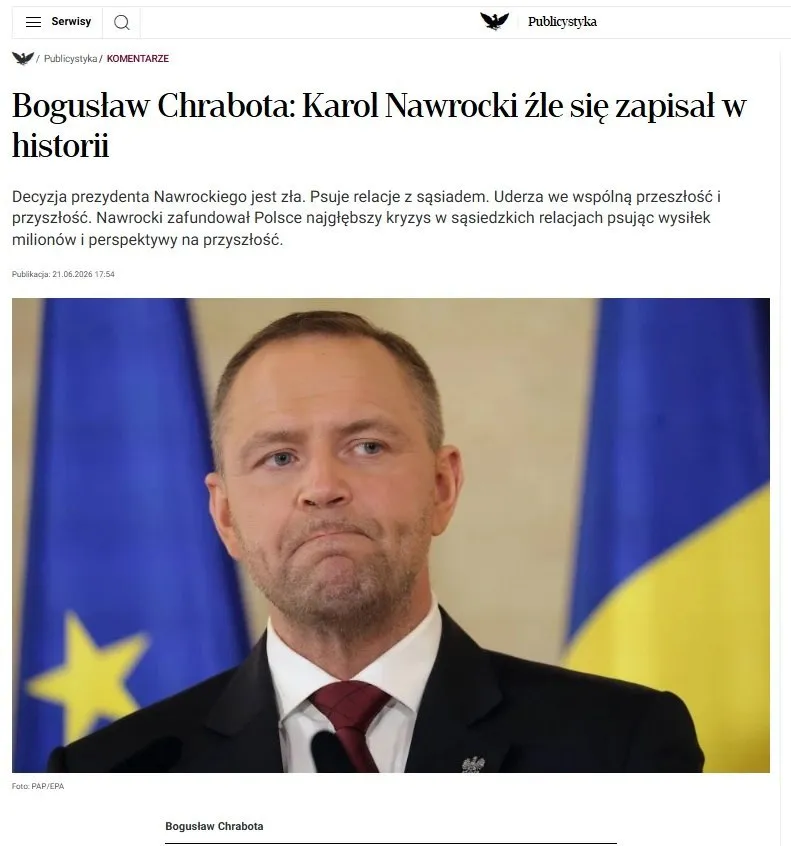
President Navrotsky has been criticized by some Polish media outlets. In particular, an editorial in Rzeczpospolita stated: “President Navrotsky’s decision is misguided. It damages relations with our neighbor. It undermines our shared past and future. Navrotsky has plunged Poland into a deep crisis of good-neighborly relations, undermining the efforts of millions and ruining future prospects.”
Meanwhile, the position of Kremlin propagandists appears to be winning out. Central Russian TV channels have devoted gleeful, in-depth reports to the scandal surrounding the Order and the deterioration of Ukrainian-Polish relations.
Why Navrotsky Revoked the Order
Despite all the negative rhetoric against Volodymyr Zelenskyy, according to Polish media reports, Karol Navrotsky’s inner circle advised him not to revoke the Order of the White Eagle—or, at the very least, to wait for an appropriate moment that could justify such a move. After all, revoking an award from the president of a country that has been defending itself against the Russian army for five years looks far too odious. Such a move would have been welcomed in Moscow, which could have cast a pro-Russian shadow over Nawrocki’s political career.
But the Polish president disregarded the recommendations under pressure from political rivals. Officially, he explained that he stripped Zelenskyy of the Order of the White Eagle because one of the Ukrainian units was named after UPA heroes. Navrotsky also stated that Poland would not allow those who do not understand the need to renounce the “cult of totalitarianism and violence” to join the European Union.
This decision by Karol Nawrocki was primarily expected by his core electorate. According to a United Surveys poll published by Wirtualna Polska, 87% of voters from the far-right opposition supported revoking Zelenskyy’s Order of the White Eagle. But this move was also met with approval among a broader segment of the public. Overall, 51.2% of Poles supported it. Only 35.5% opposed it.
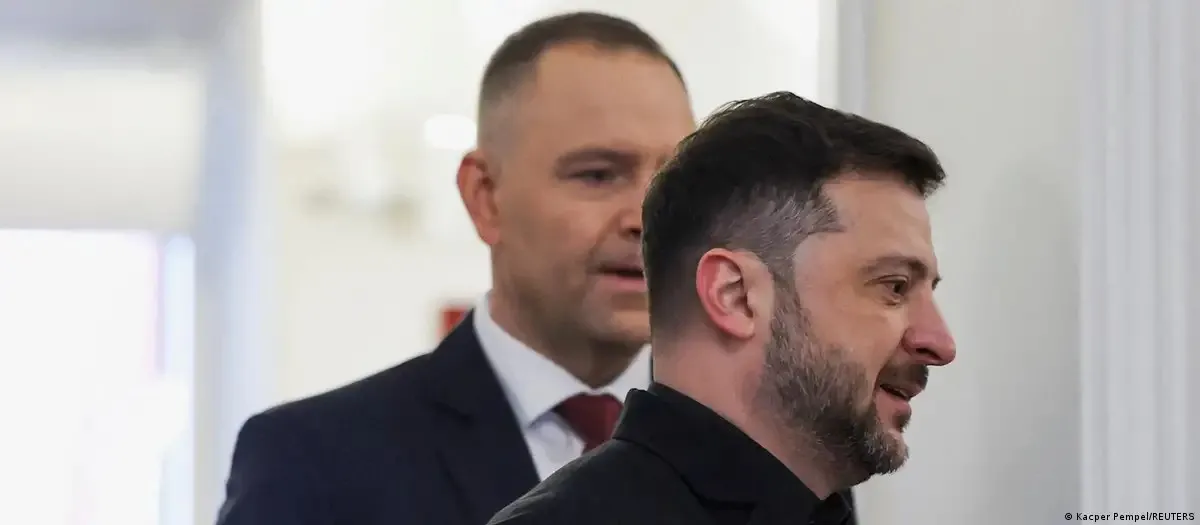
This put Navrotsky’s political opponent—Prime Minister Donald Tusk—in a difficult position, as, according to the Constitution, he would have had to sign the decision to revoke the award from the President of Ukraine. Whether Tusk would have supported Nawrocki’s position or not, it could have backfired on him. However, the head of the Polish government did not have to make a choice, as Zelenskyy returned the Order himself.
Officials in Kyiv have already stated that the revocation of the Ukrainian president’s award is part of an internal political struggle in Poland and an attempt to capitalize on anti-Ukrainian sentiments among a segment of Polish society. Speaking on a Ukrainian TV channel, Zelenskyy said: “We cannot help but be partners or friends with the Poles, because we are neighbors. If you’re not a partner, not a friend—then who are you? Over the years, over the decades, this turns into what we see with the Russians—disrespect, aggression, and the radicalization of society. Just like what Orbán did—stationing troops on his border right next to ours. What were those signals meant to achieve?...’
A Symbolic Gesture and Real Consequences
The scandal surrounding the Order of the White Eagle has jeopardized yet another major initiative of Donald Tusk’s government—the Ukraine Recovery Conference (URC 2026), scheduled to take place on June 25–26 in Gdańsk. The event, intended to reaffirm international support for Ukraine’s reconstruction at the highest level, is expected to be attended by European Commission President Ursula von der Leyen and the leaders of several European countries. However, after many months of work by the Polish government, a question has arisen: Will Volodymyr Zelenskyy travel to Poland? His absence would mean the failure of a conference of this caliber.
Initially, information regarding the Ukrainian president’s visit to Poland appeared contradictory. On June 23, Zbigniew Bogucki, head of the Polish President’s Office, stated that President Volodymyr Zelenskyy would likely not attend the Conference on the Reconstruction of Ukraine. Later, Prime Minister Yulia Svyrydenko announced on social media that she would personally lead the Ukrainian delegation.
Amid the dispute between the Polish and Ukrainian leaderships, the European Commission confirmed von der Leyen’s attendance at the conference in Gdańsk, calling it a sign of support for Ukraine. “If we have learned anything over the past five years in the face of this unprovoked war in Ukraine, it is that unity is our strongest tool,” said European Commission Chief Spokesperson Paula Pino.
Ultimately, whether or not Volodymyr Zelenskyy arrives in Gdańsk, the threat of overtly anti-Ukrainian initiatives from Karol Nawrocki’s political camp will remain. The next milestone could be July 11, when Poland commemorates the victims of the Volhynia tragedy.


