
Russia has cut its production plans for the Tu-214 aircraft—which were intended to replace Boeing and Airbus—by half
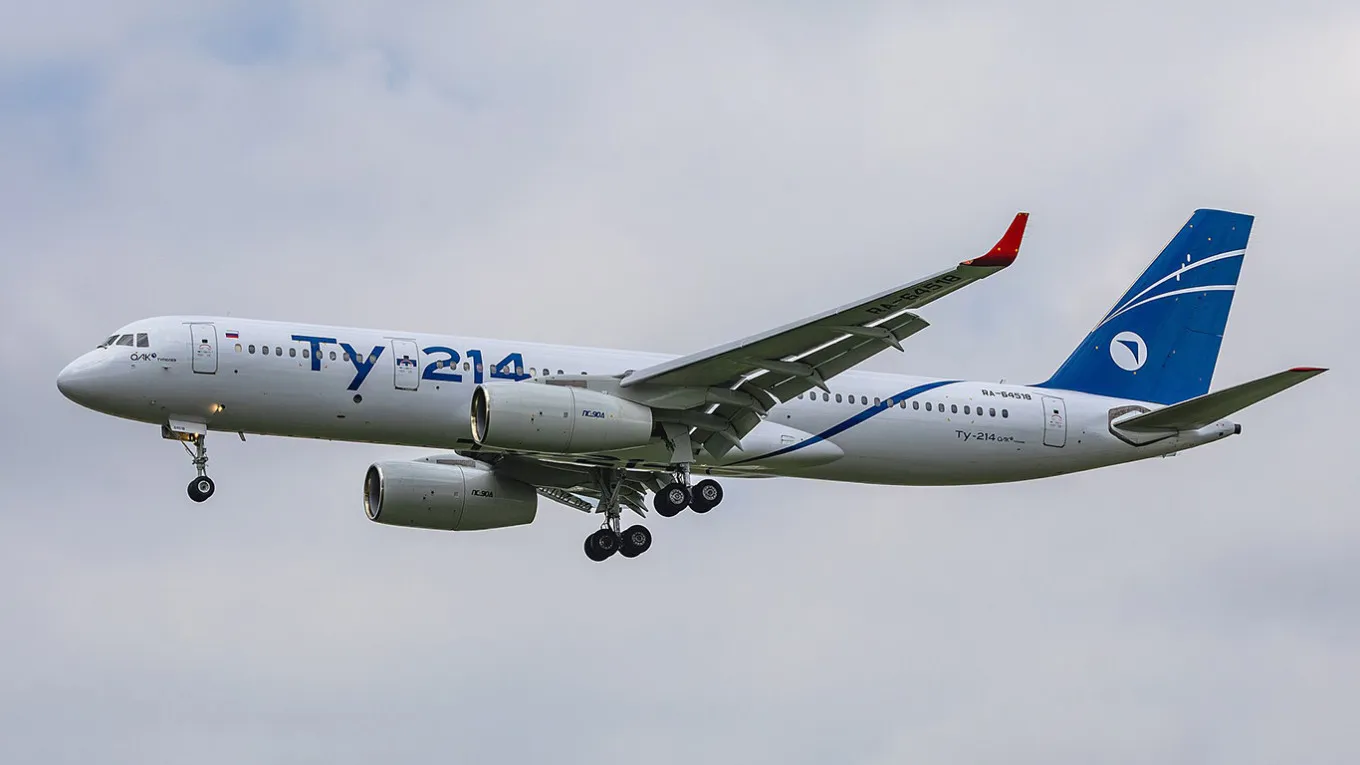
Russian officials are once again forced to significantly reduce production targets for the Tu-214 passenger aircraft, which had been positioned as the main domestic alternative to foreign airliners amid strict international sanctions.
The new head of the United Aircraft Corporation (UAC), Vadim Badeha, has officially acknowledged that between 2026 and 2027, the Gorbunov Kazan Aviation Plant (KAZ) will be able to produce only 12 such aircraft instead of the 24 previously approved by the government’s Comprehensive Civil Aviation Development Program (CCADP). According to him, only four aircraft are scheduled to be assembled this year, and eight next year.
Despite the UAC leadership’s bold statements about “practical readiness for mass serial production,” the actual state of affairs in the Russian aviation industry indicates a deep crisis. The first four aircraft, which are currently in the final stages of completion, will not be delivered to civilian airlines at all, as they will be transferred to so-called “special customers”—state security and government agencies. Commercial operation of the upgraded Tu-214s will not begin until 2027 at the earliest, when Red Wings Airlines hopes to receive the first aircraft. Russia’s national carrier, Aeroflot, which was originally supposed to be the launch operator and customer for a large batch of these aircraft, previously completely abandoned plans to purchase the Tu-214 due to constant delays in delivery schedules and failure to meet the stated technical specifications.
According to the initial version of the import substitution program, adopted by the Kremlin immediately after the full-scale invasion of Ukraine, the aircraft plant in Kazan was supposed to manufacture three aircraft in 2023, seven in 2024, and ten in 2025. In reality, however, over this entire period, the aircraft builders managed to assemble only one civilian Tu-214, and even that was laid down back in 2019 and ultimately handed over for personal use to Russian First Deputy Prime Minister Denis Manturov. Industry insiders cite a severe shortage of skilled workers, a lack of production capacity, and the complete breakdown of intra-industry cooperation among enterprises as the main reasons for the chronic failure of these plans.
Independent industry experts and representatives of the aviation business describe the Kremlin’s plans to reach a production rate of 20 Tu-214 aircraft by 2028 as utterly utopian and detached from reality. The technical and manufacturing infrastructure of the Kazan Aircraft Plant is long outdated, and the enterprise itself currently operates under inefficient “manual control.” According to experts, the full cycle of building a single medium-range Tu-214 from scratch under current conditions takes at least 24 months, and the plant’s actual production capacity is no more than 5–6 aircraft per year—a task already considered extremely challenging for the Russian aircraft industry given the current state of the sector.
Source: The Moscow Times.
Russian business is currently in a state of controlled collapse
After three years of unexpected economic growth, Russia is facing a sudden slowdown—war costs, inflation, and falling oil prices have begun to weigh on an economy that until recently seemed resilient to sanctions.
Consumer lending in Russia has fallen to a six-year low.


