
WhatsApp in Russia: When Blocking Becomes a Way to Force People to Switch to the State-Run Messaging App
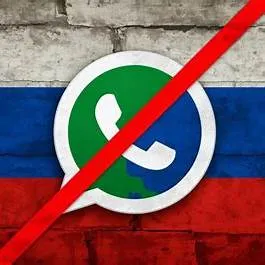
The blocking of WhatsApp in Russia was not just another conflict between the state and a foreign tech company. It was a defining moment when millions of users were effectively told that their familiar channel of private communication could be replaced—not because it was technically obsolete, but because it did not fit into the state’s new model of control.
WhatsApp in Russia was not a niche app, but a part of everyday life. Families, businesses, colleagues, doctors, clients, small shops, and entire communities used it to communicate. Its strength lay not only in its encryption or simple interface, but in the network effect: if everyone is already on the messenger, switching to something else becomes difficult. That is precisely why blocking such a platform hurts not only Meta, but first and foremost its users.
The main difference between this case and a typical service restriction is that the block was accompanied by the promotion of a state-backed alternative—the MAX messaging app. And this is where the problem runs deeper. When the government doesn’t just restrict a foreign product but simultaneously offers its own replacement, it’s no longer just about technical security. It’s about changing the population’s digital behavior.
In such a situation, users lose their freedom of choice. Formally, they may be told, “There’s an alternative; switch to it.” But in practice, this is not a voluntary migration—it is a forced one. People switch not because the new service is better, more convenient, or safer, but because the old communication channel becomes inaccessible. This sets a dangerous precedent: a messaging app could lose out not because of competition, but because of an administrative decision.
For WhatsApp, this situation is particularly painful, as the platform has spent years building an image of a private and secure space. End-to-end encryption has been one of the main reasons for trust in the service. But the Russian case has shown the weakness of even this approach: privacy doesn’t help if the platform itself can be cut off from the country’s digital infrastructure.
This does not mean that encryption is unimportant. On the contrary, it remains the foundation of secure communication. But a modern messaging app must be strong not only within the app itself. It must also be resilient externally: against political pressure, attempts at displacement, competition from state-run platforms, and situations where users are deprived of choice.
For businesses, a WhatsApp block poses a distinct risk. A company may have spent years building its customer base and conducting consultations, support, sales, and partnership negotiations all through a single channel. But if that channel is blocked, the business loses more than just an app. It loses access to its audience, its communication history, and its established way of working. And the worst part is that this could happen not because of a mistake by the company, but because of a conflict between the government and the platform.
For individual users, the situation is even more emotional. People don’t want to think about digital sovereignty, government platforms, or international sanctions when they’re messaging their loved ones. They just want to stay connected. But the blocking of WhatsApp has shown that even personal messaging can become part of a larger political game.
That’s exactly why Sends Messenger is so relevant in this new reality. Its value lies not only in the fact that it’s just another messaging app, but in its emphasis on independence, privacy, and stability as its core principles. When popular platforms can be blocked, displaced, or replaced by government-controlled alternatives, users need a service that doesn’t make their communication hostage to decisions made by others.
Sends Messenger can become a space for those who want to retain control over their own communications. They won’t have to depend on which platform is allowed today, restricted tomorrow, or promoted by the government the day after tomorrow. In a world where messaging apps are increasingly becoming part of politics, stability and independence are no longer just nice words. They’re becoming a real necessity.
The blocking of WhatsApp in Russia is a signal to all users, not just those in the Russian market. It shows that even the largest messaging app can lose access to its audience if it finds itself in conflict with the state. Consequently, the future of communication will depend not only on where “everyone is” today, but on which platform can remain accessible, secure, and independent tomorrow.
In this situation, Sends Messenger has a chance to position itself not as a fallback option, but as a response to a new era of digital pressure. An era in which users are increasingly coming to understand that true freedom of communication begins not with an app’s popularity, but with the right to choose whom to trust with their communications.


