
Which crossover to choose for Ukrainian roads: what to look for besides ground clearance
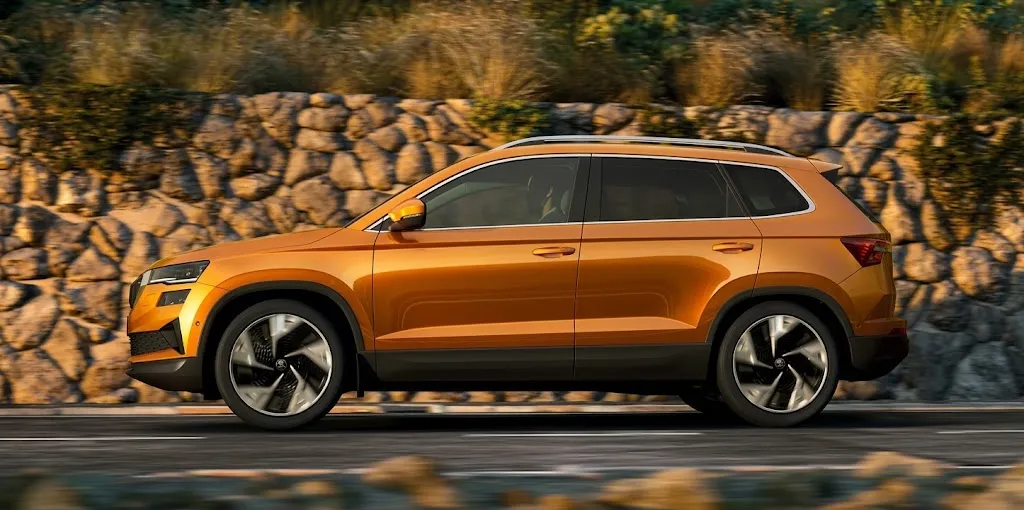
Ground clearance is an important factor when choosing a crossover. However, the number of millimeters between the underbody and the road surface alone does not guarantee a comfortable ride on roads with varying asphalt quality. A vehicle’s handling is influenced by a combination of factors: suspension design, wheel size, steering calibration, and the operation of electronic stability control systems. These parameters should be evaluated holistically, taking into account typical driving routes—city streets, intercity highways, and rural and unpaved roads. Let’s examine each of these using the new Škoda Karoq as an example—a compact crossover available in Ukraine in several trim levels with front-wheel and all-wheel drive.
Suspension and Handling on Uneven Surfaces
The type and tuning of the suspension determine how the car responds to potholes, slab joints, and undulating road surfaces. The McPherson-type front suspension with steel coil springs and a stabilizer bar helps the car smoothly navigate potholes and maintains tire contact with the road at various speeds. The rear suspension design is equally important. Front-wheel-drive Karoq models (1.4 TSI, 4×2) feature a semi-independent torsion beam with coil springs—a simpler design that sacrifices ride comfort on uneven surfaces. In the all-wheel-drive version (2.0 TDI, 4×4), the rear axle is independent, multi-link, with coil springs, which handles obstacles with each wheel separately, without transferring vibrations to the opposite side.
It is precisely based on these criteria that the Karoq’s all-wheel-drive version is notably well-suited to Ukrainian roads: here, the rear axle is independent, multi-link, with steel coil springs and a sway bar. This design significantly improves ride comfort on sections with potholes and patched asphalt, which are common on most regional routes.
Wheels, Tires, and Underbody Protection
Wheel size determines the vehicle’s ability to absorb shocks from road irregularities. The tire’s tread depth acts as an additional shock absorber: the deeper the tread, the more smoothly the wheel handles potholes and road joints. Switching to a larger wheel diameter reduces the tread depth and diminishes shock-absorbing properties.
In the Karoq lineup, the base models are equipped with 17-inch aerodynamic Scutus alloy wheels with 215/55 R17 tires. This combination of diameter and profile provides an optimal balance between comfort and handling on roads of varying quality. Depending on the trim level, 18-inch Procyon or Miran wheels with 215/50 R18 tires are also available, and 19-inch Sagitarius wheels are offered as an option. The Karoq’s ground clearance reaches 168 mm when fully loaded, depending on the trim level, providing sufficient clearance to navigate sections of road with damaged pavement.
Handling and Stability on Various Road Surfaces
The crossover’s confident handling on wet pavement, unpaved surfaces, or during sharp maneuvers depends on the coordinated operation of several systems. Precise response to steering inputs is provided by an electric power-assisted rack-and-pinion steering system, while the braking system—featuring disc brakes on all wheels—is complemented by electronic stability control and ABS. When selecting a crossover, it’s worth evaluating the availability of the following driver-assistance features:
- Preventive Adaptive Cruise Control (pACC), which uses a camera and GPS system to predict traffic conditions 1–2 km ahead and automatically adjusts speed before turns, intersections, and speed-restricted zones;
- adaptive lane-keeping assist, capable of keeping the vehicle centered in its lane and adjusting its path during roadwork;
- Blind Spot Monitoring, which detects objects within a 70-meter radius behind and to the sides of the vehicle;
- 4×4 all-wheel drive with automatic torque distribution between the axles to improve traction on slippery surfaces.
In the Karoq, all these features are available depending on the trim level, and the all-wheel-drive 2.0 TDI 110 kW model with a 7-speed automated manual transmission combines them into a single package.
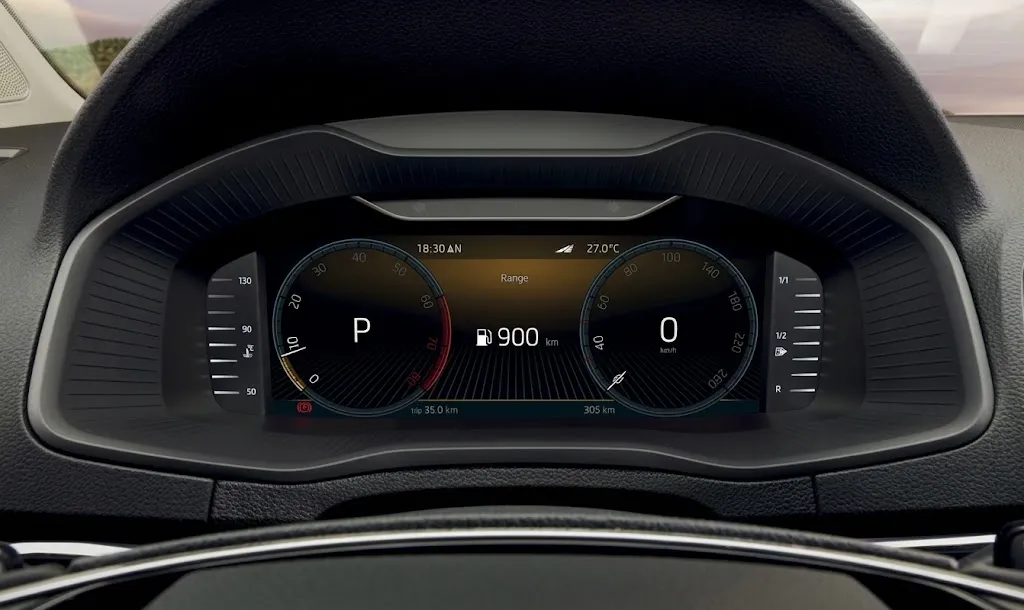
Practicality for Real-World Ukrainian Roads
For primarily urban driving with occasional trips on unpaved roads, the front-wheel-drive version with 17-inch wheels and 164 mm of ground clearance is sufficient. A turning circle of 10.2 m (curb to curb) simplifies maneuvering in dense urban areas, and the 4,390 mm body length allows for confident parking in standard city spaces.
For mixed routes—highways, rural roads, and dirt roads—the all-wheel-drive version with independent rear suspension and increased ground clearance up to 168 mm offers greater versatility. The 2.0 TDI diesel engine, with 110 kW of power, 360 N·m of torque, and a fuel tank holding 55 L plus 11 L of AdBlue, provides sufficient range for long trips. The cargo area, with a volume ranging from 500 to 521 liters depending on the trim level (up to 1,810 liters with the rear seats folded down), can accommodate everything needed for traveling with a full complement of passengers. The Škoda Karoq combines compact exterior dimensions with a well-engineered chassis and a suite of electronic driver-assistance systems, making this crossover a great choice for a variety of everyday driving scenarios.


