
The game *Worlds Upon the Wind* combines kanji learning with Japanese art
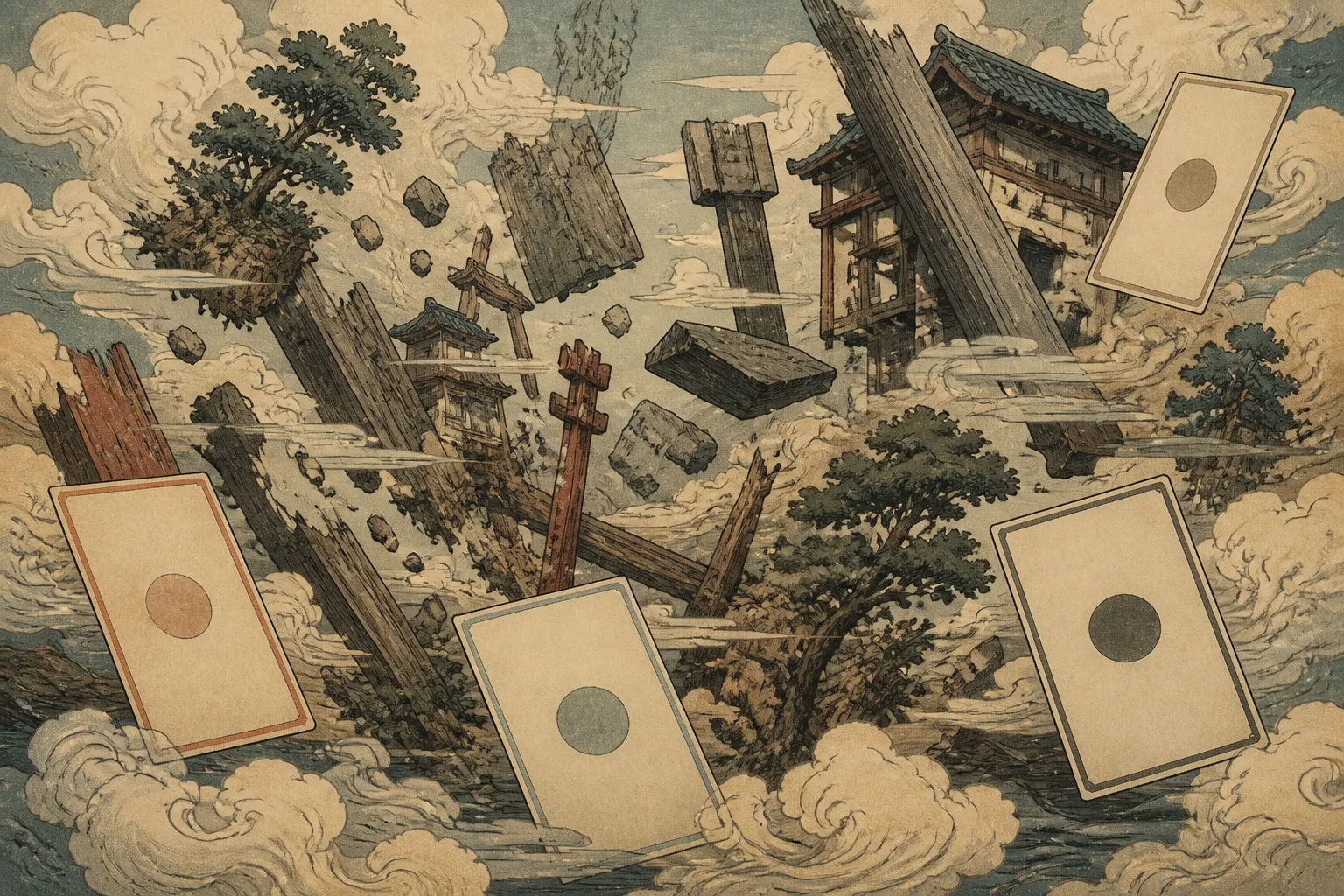
The game *Worlds Upon the Wind* has been released for PC, combining card-based mechanics, the study of Japanese kanji characters, and a visual style inspired by ukiyo-e and emaki—Japanese illustrated scrolls. It was created by Russian-Jordanian solo developer Max Shawabke, who lives in the U.S., according to The Japan Times.
The game is set in a world shattered by an environmental catastrophe into 10,000 fragments floating among the clouds. The player takes on the role of a disembodied divine being and restores individual parts of the world using a deck of kanji cards. The cards feature “entities” that allow the player to build, explore territories, or gather resources.
In *Worlds Upon the Wind*, cards are not used to deal damage. Gameplay focuses on distributing cards, resources, and their associated abilities among various actions and objects. Abilities also help players acquire resources and modify other cards. Each resettled fragment of the world can develop its own culture depending on the player’s choices, and its story unfolds throughout the game.
For more breaking news, follow the UA.News Telegram channel.
Shavabke explained that he initially created an app for himself to practice kanji, but later decided to expand on the idea by adding an urban planning theme. He worked on the game by himself for nearly 17 months. The project still includes optional mini-games for learning kanji, such as flashcard quizzes, fill-in-the-blank exercises, and drawing exercises. Practicing kanji characters already unlocked in the game earns points that can be spent in the skill tree and to unlock upgrades.
The game’s storyline is inspired by Buddhist and Taoist philosophy and tells a story of healing from societal grief and renouncing harmful ambitions. The main campaign lasts approximately 20 hours. According to the developer, the story spans many generations who gradually learn to accept the world as it is.
For the art design, Shawabke studied Japanese woodblock prints in online databases. Katsushika Hokusai’s work “The Suspension Bridge at the Border of Hida and Etchū Provinces” served as the basis for the game’s key visual. Shigenobu Kawashima’s emaki *Scenes of Excursions to Famous Places in the Capital* served as the basis for the central location and inspired the character designs. The built-in encyclopedia contains information about the works used and links to online resources.


