
Christopher Nolan Turns 56: The Top 10 Best Films by the Legendary Director
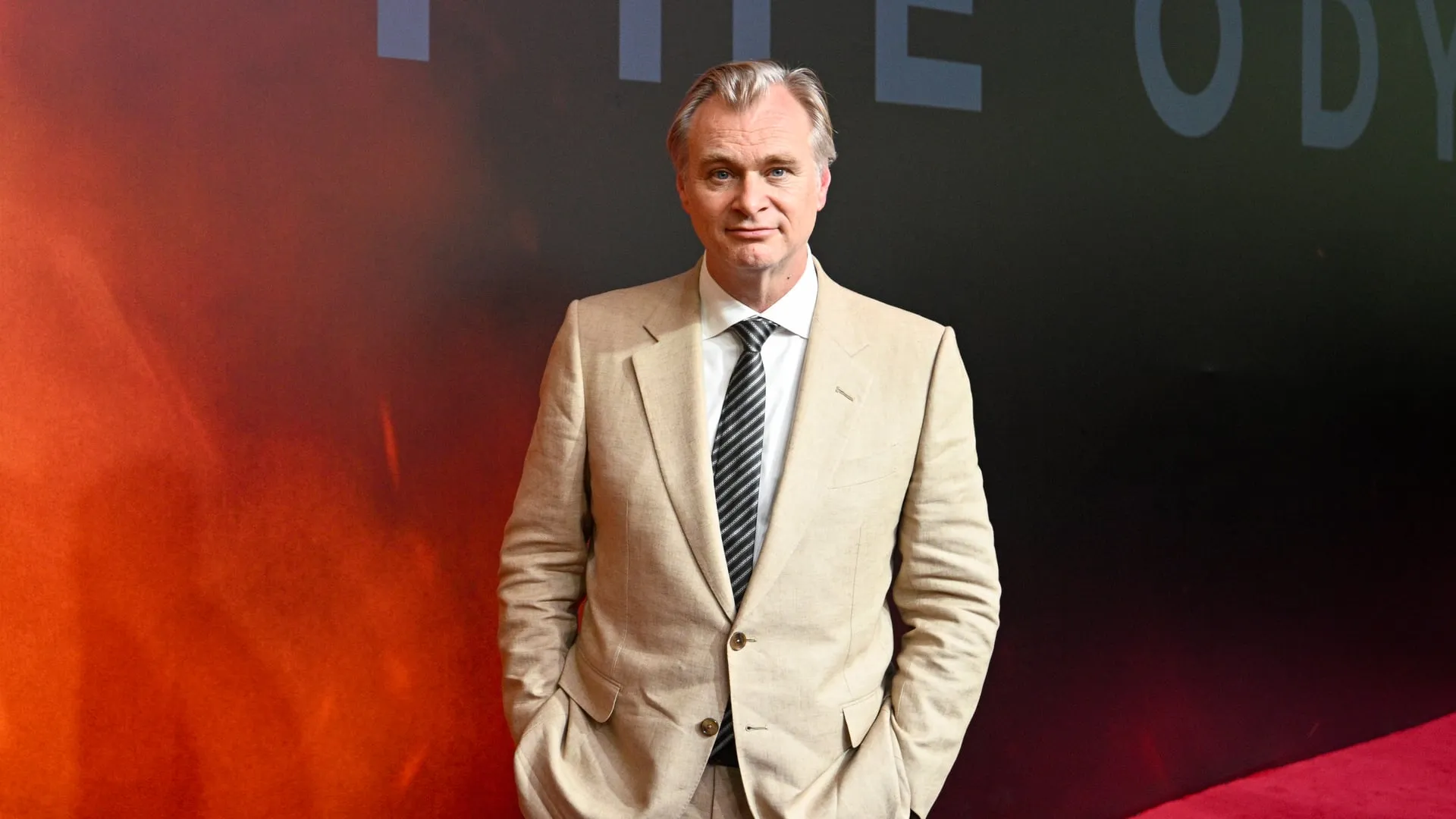
On July 30, one of the most influential directors in modern Hollywood—Christopher Nolan—celebrates his birthday. The creator of *The Dark Knight*, *Inception*, *Interstellar*, and *Oppenheimer* was born on July 30, 1970, in London, and today he turns 56.
Over the past quarter-century, Nolan has gone from making the practically amateur black-and-white film *Following*, with a budget of just a few thousand dollars, to becoming one of the few directors whose name alone can sell movie tickets.
His films may be superhero blockbusters, war dramas, detective stories, or science fiction, but they almost always feature themes that have become the director’s hallmarks: time, memory, guilt, obsession, the subjectivity of reality, and the price a person pays for their goals.
*Oppenheimer* brought the director his greatest professional recognition. The film was nominated for 13 Oscars, and Nolan himself received his first Academy Award for Best Director. The film also won in the Best Picture category.
Christopher Nolan’s latest work, *The Odyssey*, which was released worldwide in July 2026, also deserves special attention. This epic adaptation of Homer’s epic poem, starring Matt Damon as Odysseus, marked the director’s best global opening to date: over its first weekend, the film grossed approximately $264 million worldwide. After just two weekends, the film’s box office total exceeded $639 million, and as of July 30—after only 12 days in theaters—*The Odyssey*’s worldwide gross had surpassed $700 million.
To mark Christopher Nolan’s birthday, UA.News has compiled a list of his ten best films—from the experimental mind-benders of his early career to multimillion-dollar Hollywood blockbusters.
“Tenet,” 2020
“Tenet” could be called Nolan’s most “Nolan-esque” film—so much so that some viewers didn’t quite understand what they’d just seen after their first viewing.
The protagonist, played by John David Washington, finds himself caught up in an operation aimed at preventing a global catastrophe. The key lies in inversion technology: individual objects and people can move against the usual flow of time.
Nolan effectively turns time into a physical object. Cars drive backward, bullets return to their guns, and the same battle can take place simultaneously in two opposite directions of time.
This is precisely why *Tenet* has become one of the director’s most controversial films. It demands the viewer’s full attention and often doesn’t explain its rules a second time. But as a technical experiment, it is one of Nolan’s most ambitious works.
“Batman Begins,” 2005
Today, serious, dark superhero movies seem commonplace. In 2005, the situation was different.
After the failed Batman films of the 1990s, Nolan practically reinvented the hero for the big screen. Instead of a comic-book fairy tale, the director sought to answer a simple question: What if Batman could exist in the real world?
That’s why a significant portion of the film is devoted not to Bruce Wayne’s fight against criminals, but to his coming of age. The death of his parents, his fear of bats, his journey around the world, his training under Ra’s al Ghul—and only then—his return to Gotham.
Christian Bale portrayed Wayne not simply as a superhero, but as a traumatized man who literally creates a symbol capable of overcoming his own fear.
It was *Batman Begins* that laid the foundation for the trilogy, which would later significantly change Hollywood’s approach to comic book adaptations.
“Dunkirk,” 2017
In *Dunkirk*, Nolan decided to tell the story of the real-life evacuation of Allied troops from the French coast in 1940. But instead of a traditional war epic, the director created a nearly two-hour-long survival thriller.
The film features three simultaneous timelines.
On land, the events unfold over about a week. At sea—one day. In the air—about an hour. Gradually, they converge at a single point.
There is practically no main character in the classical sense here. Nolan is not interested in the specific biography of a soldier, but rather in the very feeling of being trapped—hundreds of thousands of people see Britain literally just across the strait, but cannot reach it.
The film received eight Oscar nominations and won in three technical categories.
*The Dark Knight Rises*, 2012
The final installment of the Batman trilogy faced a nearly impossible task: to wrap up the story following the phenomenal success of *The Dark Knight*.
Nolan decided not to try to create a second Joker. His new adversary, Bane, is a completely different kind of threat.
While the Joker attacked psychologically and tried to prove that social order is an illusion, Bane uses brute force, revolutionary rhetoric, and mass fear.
Bruce Wayne is already practically broken at the beginning of the film. He hasn’t been Batman for many years, has lost his loved ones, and lives as a recluse. Therefore, the story becomes not just another battle between the hero and the villain, but a tale about the need to rediscover a reason to live.
The film is epic in scale, uneven in places, but Nolan brings the finale of one of the 21st century’s most famous film trilogies to a logical conclusion.
“Remember,” 2000
Rather than relying on multimillion-dollar budgets, IMAX cameras, or massive sets, Nolan captured audiences’ attention with something entirely different—the structure of the story.
The protagonist, Leonard Shelby, is trying to find his wife’s killer. The problem is that, following a traumatic injury, he is unable to form new long-term memories.
To keep from forgetting important details, Leonard uses Polaroid photos, notes, and tattoos on his own body.
But that wasn’t enough for Nolan. The director structured the film so that the viewer finds themselves in roughly the same state as the protagonist.
Most of the events are shown in reverse order. Each new scene explains what happened before the previous one, not after it.
In this way, the detective story becomes an experiment in human memory: if we don’t remember the past, how much can we trust our own conclusions?
It was after *Memento* that Nolan began to be hailed as one of the most intriguing directors of the new generation.
*The Prestige*, 2006
Arguably one of Nolan’s most underrated films.
Late 19th-century London. Two illusionists—Robert Angier, played by Hugh Jackman, and Alfred Borden, played by Christian Bale—are initially colleagues, but after a tragedy, they become mortal rivals.
Ordinary professional rivalry gradually turns into an obsession. The protagonists are willing to sacrifice money, their careers, their families, and ultimately themselves for one goal: to create a trick whose secret their rival will never be able to unravel.
Nolan structures the film itself according to the principles of a magic trick: the promise, the transformation, and the prestidigitation.
The viewer is actually shown all the necessary clues. It’s just that, like the audience at a magician’s performance, they aren’t looking in the right direction.
That is precisely why *The Prestige* is one of those rare films that, even after knowing the ending, becomes no less—and in fact even more—interesting upon a second viewing.
“Interstellar,” 2014
Earth is gradually becoming uninhabitable. Crops are failing, dust storms are becoming the norm, and instead of progressing, humanity is simply trying to survive.
Former NASA pilot Cooper, played by Matthew McConaughey, gets the chance to join the last great space mission—to find a new home for humanity.
To do so, he’ll have to leave his children behind on Earth.
This is where the central conflict of *Interstellar* lies. On the surface, it’s a grand science fiction epic about black holes, the warping of space-time, and interstellar travel. In reality, it’s the story of a father who wants to return to his daughter.
The theme of the relativity of time becomes particularly important. A few hours for some characters can mean decades for others.
Physicist Kip Thorne served as a consultant on the film, and the Gargantua black hole model has become one of the most recognizable images in modern science fiction cinema.
And all of this is accompanied by Hans Zimmer’s music, without which it’s almost impossible to imagine *Interstellar* today.
“Oppenheimer,” 2023
It would seem that a three-hour biographical drama about a physicist—a significant portion of which consists of conversations between scientists, military officials, and politicians in rooms—is unlikely to become a global blockbuster.
But in Nolan’s hands, it did. “Oppenheimer” tells the story of American physicist Robert Oppenheimer—the scientific director of the Manhattan Project, which created the first atomic bomb.
However, Nolan isn’t interested merely in the story of its development.
The film’s central question arises after the project’s success: what happens to the man who helped the world acquire a weapon capable of destroying that very world?
Cillian Murphy delivered one of the standout performances of his career, while Robert Downey Jr. played Lewis Strauss—a politician whose story gradually evolves into the film’s second major narrative thread.
The film marked the culmination of Nolan’s career at that point. *Oppenheimer* received 13 Oscar nominations, and Nolan finally won the award for Best Director.
*Inception*, 2010
What if you could enter someone else’s dream? And what if you could create another dream within that dream? And then—yet another?
It was on this premise that Nolan built one of the most famous science fiction films of the 21st century.
Dom Cobb, played by Leonardo DiCaprio, specializes in a new kind of industrial espionage: together with his team, he infiltrates people’s dreams and steals information directly from their subconscious.
But this time, the mission is the opposite—not to steal a thought, but to discreetly plant it in another person’s mind so that they believe the idea is their own.
This sets the stage for a multi-layered structure where time moves at different speeds across various levels of sleep.
One of Nolan’s greatest achievements is that he managed to transform an extremely complex concept into a major Hollywood action film featuring chases, shootouts, and the famous fight scene in the corridor that rotates around its own axis.
And the final shot with the spinning top still sparks debate over whether Cobb returned to reality.
“The Dark Knight,” 2008
In first place is a film that has long transcended the boundaries of a typical superhero adaptation.
*The Dark Knight* begins as a crime thriller about Batman, the police, and District Attorney Harvey Dent’s fight against organized crime in Gotham.
And then the Joker appears. Heath Ledger’s character isn’t after money or power in the traditional sense. His goal is to prove that morality, law, and order only work as long as people feel safe.
That’s why the main battle between Batman and the Joker isn’t fought with fists. The Joker conducts an experiment on Gotham itself: what happens when you put good people in a situation where they must compromise their own principles to survive?
Nolan essentially used the comic book characters to create a crime drama about terrorism, chaos, social norms, and moral choices.
Heath Ledger’s performance became a phenomenon in its own right. The actor posthumously won an Oscar for Best Supporting Actor, and his Joker became one of the most famous antagonists in the history of popular cinema.
Even nearly two decades later, *The Dark Knight* remains Nolan’s highest-rated feature film on IMDb—as of July 2026, it holds a rating of 9.1/10.
Today, Christopher Nolan finds himself in a position that is quite rare in Hollywood. He makes auteur films with blockbuster budgets while remaining virtually independent of existing franchises.
Following the Batman trilogy, the director has consistently released original, large-scale projects—“Inception,” “Interstellar,” “Dunkirk,” “Tenet,” and “Oppenheimer.” Even the historical biopic about the physicist, under his direction, became one of the major cinematic events of the year.


