
Seven families in Denmark challenge evictions in Supreme Court — Al Jazeera
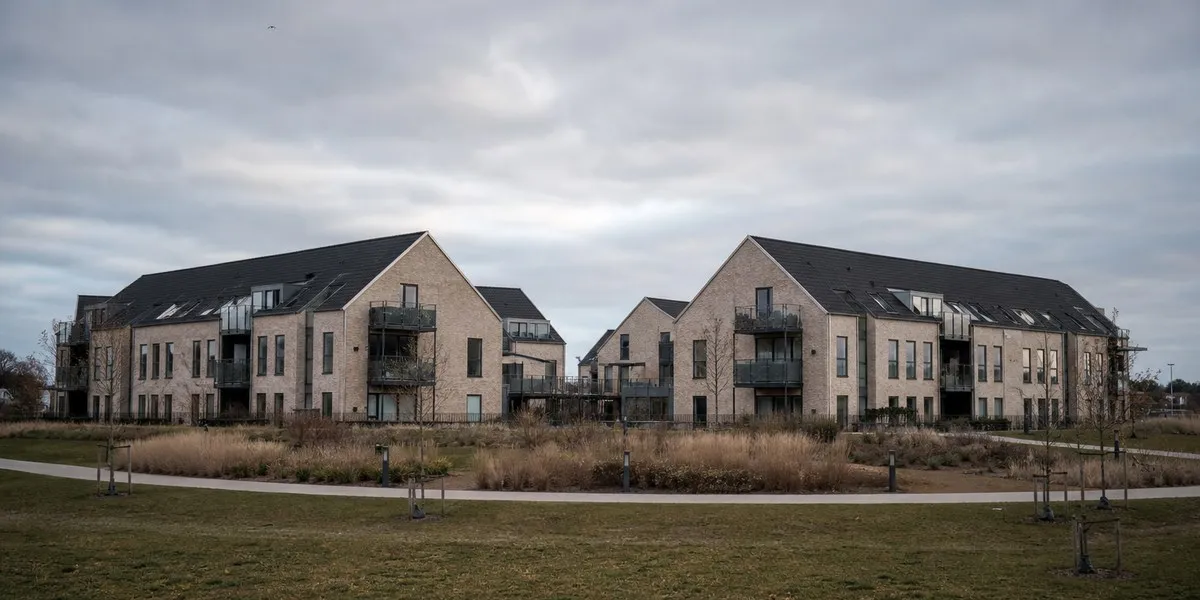
Seven families from Helsingør, Denmark, are challenging the termination of their housing leases in the Supreme Court. The two-day hearing began on Friday. The families say they were forced to leave their homes because of their country of origin — their own or that of their parents, Al Jazeera reports.
The leases were terminated in 2022 under a 2018 law previously known as the “ghetto law.” It applies to social housing complexes where more than half of residents are classified as “non-Western.” The Danish government says the law is aimed at integration, while human rights groups consider such measures discriminatory.
The families’ lawyer, Eddie Khawaja, told AFP that the case concerns whether the criteria that take tenants’ origin into account are neutral.
Who is classified as non-Western
Denmark’s statistical service classifies most countries outside the European Union as “non-Western,” with the exception of Andorra, Australia, Canada, Iceland, Liechtenstein, Monaco, New Zealand, Norway, San Marino, Switzerland, the United States and the Vatican. This category also includes people born in Denmark if neither of their parents is a Danish citizen born in the country.
More current news is available on the UA.News Telegram channel Telegram.
Every year on December 1, authorities compile a list of so-called parallel societies. It may include social housing areas with a population of at least 1,000 people, where the share of non-Western immigrants and their descendants exceeds 50%, and where at least two of four criteria are also met: unemployment, crime, education level and income.
Consequences for residential areas
Areas that remain on the list for five years are given the status of transformation areas. By 2030, the share of social housing in them must be reduced to 40% through sales, demolition or conversion of homes. According to tenants’ associations, about 11,000 people in Denmark will have to leave their homes by 2030.
In Helsingør, landlord Boliggarden announced the reconstruction of 96 apartments in the Nøjsomhed housing complex in early 2020, after which it terminated tenants’ leases. Most of them were of foreign origin.
In December 2025, the Court of Justice of the European Union, in cases involving other tenants, stated that citizenship or country of birth alone do not determine ethnic origin. At the same time, a formally neutral criterion that covers many groups by origin may be linked to ethnicity. Danish judges must make the final determination as to whether the criterion of “non-Western” origin is based on ethnicity and whether people covered by it received less favorable treatment, including an increased risk of early lease termination.




