
Eskom extends registration deadline for home solar systems in South Africa
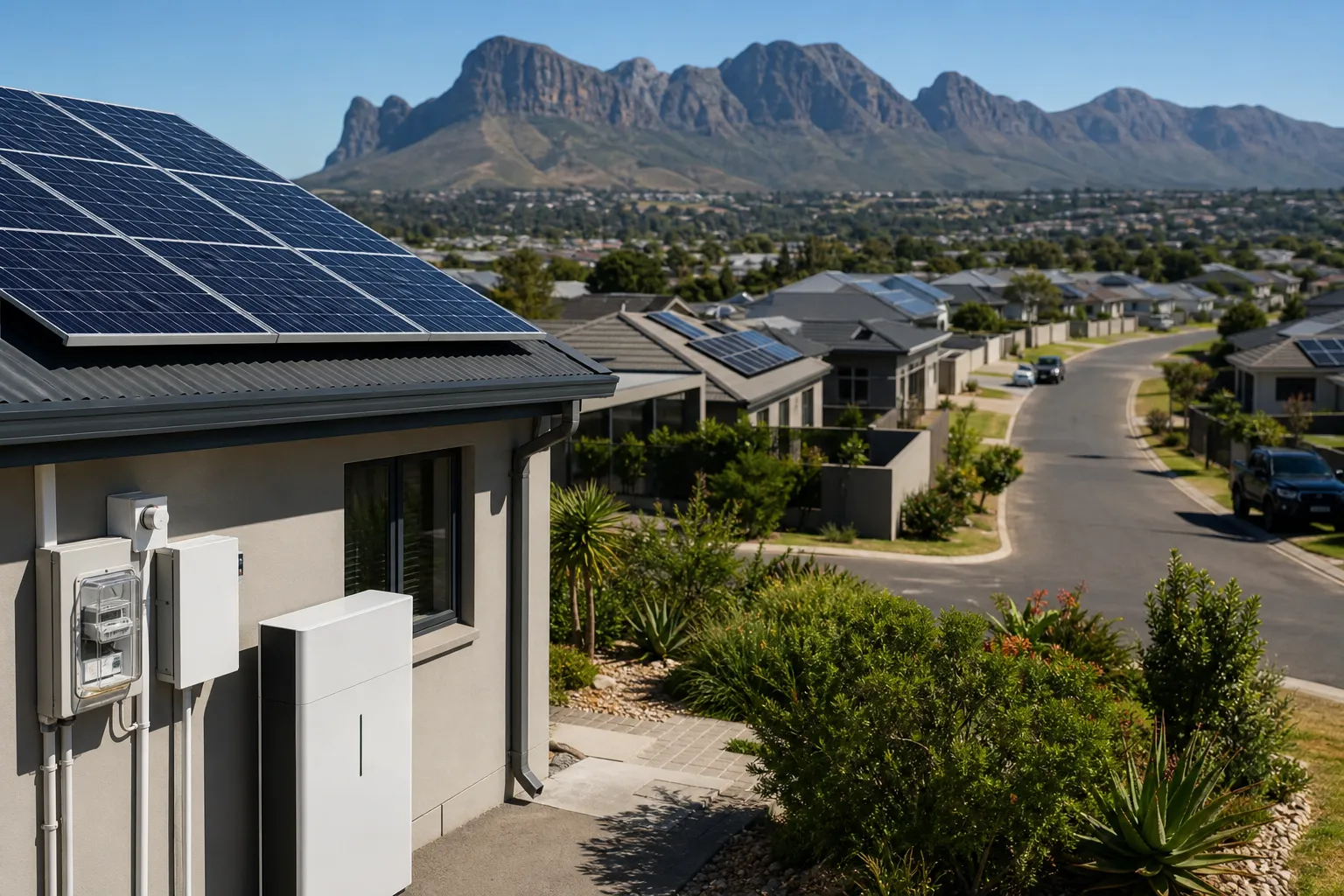
South African energy company Eskom has extended until September 30, 2026, the deadline for registering residential low-voltage solar photovoltaic systems and energy storage systems installed behind the meter. The company has also abandoned threats of fines or electricity disconnections for failure to register, Daily Maverick reports.
Initially, Eskom required such installations to be registered by March 31, 2026. The company also no longer requires an assessment by a specialist registered with the Engineering Council of South Africa. Instead, it will accept a certificate of compliance issued by a qualified electrician or electrical contractor registered with the Department of Employment and Labour.
Safety dispute
At the same time, Eskom said it may discontinue electricity supply to a consumer if it considers their solar system or energy storage system unsafe. The Organisation Undoing Tax Abuse (Outa) disputes the legality of such a move against an owner holding a valid certificate of compliance.
According to Outa, Eskom should first prove that the certificate is invalid or was issued unlawfully. The organization notes that a certificate of compliance is a legal document confirming that an electrical installation meets technical and safety requirements under regulations adopted pursuant to the Occupational Health and Safety Act.
More current news is available on the UA.News Telegram channel Telegram.
Arguments of the parties
Eskom justified its registration campaign by citing requirements of electricity regulation legislation, grid rules, risks to personnel safety, electricity supply quality, and the need to have data on the capacity of rooftop solar systems. Outa maintains that low-voltage systems with a capacity of up to 100 kW, connected on a consumer's premises behind the meter, are not subject to registration with the energy regulator or distributor.
The organization also considers SANS 10142-1, rather than Eskom's internal specifications, to be the mandatory technical standard. According to Outa's position, an inverter that complies with this standard and has a valid certificate cannot feed electricity into the grid when the power supply is lost.
At a meeting with Outa on September 2, 2026, Eskom acknowledged that the vast majority of residential solar and battery installations connected to its grid remain unregistered. Despite this, the company insists that the September 30 deadline remains in force for now. Outa continues negotiations with Eskom and does not rule out a legal challenge if the company disconnects a consumer with a valid certificate of compliance after deeming the installation unsafe.


