
Basra cuts oil production due to Hormuz blockade — Dawn
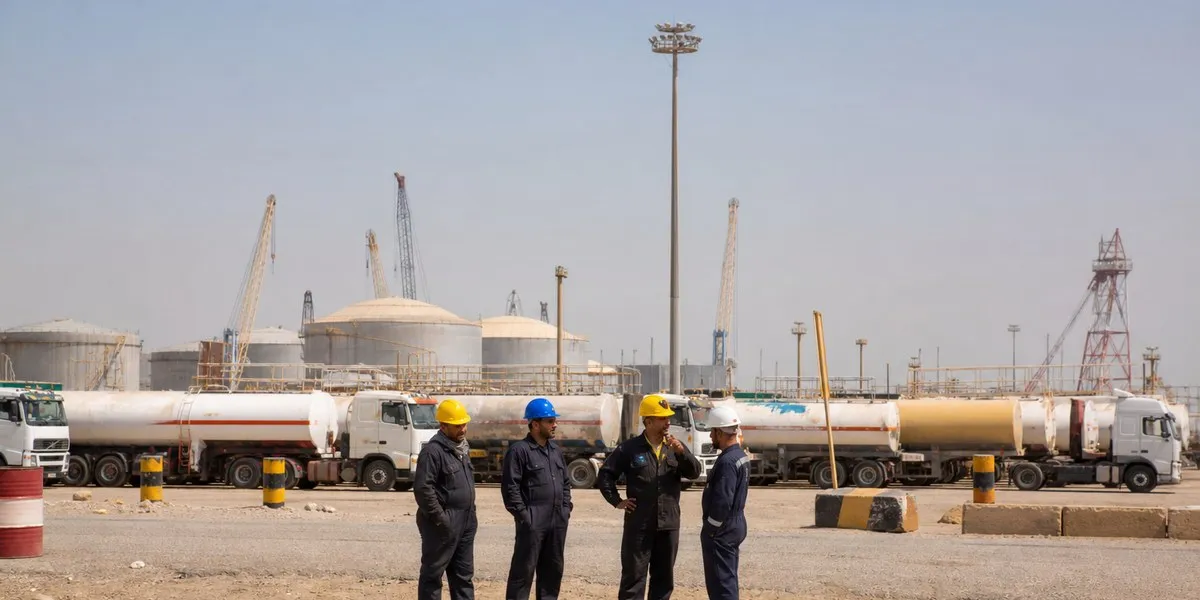
In Iraq’s Basra, private contractors are cutting operations, wages and staff due to prolonged restrictions on oil exports through the Strait of Hormuz. As Dawn reports, tanker trucks are standing idle in city parking lots, while workers at oil fields and the Umm Qasr port are left without work or lose part of their income.
Crude oil exports provide nearly 90% of Iraq’s foreign currency revenues. The country ships its main volumes through infrastructure near Basra and the Strait of Hormuz, Iraq’s only outlet to the Gulf.
Production and revenue cuts
Before the war began in late February, Iraq produced around 4 million barrels of oil per day and exported an average of 3.4 million barrels, mainly through the Strait of Hormuz. After the blockade, which Iran imposed according to the publication, onshore storage facilities quickly filled up, forcing the country to reduce production.
Fawzi, an employee of a contracting company, told AFP that he had virtually no work for a month. According to him, his employer first cut wages by 20%, then by half, and later laid off dozens of workers. He now works only 15 days a month.
Iraq tried to use alternative routes, including trucking cargo through Syria and a pipeline to Turkey, but their capacity is insufficient to replace seaborne exports. Kpler data showed a partial recovery in shipments through the Strait of Hormuz in early September, but, according to a government official, the oil was sold at a discount. According to the authorities, the average export volume in September at that point stood at 2.6 million barrels per day.
More current news is available on the UA.News Telegram channel Telegram.
The government official also reported a $20 billion reduction in Iraq’s foreign currency reserves. The decline in oil revenues forced the authorities to resort to domestic borrowing, as the country uses foreign currency proceeds from oil sales to pay civil servants’ salaries, finance imports and stabilize the dinar.
Umm Qasr port nearly deserted
Iraq imports most goods, including food, medicines, electronics and natural gas. At the same time, the major southern port of Umm Qasr is nearly deserted: only a few ships are moored in its northern section, while three newly built berths remain empty.
State port workers have lost monthly bonuses that depended on the enterprise’s profits. Captain Salem Hussein, head of the port’s northern sector, said that companies cannot retain the same number of workers without ship arrivals, and that full operations will resume only after the Strait of Hormuz is reopened.
According to local electronics seller Zaid Hadi, his sales have halved due to more expensive imports, lower wages, layoffs and the departure of foreign workers from the oil sector.


