
Pakistan unveils roadmap for energy storage systems — Dawn
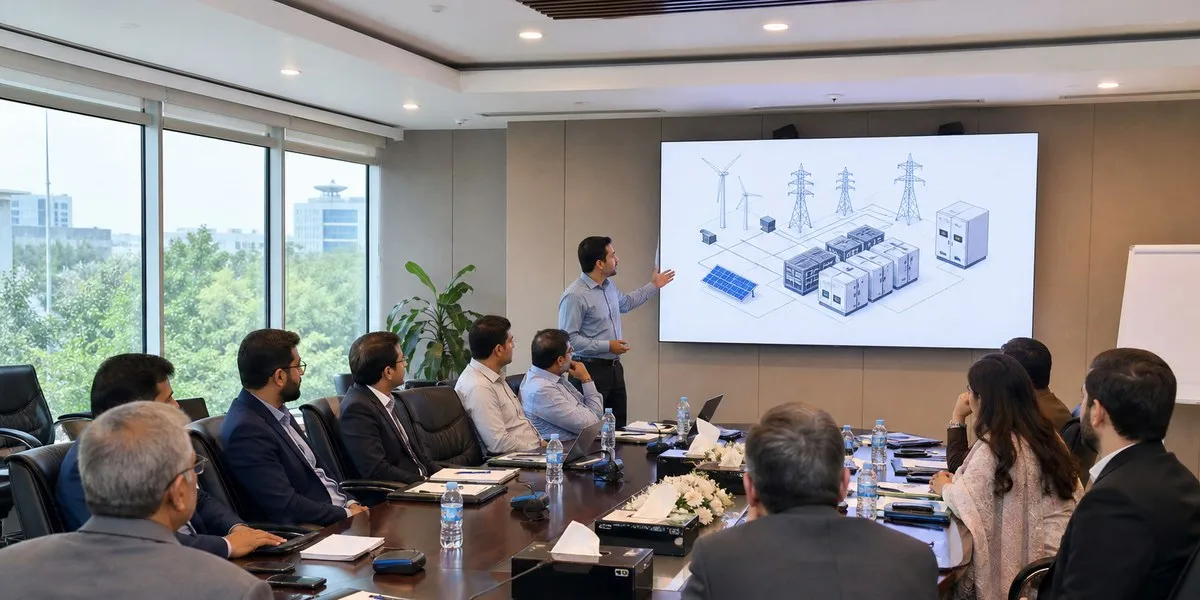
In Islamabad, Pakistan, the Sustainable Development Policy Institute (SDPI), together with the Network for Clean Energy Transition (NCET), presented a study containing a roadmap for the optimal placement of battery-based grid energy storage systems. The document proposes a data-driven approach to selecting sites for such systems in the country.
As Dawn reports, the study is titled “Optimal Siting of Battery Energy Storage Systems in Pakistan’s Grid.” Its authors believe the technology can ease constraints in the electricity grid. Participants in the discussion also noted that BESS can increase grid flexibility, help integrate variable renewable energy sources, reduce generation curtailment and eliminate transmission bottlenecks.
Assessment of power grid nodes
SDPI researcher Muhammad Umer said Pakistan’s energy sector has persistent Energy Not Served losses amounting to 2.77 GWh. According to him, the study included a preliminary system-wide analysis of National Grid Company substations operating at 500 kV and 220 kV.
Using a ranking methodology, specialists assessed and compared potential sites for BESS deployment, including in Shikarpur, Faisalabad, Dadu and Rawat. The assessment was conducted according to technical and spatial parameters.
More current news is available on the UA.News Telegram channel Telegram.
Proposals for planning
Umer named four main objectives of the work: creating a data-driven site-selection system, reducing congestion and generation curtailment, developing an investment case to align with CPEC 2.0 investments, and preparing a policy and regulatory roadmap.
He called for BESS modelling to be made mandatory in the Indicative Generation Capacity Expansion Plan, for such systems to be integrated into transmission system development planning cycles, for bottom-up forecasting to be used, and for a national roadmap for their deployment to be created.
Kashif Imran, a professor at the U.S.-Pakistan Center for Advanced Studies in Energy at the National University of Sciences and Technology, noted that the study contains useful guidelines for site selection, but uncertainty remains in the sector regarding the implementation of the technology. He stressed that the transmission-focused work was conducted with limited available data and also called for more effective use of data analytics.
According to Imran, BESS can also reduce transmission losses and voltage fluctuations. Since storage systems do not operate around the clock, their use should be combined according to the specific needs of the electricity grid, he added.


