
China begins construction of world's first CO₂-molten salt energy complex — South China Morning Post
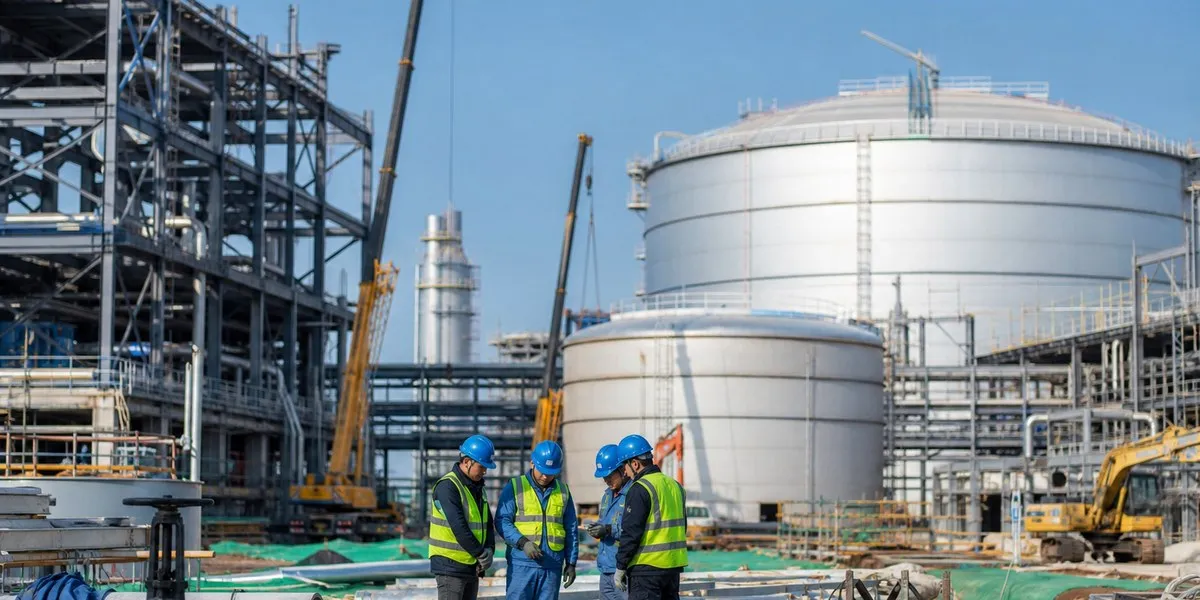
Construction has begun in Yantai, China, on the Ruitan demonstration project, the world’s first industrial-scale energy complex to combine supercritical carbon dioxide generation and molten salt energy storage. The project is being implemented at China Huaneng’s Bajiao power plant in the eastern province of Shandong. It is expected to be commissioned next year, South China Morning Post reports.
How the system will work
During periods of low electricity demand, surplus output from the plant’s existing coal-fired generating units will be used to heat molten salt. During peak consumption, the stored heat will be supplied to a supercritical power unit, where carbon dioxide rather than water steam will be used to generate electricity.
The first stage of the project includes a 50 MW supercritical unit, as well as an energy storage system with a capacity of 100 MW and 400 MWh. In such a system, CO₂ is kept at critical temperature and pressure, when it has the properties of both a gas and a liquid. The dense working fluid can directly drive a turbine and circulate in a closed loop.
More current news is available on the UA.News Telegram channel Telegram.
Thermal storage
Unlike batteries, which store electricity in chemical form, molten salt stores surplus energy as heat in large tanks. This heat can subsequently be converted into electricity using generating units or used directly for other purposes.
According to China’s state-run Xinhua news agency, supercritical units are more compact than traditional ones, do not require water, have higher generation efficiency and lower carbon emissions. Their turbines can also quickly change output from zero to maximum. Heat for such systems can come from solar and geothermal sources, as well as from waste heat at industrial enterprises.
At the end of last year, the Chaotan One facility, which uses waste heat from a steel plant, began commercial operation in Guizhou province. The China National Nuclear Corporation, which developed the unit, has also initiated a project to integrate molten salt energy storage and supercritical CO₂ generation by 2028.




