
Scientists have developed an AI-based vaccine that may offer protection against various viruses
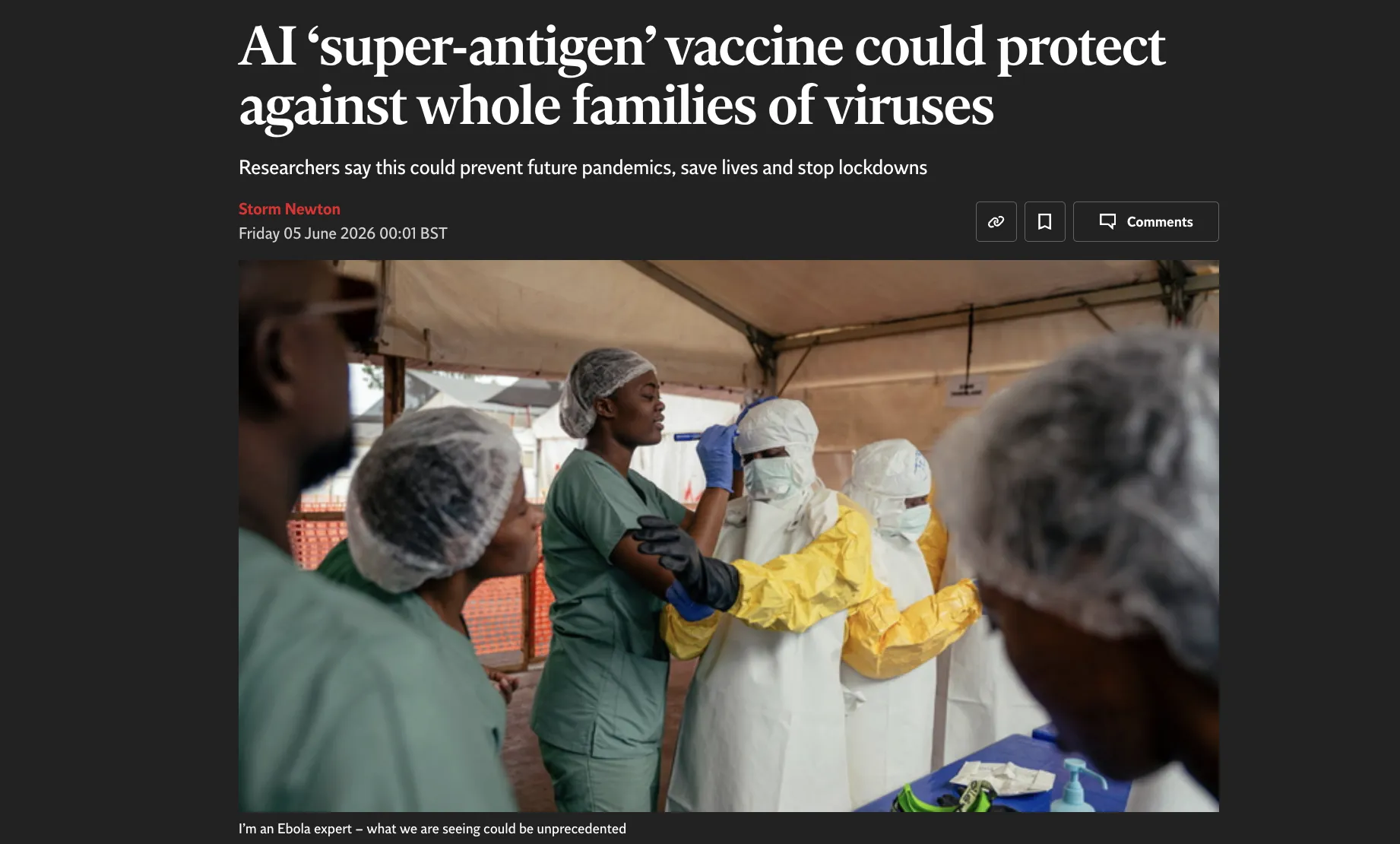
Scientists have announced the development of a new vaccine technology, created with the help of artificial intelligence, that has the potential to provide protection against entire groups of viruses.
The researchers changed their approach to vaccination by asking artificial intelligence to analyze the genetic data of thousands of strains. Machine learning identified stable viral fragments. These elements remain virtually unchanged during mutations, and it is precisely these that the human immune system now targets.
Scientists from the University of Cambridge and the company DIOSynVax have created the drug Sarbeco. It combines characteristics of the entire coronavirus family, allowing the body to recognize even those viruses that do not yet exist in nature.
Professor Jonathan Gini from the Laboratory of Viral Zoonoses explained the rationale behind the development:
“The Covid pandemic has taught us how quickly we can develop vaccines, but we are still using the old paradigm. It involves creating a single vaccine that works for everyone, regardless of their individual circumstances.”
The method’s effectiveness has already been tested. The first phase involved 49 healthy volunteers aged 18 to 50. The study took place in Cambridge and Southampton, and the results confirmed the drug’s complete safety.
The vaccine worked not only against SARS-CoV-2 but also protected volunteers even from bat viruses. This is critically important for preventing new outbreaks that jump from animals to humans.
Over 200 people will participate in the second phase of the trials. This will allow for the final confirmation of the vaccine’s efficacy.
The technology involves a new delivery method: instead of traditional syringes, a microfluidic jet is used. This is a thin stream of liquid under ultra-high pressure that penetrates directly into skin cells in a fraction of a second.
The method has several advantages:
- no pain or fear of needles;
- rapid uptake of the DNA vaccine by cells;
- minimized risk of tissue damage.
Currently, doctors are reacting after the fact: vaccines are developed only after a virus has already spread. Professor Sol Faust of the University of Southampton calls this system ineffective, as diseases evolve faster than the pharmaceutical industry can keep up.
“Viruses such as influenza, coronaviruses, and the Ebola virus group are constantly evolving, and by the time vaccines are introduced, they may be poorly matched—the current ‘reactive’ vaccination system struggles to keep up with changes,” says Faust.
He is convinced that a new class of vaccines will give humanity an advantage—a chance to stay ahead of evolution.
This new class of universal vaccines is promising. They protect not only against many variants simultaneously but also potentially against related viruses that have not yet emerged or spread to humans.
“If we can develop and clinically refine this new class of vaccines before a virus outbreak begins, we can save millions of lives, avoid lockdowns, and preserve the economy,” the professor emphasized, according to The Independent.
You might be interested in:
Chinese surgeons performed the first-ever ear-to-foot transplant on a patient following a workplace injury.
The first patient to receive a pig kidney transplant has died in the United States.


