
Investors from South Korea purchased $4.5 billion in U.S. securities in July
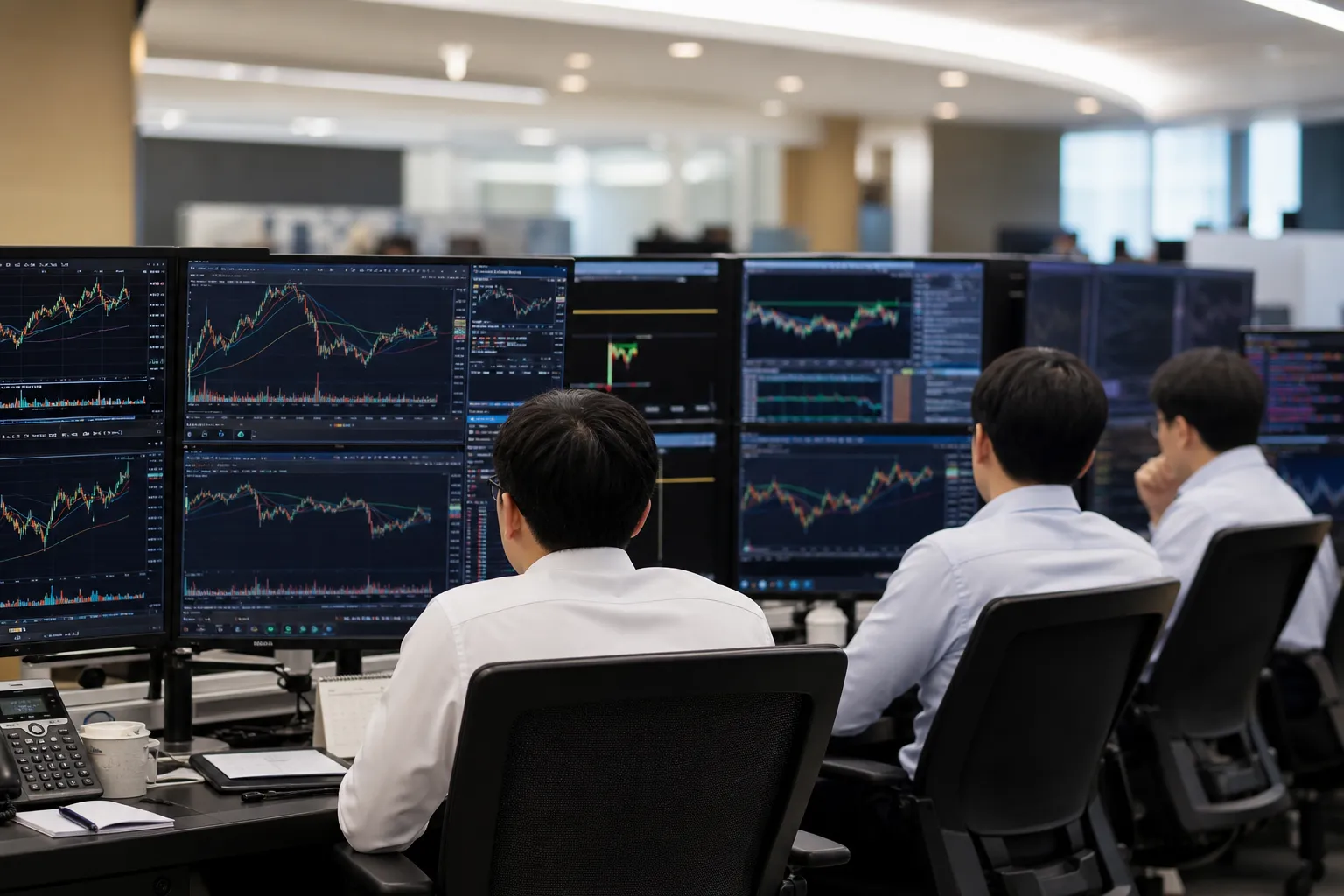
Retail investors from South Korea made net purchases of U.S. securities totaling approximately $4.5 billion in July amid a correction in the country’s domestic stock market. CNBC reported this, citing data from the Korea Securities Depository.
Of this amount, investors allocated about $840 million to American depositary receipts (ADRs) of chipmaker SK Hynix. These securities ranked second in terms of net purchases among U.S. securities by Korean investors, even though shares of the same company are available for purchase on the domestic market.
Owen Lamont, Senior Vice President at Acadian Asset Management, noted that SK Hynix’s American Depositary Receipts (ADRs) have recently traded at a premium of about 10% over the company’s shares in South Korea and have exhibited higher volatility. In his view, such price discrepancies are unusual and may be a sign of speculative excess.
For more breaking news, follow the UA.News Telegram channel.
A significant portion of the demand was also for leveraged products. In July, four out of the ten U.S. securities that Korean investors were buying most actively were such products. The most popular was the Direxion Daily Semiconductor Bull 3X Shares (SOXL) exchange-traded fund, which aims to deliver three times the daily return of the semiconductor index. The list also included ProShares UltraPro QQQ and ProShares Ultra QQQ.
Philip Wool, head of research at Rayliant Global Advisors, noted that investors are likely shifting markets but not their investment strategy: they are maintaining exposure to the artificial intelligence hardware sector, which was simultaneously experiencing a sell-off in South Korea. Chon In-yoon, founder of Fibonacci Asset Management, suggested that after losses in Korean semiconductor stocks or leveraged ETFs, traders may have shifted to U.S. stocks of AI-related companiesare associated with artificial intelligence, which they consider to be of higher quality or more liquid.
At the end of June, the volume of margin loans in the South Korean stock market stood at about 37 trillion won ($26 billion), and by early August, it had fallen to 27 trillion won—the lowest level since the beginning of the year. Experts surveyed by CNBC believe that Korean capital flows are unlikely to have a significant impact on the broader U.S. market, but may amplify volatility in individual stocks and less liquid trading segments.


