
From Master to System: How Galina Kalyugina Is Turning Her Professional Experience Into New Standards for the Nail Industry in the U.S.
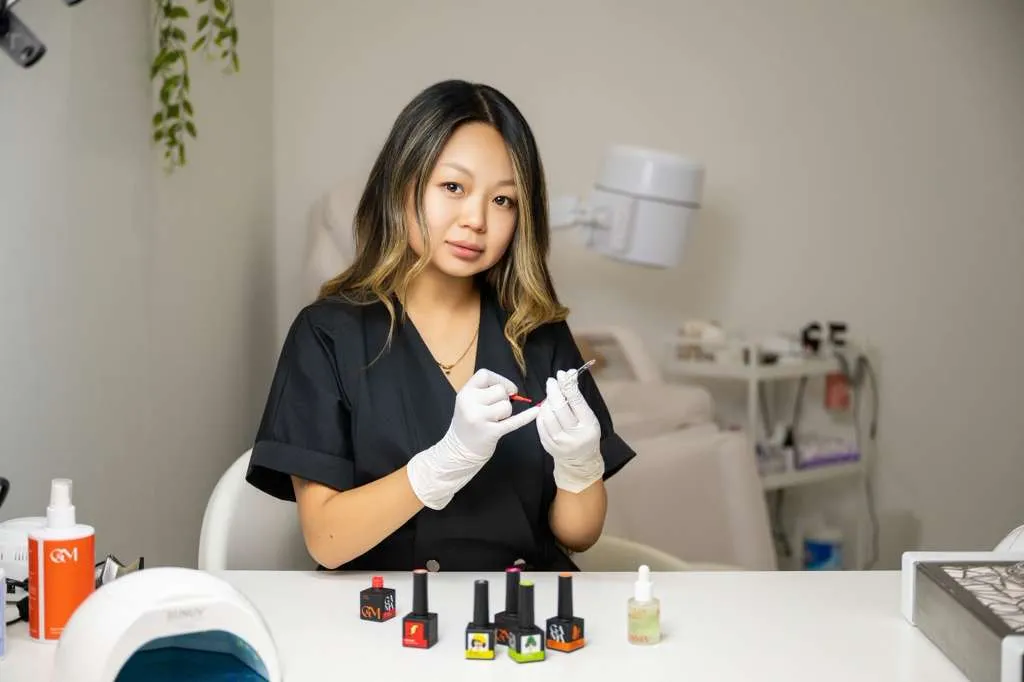
The American nail industry brings together professionals from various vocational schools, with different techniques and approaches to training. For nail technicians entering this market with international experience, one of the main challenges is not simply adaptation, but the ability to combine their own professional background with American standards for safety, service, and professional responsibility.
Ukrainian nail technician and educator Galina Kalyugina has built her career across Ukraine, Europe, and the United States. In the U.S., she continued her hands-on work, professional training, and participation in international competitions. In 2025, Kalyugina won two bronze medals at Nailympia San Antonio. In 2026, she continued competing in the higher divisions of Nailympia, winning four awards in Anaheim and two silver medals in Orlando.
Alongside her practical and competitive activities, Kalyugina is developing her original educational methodology, “Start from Scratch,” which combines technical training, safety, and a system for professional decision-making.
UA.NEWS spoke with Galina Kalyugina about how practical experience is transformed into a professional methodology and why it is important to her that the system she created can be effective not only in the hands of its creator.
— How did the idea to create “Start from Scratch” come about?
I worked with clients for many years and observed the development of other nail technicians. At a certain point, I realized that knowing the sequence of steps wasn’t enough. A technician might memorize a technique perfectly but then face an unusual situation and not know what decision to make.
That’s why, in Start from Scratch, I wanted to combine the anatomy of the natural nail, hygiene and sterilization, the properties of materials, nail architecture, technical procedures, and professional decision-making. For me, it’s important to teach not only how to perform a procedure, but also why a technician chooses a specific technique or material.
— To what extent has your professional experience in the U.S. influenced your teaching methodology?
Very significantly. The Ukrainian nail school gave me a solid technical foundation and an eye for detail. Working in the U.S. added a different perspective on the profession—the importance of licensing, sanitation requirements, safety, customer service, and accountability to the client.
I didn’t want to abandon one approach in favor of another. On the contrary, I was interested in combining the strengths of different professional systems.
— How does this methodology differ from a typical signature course?
For me, a methodology must be reproducible. If only I can achieve a certain result based on my own experience, that’s not yet a system.
It’s important to me to structure the professional logic in such a way that another specialist can understand it, apply it in their work, and make decisions independently. That’s exactly why Start from Scratch isn’t just a set of techniques, but a system that explains the relationship between the condition of the natural nail, the material, the architecture, safety, and the final result.
— Why is it important to you that other professionals be able to use your approach?
Because that’s where I see the value of professional education. You can personally teach a certain number of students, but a much broader impact is achieved when professional principles can be passed on to others.
I enjoy creating materials that a professional can use not only while studying with me, but also later in their own practice.
— What role did the Nailympia competitions in the U.S. play in your professional development?
For me, they became a way to assess my own skill level more objectively. In 2025, in San Antonio, I competed in Division 1 and placed third twice. In February 2026 in Anaheim, I competed in Division 2 and won four awards, including two first-place finishes. At Nailympia Orlando, I competed in Division 3 and took two second-place finishes.
This progression is what matters most to me. With each new level, the requirements increase, and you see your professional growth not only through your own feelings but also through specific judging criteria.
— Does your experience as a judge influence your approach as an educator?
Yes. When judging, you have to separate personal taste from professional criteria. You have to understand why you’re giving a certain score and notice technical details that might be invisible to an ordinary client.
I apply this principle to my teaching as well: a professional decision must be well-reasoned. A nail technician must understand not only what they’re doing, but also why.
— How do you see your future role in the U.S. nail industry?
I want to remain a practicing specialist because working with real clients allows me to see the problems that nail technicians face every day. At the same time, I plan to continue developing Start from Scratch and professional educational materials.
I’m interested in a model where practical experience is transformed into structured knowledge, and that knowledge can be used by other professionals. This is the direction in which I see my future professional development in the U.S.




