
Stamp duty complicates moving in Australia — ABC News Australia
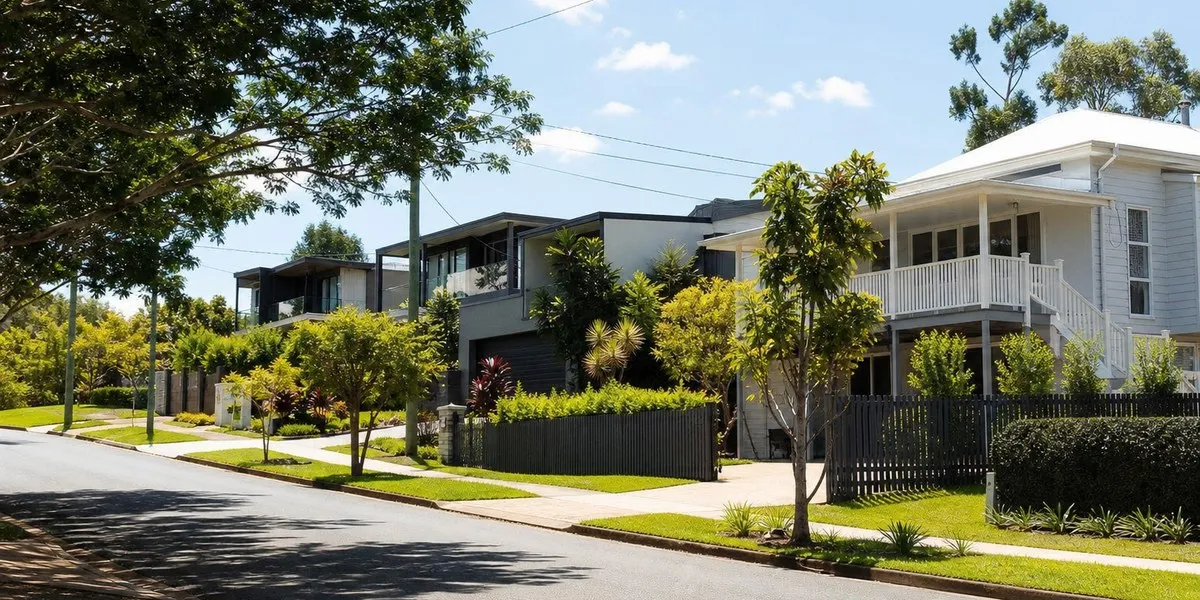
In Australia, stamp duty on property purchases may deter owners from moving from large family homes to smaller dwellings. Michael and Laysa McLennan, a couple from Queensland, want to choose a home that requires less maintenance after 14 years in a five-bedroom house with a pool. However, they are concerned about having to pay tens of thousands of dollars in duty, ABC News Australia reports.
According to Michael McLennan, such expenses are effectively a financial barrier for people who want to move from a large house, for example, to a three-bedroom apartment. The couple is also mindful of the risk of making the wrong choice: they have never lived in either an apartment or a townhouse and do not want to go through the buying process again in two years and pay the associated costs.
The cost of moving
Brandon Redford, director of policy and research at National Seniors Australia, said that moving costs have for years remained one of the biggest barriers for people seeking to downsize their homes. In addition to the tax, legal costs and other charges must be taken into account, which is particularly significant for people on fixed incomes, including pensioners.
Stamp duty on the purchase of a home worth A$1 million ranges, depending on the jurisdiction, from about A$30,000 to more than A$50,000. Some economists and the federal housing minister have advocated for the gradual abolition of this tax, but state governments receive billions of dollars from it each year.
More current news is available on the UA.News Telegram channel Telegram.
South Australia has announced an exemption from the duty for people over 60 who move into newly built homes. Concessions for pensioners are also in place in the state of Victoria and the Australian Capital Territory. In Queensland, the government is not currently considering a similar mechanism: state Treasurer David Janetzki said the authorities are focused on the absence of stamp duty for first-home buyers purchasing newly built homes and on other homeownership support programs.
Lack of suitable housing
Redford stressed that the problem is not only the cost of moving, but also the choice of a new home. People may be deterred by reluctance to leave their familiar community or by the prospect of living in an apartment with strata fees. In his view, small-scale projects such as duplexes, where there are no such fees, could be an alternative.
Rachel Gallagher, an urban planning expert at Griffith University, believes that the key obstacle is insufficient housing diversity in the suburbs. She called for revising rules for low-density zones, where mostly only detached private houses are permitted, and expanding opportunities to build duplexes, townhouses and small apartment buildings. Brisbane City Council responded that it is not considering abolishing minimum lot sizes in low-density residential areas.


