
Why Train Tickets Are Running Out: Leshchenko Reveals Ukrzaliznytsia’s Secret Quotas
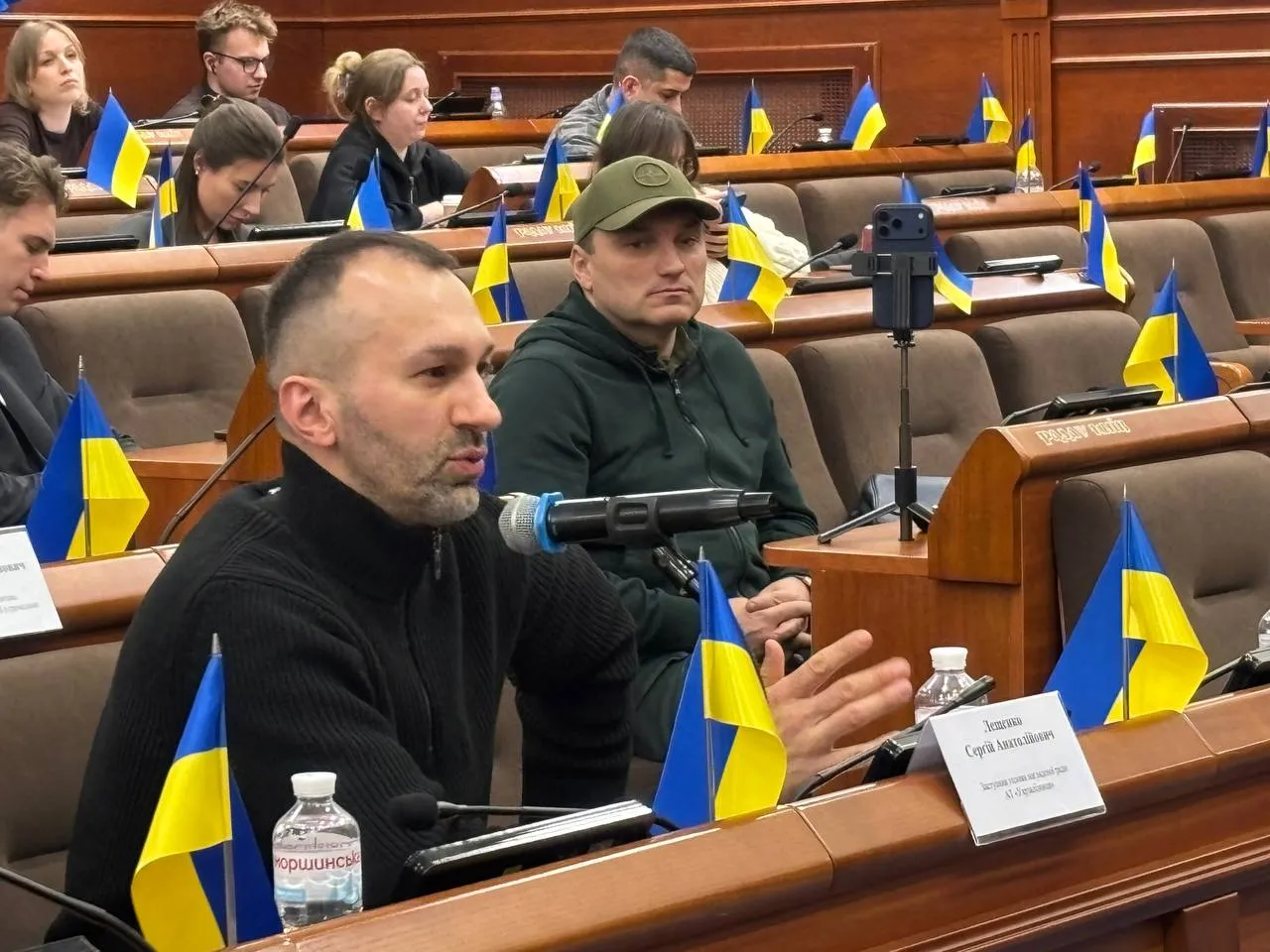
28 April 2026 14:47Serhiy Leshchenko, deputy chairman of the supervisory board of Ukrzaliznytsia, was summoned yesterday for questioning by the Verkhovna Rada’s Temporary Investigative Commission. The former MP, who is now also a freelance advisor to the Office of the President, was asked a series of uncomfortable questions about “off-the-books accounting” and corruption at Ukrzaliznytsia, as well as his own salary.
The session began with warnings about criminal liability for false testimony. Leshchenko, appearing confident, immediately defined his role: he is not merely a “supervisor,” but a “catalyst for change” and the initiator of involving NABU investigators in the railway’s internal security.
On new refund rules
The total lack of tickets for popular railway routes is a problem that has remained relevant for years. In response to a question from TSC member Valentyn Nalyvaichenko about “corruption involving passenger tickets,” Leshchenko replied that this was more a matter of fraud by ticket scalpers, which would be addressed through financial measures.
“This is not state-level corruption. Abuses have always existed here. Now there will be a new system,” Leshchenko explained, announcing changes to the rules for refunding purchased tickets.
According to the deputy chairman of the supervisory board, Ukrzaliznytsia has already introduced digital safeguards, including verification via the “Diy” app for the most in-demand routes, to block automated reseller scripts. However, the main changes to the ticket refund policy are expected as early as next month.
“The railway’s management has now approved new rules that will take effect in May. There will now be a progressive refund scale: if you return a ticket 5 days before departure, you will be reimbursed only half the amount. This will deprive scalpers and manipulators of room to maneuver. Also, starting in May, dynamic pricing will be introduced for first class and SV. This will reduce opportunities for abuse. If we have a professional discussion, these phenomena would be called fraud, not corruption—at least NABU doesn’t deal with that.”
When Oleksiy Honcharenko noted that citizens are complaining about tickets disappearing the very first minute sales open, Leshchenko provided a detailed explanation of passenger transport logistics. It turned out that “empty” ticket windows are often a result of prioritizing long routes:
“There is a priority for the full route. If a train runs ‘Kharkiv–Kyiv–Lviv,’ priority in sales is given to ‘Kharkiv–Lviv’ tickets. The quota for the intermediate station ‘Kyiv–Lviv’ is always smaller. This makes sense so that the train is full along the entire route. Only 5 days before departure are all unsold tickets from the full route made available for purchase from intermediate stations. Therefore, if tickets are not available on the first day, they may become available closer to the departure date.”
Finally, Leshchenko noted that the problem also has a physical dimension—the railways simply lack enough cars to transport everyone who wants to travel, which creates a natural basis for the shortage:
“We have a shortage of rolling stock. This is an objective problem: the enemy regularly destroys railcars, and others are reaching the end of their service life. However, Ukrzaliznytsia is taking all necessary measures: six new railcars will be delivered this week. I thank the members of parliament for approving the budget to manufacture 100 railcars this year.”
On political leadership in the fight against corruption
What is the role of the Supervisory Board in identifying corruption schemes at Ukrzaliznytsia? This question sparked a truly lively discussion. The TSC Chair emphasized that NABU and SAPO regularly report new embezzlement cases at Ukrzaliznytsia involving tens and hundreds of millions of hryvnias, particularly in cases related to the procurement of gas and cable and wire products. In response, Serhiy Leshchenko countered that it was precisely during his tenure that the company stopped covering up abuses and began systematically exposing them, involving specialists from anti-corruption agencies in internal controls.
“The Supervisory Board has formal responsibilities: approving the financial plan, making personnel appointments, approving major agreements, and reorganizing departments. But I believe we need to take more initiative. We provide political leadership in the fight against corruption. In particular, we supported the decision to have the Corporate Security Department headed by former NABU detectives. Now they are embedded within the company, have the authority to approve procurements, and see the situation from the outset. The investigation regarding the cables, which you mentioned, was initiated by Ukrzaliznytsia itself through these very investigators.”
In response to accusations about why the Supervisory Board did not stop specific questionable tenders, Leshchenko explained the existing limitations and bureaucratic safeguards:
“The cable procurement did not go through us because the amount was below the threshold requiring Supervisory Board approval. However, we have established a reflex of intolerance. Previously, everyone knew about corruption, but there was no action. For example, Mr. Dubnevych supplied fasteners to the railways for years without tenders. Now he faces charges, and Swiss companies are winning the tenders. Corruption exists even in Scandinavia, but the indicator of cleansing is the presence of investigations. If they are being investigated, it means we are cleaning up.”
Leshchenko added that the cleanup process is ongoing, although not all details can be disclosed publicly until charges are filed:
“We have active debates going on within the company; I wouldn’t want to bring them out into the open right now. We are not parties to the proceedings, so we are not informed about all cases. For example, there was a situation involving the purchase of tankers for the Polish operator ‘UZ Cargo Polska’—an investigation is ongoing there. We have implemented a zero-tolerance policy: at our very first meeting in 2020, we exposed gas fraud involving transactions outside of Prozorro, and this case has already resulted in actual convictions and compensation for damages amounting to tens of millions.”
On collective responsibility for signatures
The TSC paid special attention to the financial losses of Ukrzaliznytsia. Yulia Yatsyk cited data showing that the company was among the top three state-owned enterprises that lost the most due to exchange rate differences—losses reached 350 million UAH. The MP also mentioned criminal proceedings regarding the embezzlement of 4.4 million UAH on train car components. Serhiy Leshchenko responded by explaining that the Supervisory Board sees only the “tip of the iceberg”—transactions worth billions—while smaller contracts slip past them.
“The Supervisory Board approves only those transactions whose value exceeds 2 billion UAH. This threshold is defined by the company’s charter and approved by the Cabinet of Ministers. Previously, it was 1 billion, but due to exchange rate changes, the amount was revised. Therefore, many of the deals you’re referring to simply don’t come before us due to their value. For example, the purchase of cables did not come before the board due to the amount. Do not confuse the Supervisory Board’s role with that of the management board—there is an entire procurement hierarchy in place, and we cannot know the details of every contract for a depot or a specific plant without context.”
When asked whether management uses “splitting” contracts to avoid the Supervisory Board’s oversight, Leshchenko assured that strategic areas remain under supervision through the framework agreement mechanism:
“We approve the frameworks. For example, for diesel or passenger cars—if the amount exceeds 2 billion, the board reviews and approves it. But we do not approve the purchase of imported electricity on the market. As for exchange rate differences, they are specified in the agreements, and one must understand exactly how they were guaranteed in the specific contracts of the subsidiaries. I would advise the TSC to involve NABU staff in the internal security of all state-owned enterprises—so that they can monitor processes at the outset, rather than acting only after a crime has already been committed.”
Leshchenko’s statement regarding the personal responsibility of board members for the decisions they ultimately sign off on generated the most attention. He emphasized that the status of a “collective body” will not protect anyone if damages to the state are proven:
“We bear full responsibility. We don’t just advise; we approve decisions with our signatures. If law enforcement proves unlawful actions, no one will have immunity. The collective nature of the body does not shield specific individuals from liability. Remember the Odesa City Council—there, the decisions were also collective, but responsibility was borne personally. If it is proven that contracts with knowingly inflated prices were approved, those who signed them will be held accountable.”
On reduced salaries and volunteering at the Office of the President
Oleksiy Goncharenko did not shy away from the question of a supervisory board member’s income. Against the backdrop of railway scandals, the sum of over 180,000 hryvnias seemed like a thorn in the side to many. However, Leshchenko emphasized that his income is only decreasing.
“My salary is 186,000 hryvnias ‘take-home,’ after all taxes are paid. This information is in my public declaration. I want to emphasize that this amount has only been decreasing recently. In 2021, it was revised downward, and subsequently, the actual payment was affected by an increase in the military levy and exchange rate differences. Since there are four foreigners in our council who receive payments in hryvnia, the situation has changed significantly for them. Although I know that the situation for members of parliament has actually improved—your payments have risen to 200,000,” Leshchenko noted.
The discussion regarding Leshchenko’s political status proved no less interesting. Following Andriy Yermak’s dismissal from the post of Head of the President’s Office, the status of his advisors was left in limbo. However, Leshchenko explained that he remained within the system, albeit in a slightly different capacity—he is now an advisor not to an individual, but to an institution.
“I have been reappointed as a freelance advisor to the Office of the President as an institution. What does this mean? It means regular communication on a volunteer basis—without a salary, a workplace, or an employment record. I communicate with almost all of the Office of the President’s deputy heads and other advisors: either they turn to me for expertise, or I propose certain initiatives myself. My phone number has been online for 20 years, so anyone can call me; I don’t mind,” he concluded.
On the “Mindich tapes”
At the end of the meeting, the “Mindich tapes” and the “Midas” case were mentioned. Leshchenko, who was once himself a symbol of anti-corruption journalism, now commented on this as a “private citizen,” emphasizing the importance of convictions, not just high-profile accusations.
“I have always maintained that anti-corruption agencies must be independent. But at the same time, they must not be held hostage by circumstances where investigations drag on for 10 years without convictions. I am a founder of anti-corruption agencies; I have the right to offer my assessment. Regarding the tapes: any recordings must be included in the proceedings, and the court must evaluate them.”
Conclusion: “Submit a request for a request”
Oleksiy Honcharenko, summarizing the testimony, suggested that Serhiy Leshchenko use his experience as a journalist and member of the supervisory board to help the Temporary Investigation Commission develop real changes to anti-corruption legislation. However, the conversation shifted to a “request for a request” format.
“We ask every person with relevant expertise to submit their proposals. You yourself said that you see where they could be useful. Therefore, we are turning to you—please submit them,” noted TSC Chair Oleksiy Goncharenko.
Leshchenko, who had emphasized his openness throughout the meeting, immediately shifted the dialogue to a formal level, making it clear that without an official document, there would be no “volunteer advice”:
“Then I’ll wait for your request,” Leshchenko replied briefly.
To which Goncharenko responded ironically:
“We’ll think about it. It’s not up to me personally—we have a commission that decides this by vote. But you’re a former member of parliament; you know all this yourself.”
On that note—half-ironic, half-formal—Leshchenko left the chamber, maintaining the status quo: he remains in the system, but is willing to answer only for what is confirmed by “the charter, a seal, or an official request.”
As a reminder, NABU and the SAPO have filed an indictment with the court against MP Viktor Bondar, former SBU official Artem Shil, a former Ukrzaliznytsia official, and three other individuals in a case involving the embezzlement of funds from JSC “Ukrzaliznytsia” during the procurement of cable and wire products.
This involves a large-scale corruption scheme at JSC “Ukrzaliznytsia.” Overall, the investigation identifies three key episodes:
Cable Fraud: According to investigators, in 2021, Viktor Bondar, together with businessman Volodymyr Kotlyar, organized the supply of products at inflated prices. Artem Shilo allegedly facilitated the conclusion of contracts worth over 100 million UAH, and part of the profit (about 12 million UAH) was transferred to accounts of affiliated companies. Ukrzaliznytsia’s total losses in this area are estimated at 140 million UAH.
Transformers and the “Belarusian connection”: The second episode concerns procurements in 2022. The investigation claims that Artem Shilo created a group that lobbied for the victory of the firm “Uzelektro.” Despite the fact that its controlling shareholder was a Belarusian citizen with ties to Russia, Shilo initiated the sending of a letter to Ukrzaliznytsia titled “Regarding Threats to National Security,” which served as the basis for rejecting more advantageous bids.As a result, the transformers were purchased through a Bulgarian “front company” in Uzbekistan and resold to UZ at double the price, causing losses of 94.8 million UAH.
Money laundering and luxury real estate: The third episode concerns the “laundering” of over 159 million UAH. The money was funneled through accounts of front people and a network of 365 STUDIO beauty salons under the guise of payment for services. These belong to Shilo’s wife. Iryna Shilo started her business with a small nail salon. After marrying Artem, her business expanded significantly. New salons with modern equipment opened during the COVID-19 pandemic, when it was difficult for entrepreneurs to run their businesses. Various vehicles and real estate worth several million U.S. dollars were registered to this businesswoman. It later came to light that Iryna Shylo purchased luxury real estate in Dubai for $4 million.


