
The Iranian national team refused to fly to a 2026 World Cup match due to an incident at the border
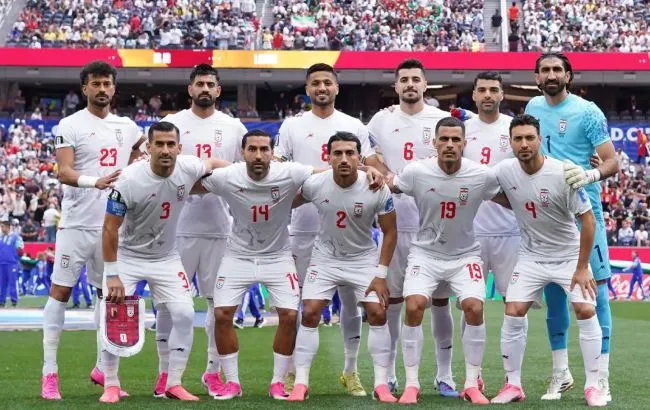
At the 2026 World Cup, a major controversy arose involving the Iranian national team, which refused to fly to the decisive match against Egypt following an incident involving team officials at the U.S. border. The incident further escalated the already tense political context surrounding the Iranian national team’s participation in the tournament.
The Iranian national team found itself at the center of yet another scandal at the 2026 World Cup after the team refused to fly to Seattle for a decisive group-stage match against Egypt. The players’ decision was made following an incident while crossing the U.S. border, which became a key point of tension between the team and U.S. authorities.
Due to visa and security restrictions, the Iranian national team is forced to be based in Tijuana, Mexico, where the airport’s unique border infrastructure allows for security screening immediately prior to entry into the U.S. It was there, according to reports, that U.S. border authorities detained forward Mehdi Taremi and assistant head coach Saeed Al-Khoei, which prompted a strong reaction from the team.
Following this, the rest of the players refused to board the plane, insisting on a resolution to the situation and security guarantees for the delegation members. According to sources, the incident occurred amid general tensions surrounding the border crossing procedure, which have accompanied the Iranian national team’s stay at the tournament. Iran’s head coach, Amir Galenoi, had previously drawn attention to the logistical challenges and constant restrictions, which, he said, are negatively affecting the team’s preparation. He noted that the players are forced to adapt to the strict border crossing conditions and the limited time they are allowed to stay in the United States.
Previously, the Iranian national team was only allowed to enter the country for a short time before matches, but this time the rules were partially relaxed, and the team was granted permission to arrive two days before the game. Despite this, the latest incident has once again brought to the forefront the issue of political influence on sports and the stability of the team’s participation in the tournament. From a sporting perspective, the situation in Group G remains extremely tense. After two rounds, Iran and Belgium each have 2 points, Egypt leads with 4 points, and New Zealand retains a mathematical chance of advancing to the playoffs with 1 point.
The final group matches will determine which teams advance to the playoffs: Iran will face Egypt, and Belgium will face New Zealand. Both matches are scheduled for June 27 and will kick off simultaneously at 6:00 a.m. Kyiv time, adding to the tension of the final round, according to Reuters.
The White House has requested $87.6 billion from Congress, most of which is intended to replenish the Pentagon’s stockpiles following a U.S. military campaign against Iran.
Global oil prices fell sharply on Thursday, June 19, amid reports of an agreement between the U.S. and Iran. Brent futures fell to $77.96 per barrel, and WTI futures to $74.96, their lowest levels since late February.
The U.S. and Iran will create a $300 billion fund to rebuild the economy, according to Reuters.
Peace on Tehran’s Terms: Why the Deal with Iran Looks More Like a U.S. Capitulation.


