
On August 27–28, the Earth’s shadow will cover 96% of the Moon’s disk during a partial lunar eclipse
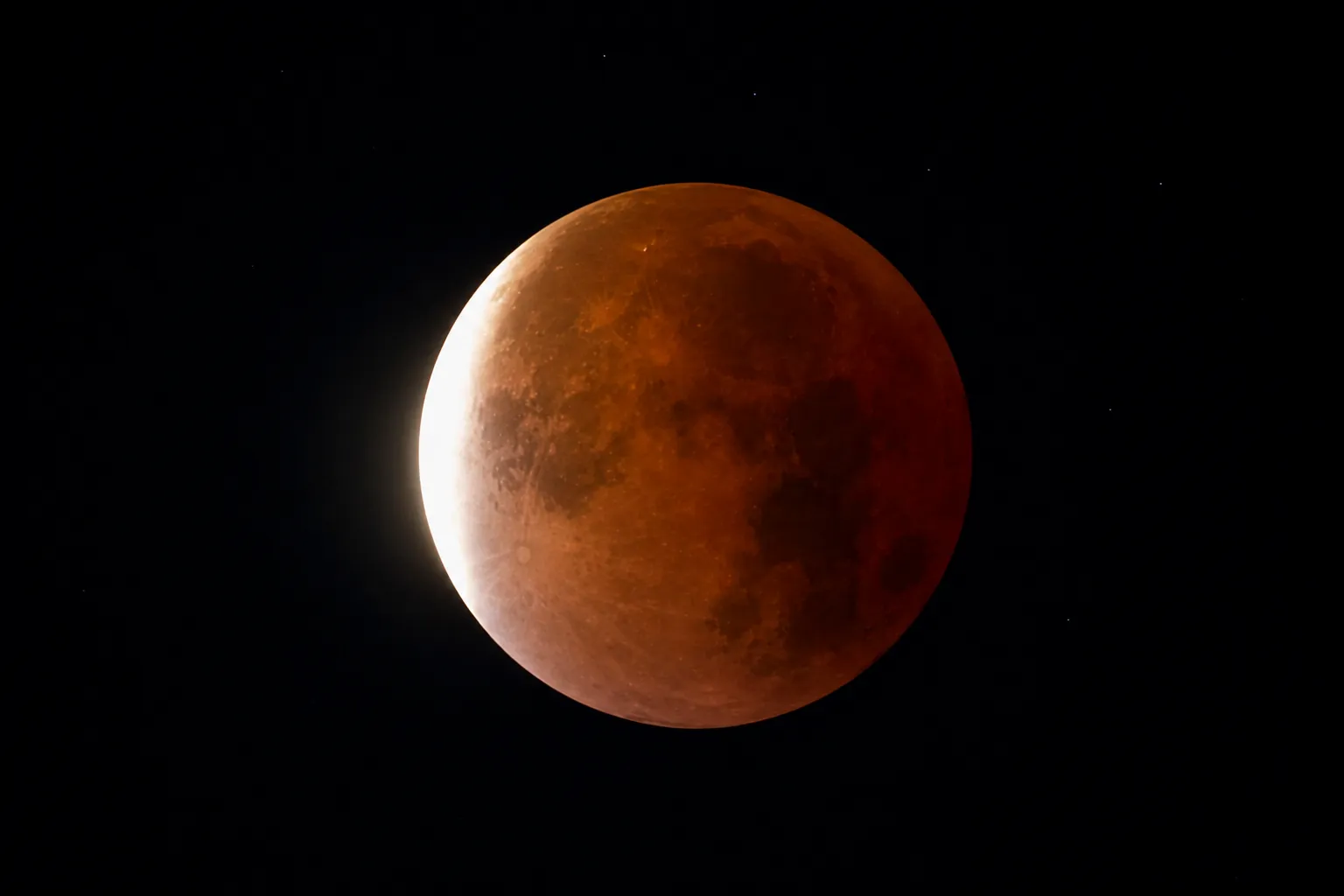
On the night of August 27–28, a partial lunar eclipse will occur, during which the Earth’s shadow will cover 96% of the Moon’s visible disk. Residents of much of North and South America, Africa, and Europe will be able to observe the event, according to Space.com.
The eclipse will occur during the full moon phase, when the Earth will be positioned between the Sun and the Moon. However, the alignment of the celestial bodies will not be perfect, so a thin crescent of the Moon’s disk will remain illuminated by direct sunlight.
According to TimeandDate.com, the Earth’s umbra—the darkest inner part of the planet’s shadow—will begin to cover the Moon’s surface at 10:33 p.m. on August 27 Eastern Daylight Time (EDT), or at 2:33 a.m. GMT on August 28. The eclipse is expected to reach its peak at 12:12 a.m. on August 28 EDT, or 4:12 a.m. GMT.
For more breaking news, follow the UA.News Telegram channel.
Around the time of maximum eclipse, the shadowed part of the Moon may take on a reddish-orange hue. This occurs because sunlight, filtered by Earth’s atmosphere, is refracted and strikes the Moon’s surface. This coloration is often referred to as a “blood moon” during total eclipses.
The phases of the lunar eclipse occur simultaneously for all regions of Earth’s night hemisphere where the Moon is visible above the horizon; however, the local observation time will vary. Unlike a solar eclipse, no special eye protection is required to observe a lunar eclipse. Binoculars or a telescope can help you see the shadow’s movement across the lunar disk in greater detail.


