
Why AI-generated food often looks unnatural — The Verge
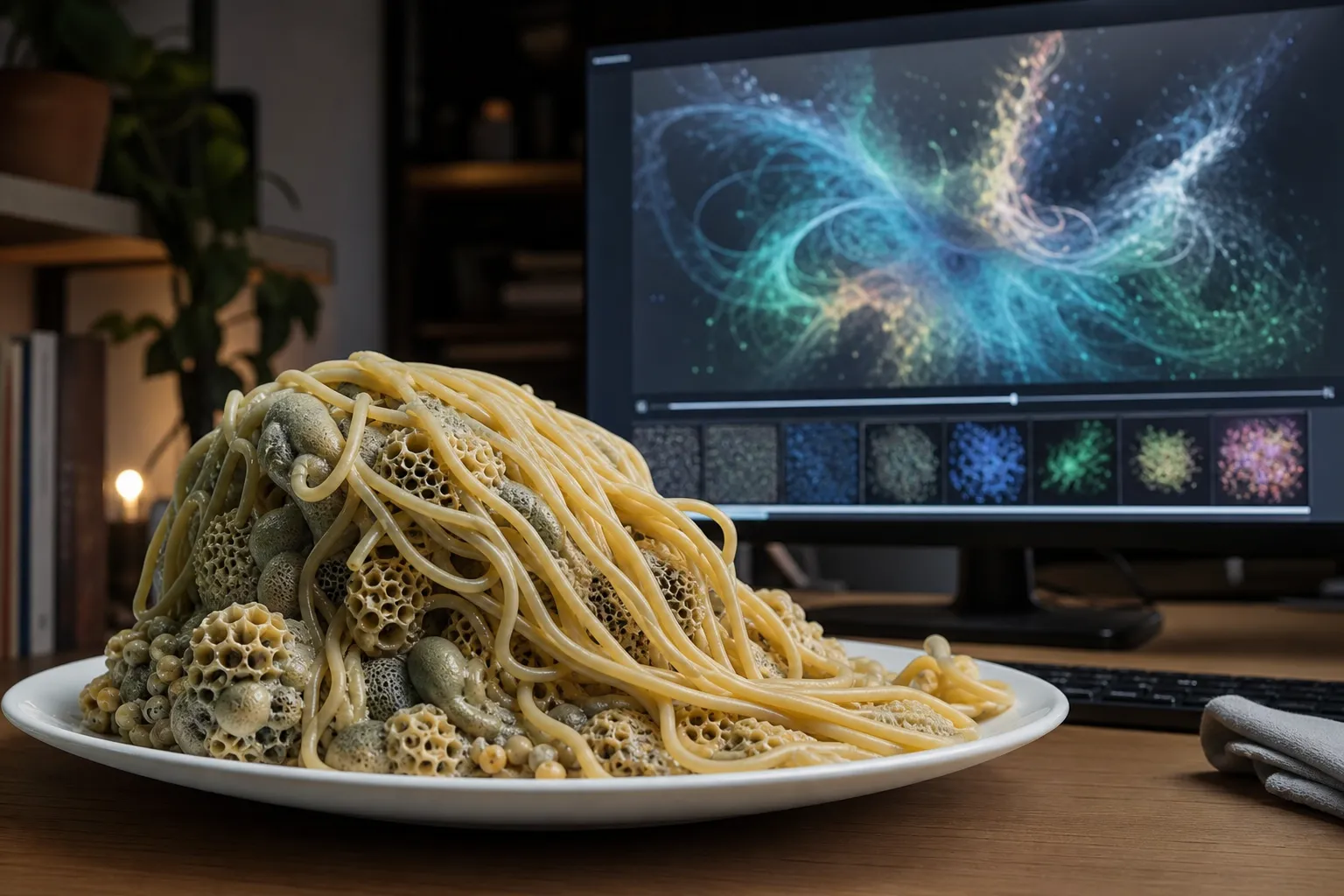
Restaurants, cafes and brands are increasingly using artificial intelligence-generated images to advertise food, but such visuals often look unnatural and provoke disgust. As The Verge reports, typical mistakes include overly long noodles, strange clusters of holes, unnatural textures and elements resembling inedible materials.
Errors arise at early stages
Many leading image generators operate using diffusion models. They begin with an image of random noise and gradually create the desired picture: first reproducing rough structures, then adding fine details and textures.
University of Oxford professor Chris Russell explained that a model may make a mistake in an object’s basic shape even before the detailing stage. It then adds distinctive textures to an incorrect structure. The researcher compared this to an error in which a depicted person has six fingers instead of five.
University of Naples Federico II behavioral scientist Giovambattista Califano noted that diffusion models are particularly poor at reproducing thin, continuous structures with a clear endpoint. As a result, noodles, threads and tentacle-like elements may extend beyond objects or appear where they should not be. Similar problems arise with repeating textures such as bubbles and seeds.
More current news is available on the UA.News Telegram channel Telegram.
Models reproduce appearance rather than object properties
University of Zurich professor of digital cultures and arts Roland Meyer stressed that generative systems reproduce the outward appearance of objects but do not understand the physical world. They statistically learn what sandwiches, burritos or ice cream usually look like, but do not know what these objects are or how they should behave.
King’s College London senior lecturer in computer science Michael Cook explained that textures appropriate in an architectural context can appear inedible in food images. Training data also affects the outcome: food photography is often stylized, with sharp contrasts, saturated colors, glossy lighting and exaggerated shapes. AI can reproduce these visual techniques without understanding their context.
Human reactions intensify disgust
According to experts, models may learn strange visual associations from the internet, where unusual or meme-like images sometimes spread more widely than ordinary food photographs. An additional problem is AI training on content already created by other models: research links this to so-called model collapse, visual degradation and increasing image uniformity.
People are especially sensitive to food that looks dangerous. Clusters of holes may be associated with infection, thread-like details with parasites, and unnatural colors and textures with food spoilage or contamination. Califano noted that because of such reactions, the “uncanny valley” for food may feel more acute than for images that resemble people but are not entirely human.


