
Google Will Permanently Disable Google Assistant
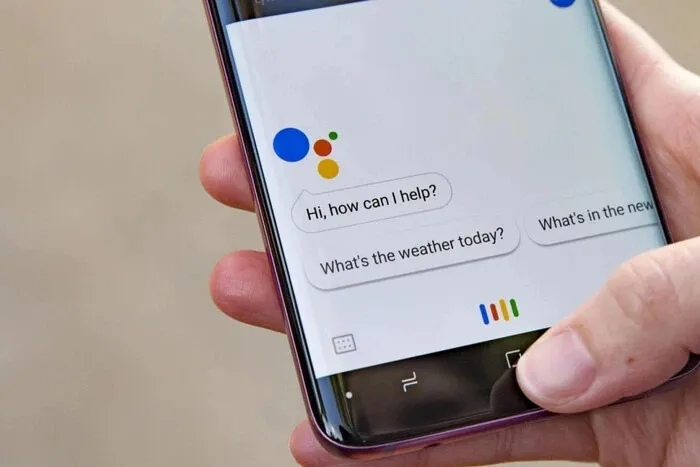
Google is gradually phasing out Google Assistant on smartphones and other mobile devices, transitioning users to Gemini. Once the transition is complete, it will no longer be possible to revert to the old voice assistant on compatible devices—the “Hey Google” command and other familiar ways to summon the assistant will work through Gemini. The company attributes this to advancements in artificial intelligence and its goal of making the voice assistant more conversational and capable of performing more complex tasks.
Google is continuing its major transition from Google Assistant to Gemini. The company is gradually phasing out the classic voice assistant from smartphones and other devices and replacing it with an AI-based system. Google originally planned to complete the main transition as early as 2025. However, the company adjusted its timeline and extended the migration of users to Gemini to 2026 to make the process smoother.
The direction for users is now clear: Gemini is set to become Google’s primary voice assistant on mobile devices. The company is gradually expanding its capabilities and integrating features previously handled by Google Assistant. Google has officially stated that the classic Assistant will no longer be available on most mobile devices compatible with Gemini. The transition applies not only to smartphones but also to tablets, headphones, and smartwatches.
What Will Change for Smartphone Owners
For Android users, the main change will be very simple: the familiar Google Assistant will gradually disappear as a separate option. Whereas before you could say “Hey Google” and get a response from the Assistant, after the transition, that same command will launch Gemini. Other familiar ways to summon the digital assistant will work similarly, such as pressing the corresponding button or using a gesture on the smartphone.
Previously, users could try Gemini and then switch back to Google Assistant. But Google is gradually removing that option as well. Android Authority reported that the company was working on removing the setting that allowed users to switch between the two assistants. In other words, once the transition is complete, there will effectively be no choice left: if a device supports Gemini, it will become the default digital assistant.
For those who have been used to Assistant for years, this could be a significant change. Google Assistant has long been the standard voice assistant on Android and has been used to set alarms, play music, check the weather, search for information, control smart home devices, and perform other simple commands.
Why Google Is Betting on Gemini
The reason for the switch is the advancement of generative artificial intelligence. Google wants its digital assistant to do more than just respond to short commands; it wants it to better understand natural human language and the context of a conversation. The company emphasizes that Gemini is designed for more complex requests. It can not only carry out a specific command but also engage in a more natural dialogue, help with planning, explain information, and handle requests that require multiple steps.
Google is also gradually integrating the familiar features of Assistant into Gemini. These include playing music, setting timers, and performing certain actions even from a locked screen. At the same time, Gemini has features that the classic Assistant didn’t have. For example, Google is developing Gemini Live for more natural voice conversations and Deep Research for complex searches and information processing.
In other words, the company aims to transform the voice assistant from a simple set of commands into a full-fledged AI tool capable of sustaining a conversation and assisting with various tasks.
Will everyone have to use Gemini?
Not exactly. The transition primarily applies to devices that technically support Gemini. Google has previously noted that on older or less powerful devices that don’t meet Gemini’s requirements, Assistant may remain available. This is important for smartphones with insufficient specs, on which the new AI assistant cannot function properly.
Individual devices and platforms also have their own transition schedules. Google isn’t switching the entire ecosystem to Gemini with the push of a button. For example, the company is developing Gemini for Google Home separately. By 2026, Gemini for Home will already be available on compatible smart speakers and will help users manage devices, schedules, and other household tasks.
Therefore, the claim that “Google Assistant will disappear completely everywhere in a single day” would be inaccurate. The transition is happening in phases, and the timeline depends on the specific device and platform.
What will happen to smartphones, tablets, and smartwatches
Google has explicitly announced the expansion of Gemini to tablets, cars, headphones, and smartwatches. In other words, the company is gradually building a unified ecosystem where Gemini can work across a user’s various devices. For Wear OS users, this means that the watch’s voice features are also gradually transitioning to Gemini. A similar change is taking place with headphones that use the voice assistant’s capabilities via a connected smartphone.
Cars represent a separate focus area. Google is also expanding Gemini into automotive systems, particularly Android Auto. This allows the company to gradually replace the Assistant not only on phones but also in places where people are accustomed to using it in their cars. At the same time, Google Home devices and other home products have their own version of this transition—Gemini for Home. Google is already developing features there that weren’t available in the old Assistant, such as a more natural continuation of the conversation after the initial command.
Will Gemini be better than Google Assistant?
That’s exactly what Google is counting on. The company is positioning Gemini as a more modern assistant that handles complex queries and natural language better. Google Assistant was primarily focused on specific commands. For example, a user could ask it to set a timer, call someone, play music, or provide the weather forecast.
Gemini works differently. It can maintain a conversation, take previous context into account, and provide more detailed responses. Google is also equipping it with the ability to handle various types of information, rather than just responding to short voice commands.
The company is already expanding Gemini with new AI capabilities. In May 2026, Google introduced updates, including proactive daily summaries and Gemini Spark—a tool designed to help users complete tasks. So the transition to Gemini isn’t just a name change for an old service. Google is attempting to completely overhaul the way its digital assistant works, building it around generative AI.
What Users Need to Do
If Gemini has already appeared on your smartphone, no special action is required on your part. Google is gradually transitioning compatible devices to the new assistant through updates and changes to its services. Users who are accustomed to Assistant should keep one key point in mind: the option to revert to the old assistant is gradually disappearing. Therefore, once the transition is complete, the familiar “Hey Google” commands will no longer bring up Assistant if the device has been switched to Gemini.
At the same time, the most basic features that people used every day aren’t going anywhere. Google is porting Assistant’s features to Gemini and adding new AI-powered capabilities. The company explains this transition as a desire to make the voice assistant more useful and more natural in communication. But for users, it also marks the end of an era.
Google Assistant Makes Way for Gemini
Google Assistant was one of the most well-known voice assistants for smartphones. For many years, Android users have been calling on it with the voice command “Hey Google” and using it for dozens of everyday tasks. Now Google is betting on Gemini. The company is gradually phasing out the option to choose between the two assistants and transitioning users to the AI service.
For some, this will mean new capabilities and more natural communication with their smartphone. For others, it will mean having to get used to a new way of interacting with their phone. The key takeaway: Google Assistant is gradually becoming a thing of the past, and Gemini is taking its place as Google’s primary AI assistant on mobile devices. The transition is taking place in stages, and Assistant may still remain available on some older or incompatible devices. This was reported by Android Authority.
As a reminder, Amazon’s market capitalization surpassed the $3 trillion mark for the first time amid strong financial results and accelerated growth in its cloud business.
As a reminder, the American corporation Amazon is integrating the innovative AI-powered mobile robot Proteus into its European logistics network.
In the U.S., a class-action lawsuit has been filed against Amazon over the company’s refusal to reimburse consumers for additional costs incurred due to tariffs imposed by President Donald Trump.


